About this book
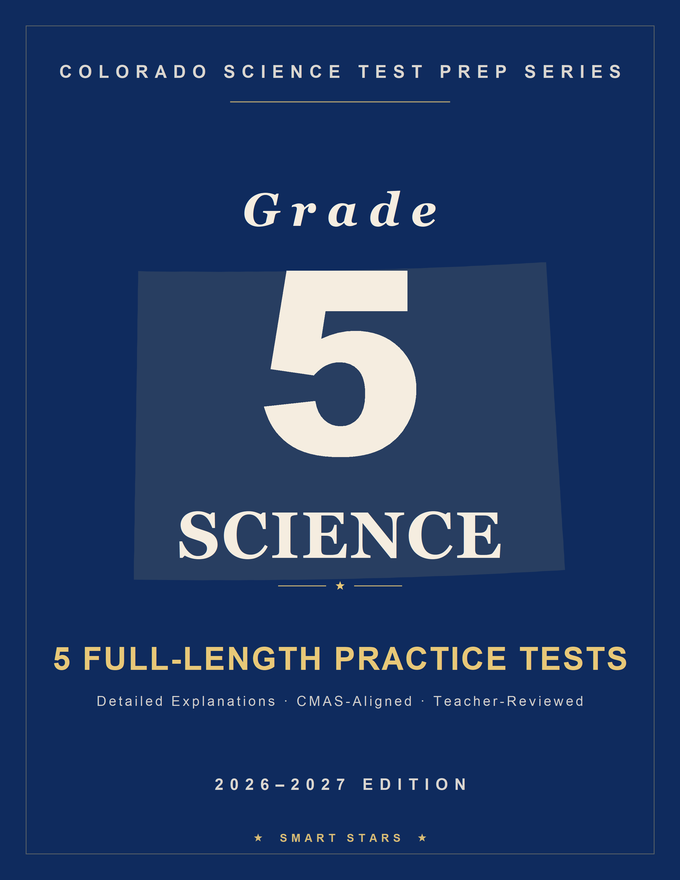
Give your fifth grader the confidence to succeed on the Colorado Measures of Academic Success (CMAS) Grade 5 Science assessment.
This book contains five full-length practice tests — 231 questions in all — aligned to the 2020 Colorado Academic Standards for Science and built to match the format, difficulty, and content of the real Grade 5 CMAS exam.
Take a look inside
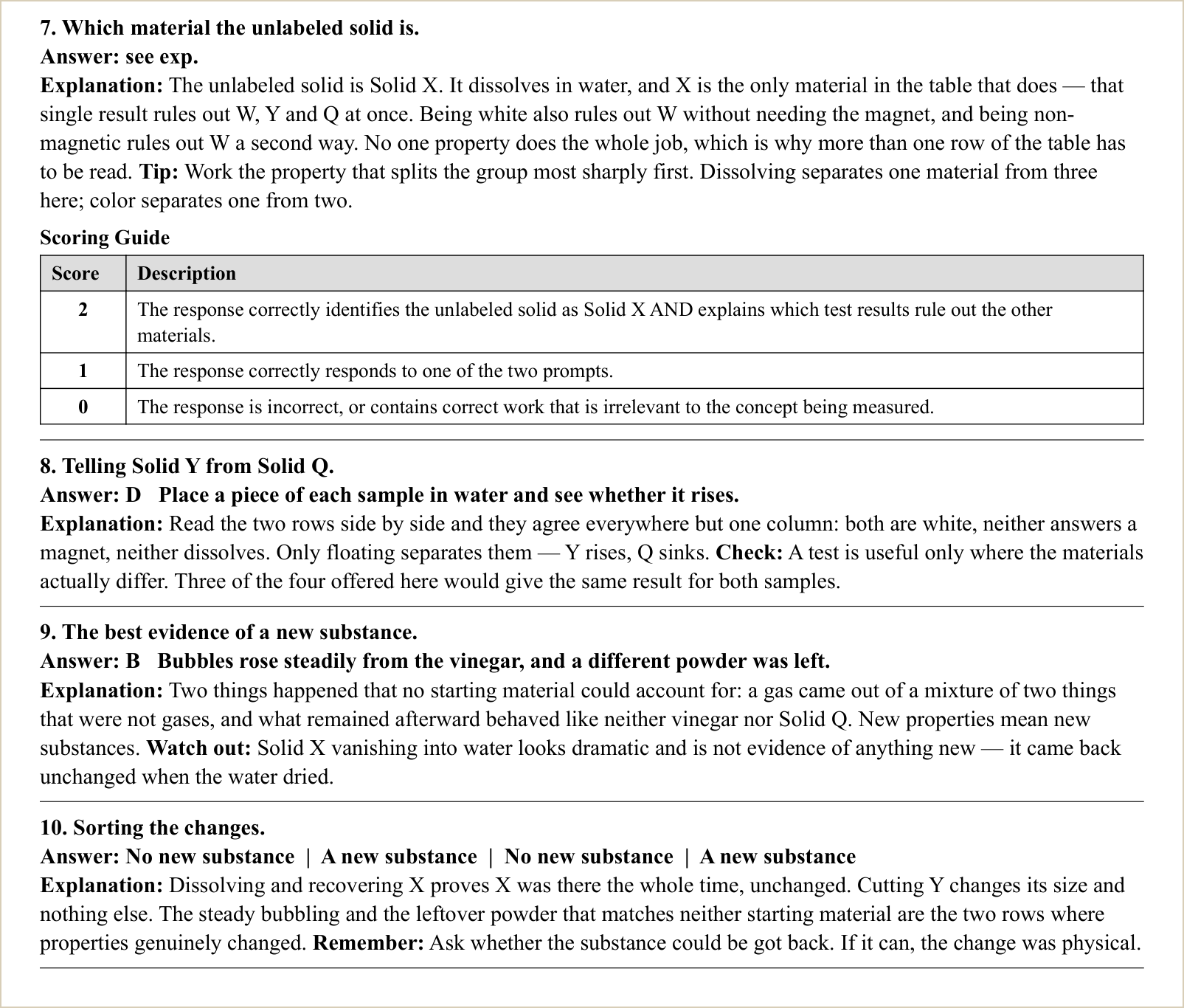
- Delivery: CMAS is Colorado’s own test, overseen by the Colorado Department of Education and given online through TestNav each spring.
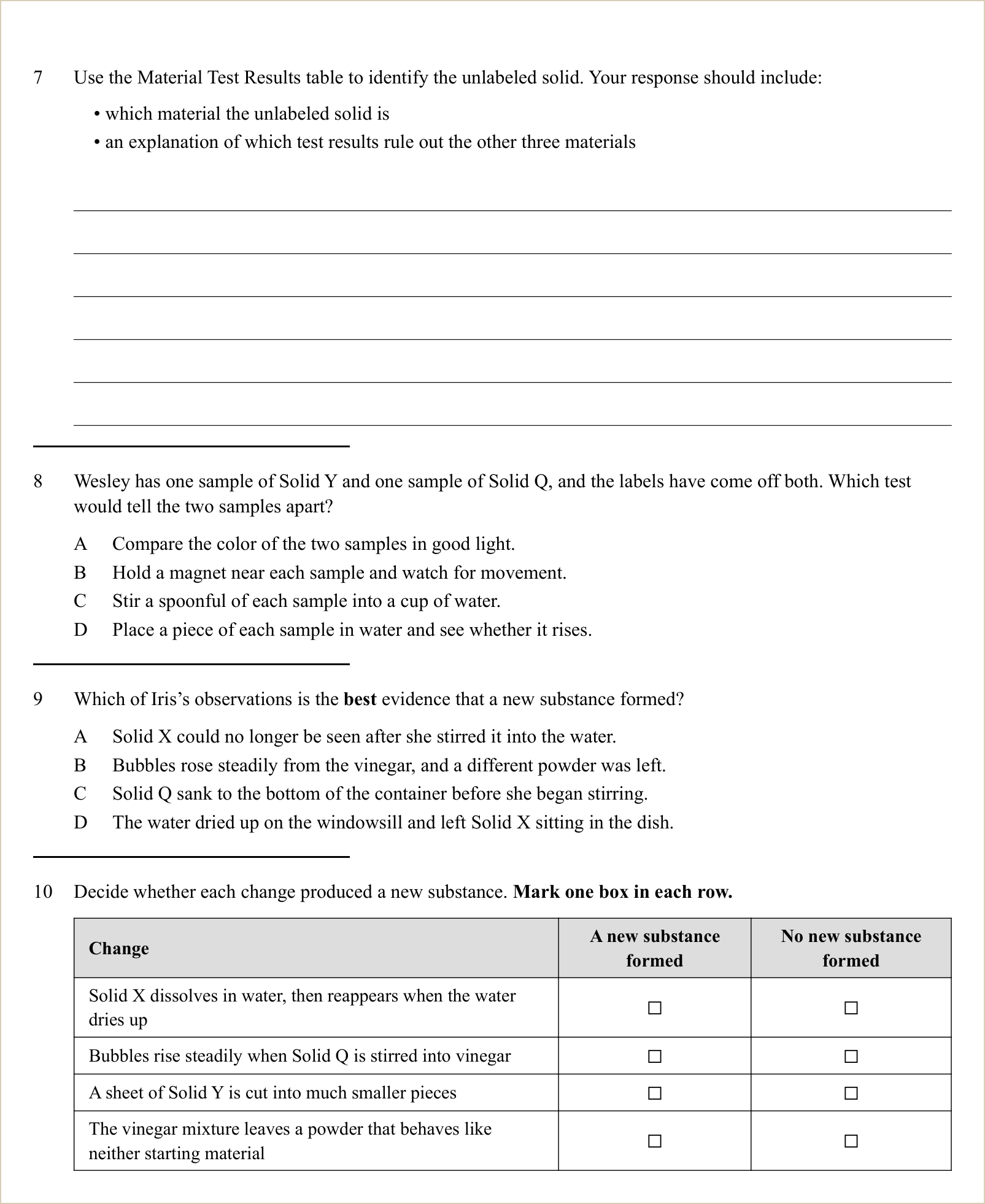
- Written response: just under half the points, 47%, come from written responses.
That is far more than most state science tests require, and it is the hardest thing to be ready for without practice.
What’s inside
- 5 complete full-length practice tests — 231 questions, 61 points per test, matching the real test’s length
- Built the way CMAS Science is actually built, from item sets: one real situation is presented first, then a group of questions all draw on it
- Three-dimensional questions throughout — a science idea, a thinking practice, and a big-picture pattern, used together
- Written responses scored the way Colorado scores them: each bullet of a “Your response should include:” prompt is a point, and the book teaches that structure
- A printed scoring guide beside every written response, so a parent can score it the way a scorer would
- Detailed explanations for every question — the reasoning, not just the answer
- Item types, names and contexts varied across all 5 tests, so no problem repeats in the same slot
- Reporting categories weighted exactly as on the official test: Earth and Space Science 41%, Physical Science 35%, Life Science 24%
- A parent letter with test-taking tips, plus a Grade 5 Science Study Reference for studying between tests — Colorado allows a calculator but provides no reference sheet, and the book says so plainly
- A quick-reference answer key for all five tests
Topics covered
- Matter made of particles far too small to see, and the evidence they are there
- Identifying materials by observable properties — color, hardness, reflectivity, conductivity, magnetism and solubility
- Conservation of matter through heating, cooling, mixing and dissolving, and evidence of a genuinely new substance
- Gravity as a force directed toward Earth’s center, and why balanced forces look like no force
- Energy in food tracing back to the sun, and what that means for every animal in a food web
- Plants building their material from air and water, and the evidence that soil is not the source
- Matter cycling among plants, animals and decomposers
- Stars and apparent brightness, and daily and yearly sky patterns that reveal Earth’s motion
- Earth’s geosphere, hydrosphere, atmosphere and biosphere acting on one another
- Where Earth’s water is held, and how little is fresh water people can reach
- Weathering, erosion and deposition, and protecting natural resources
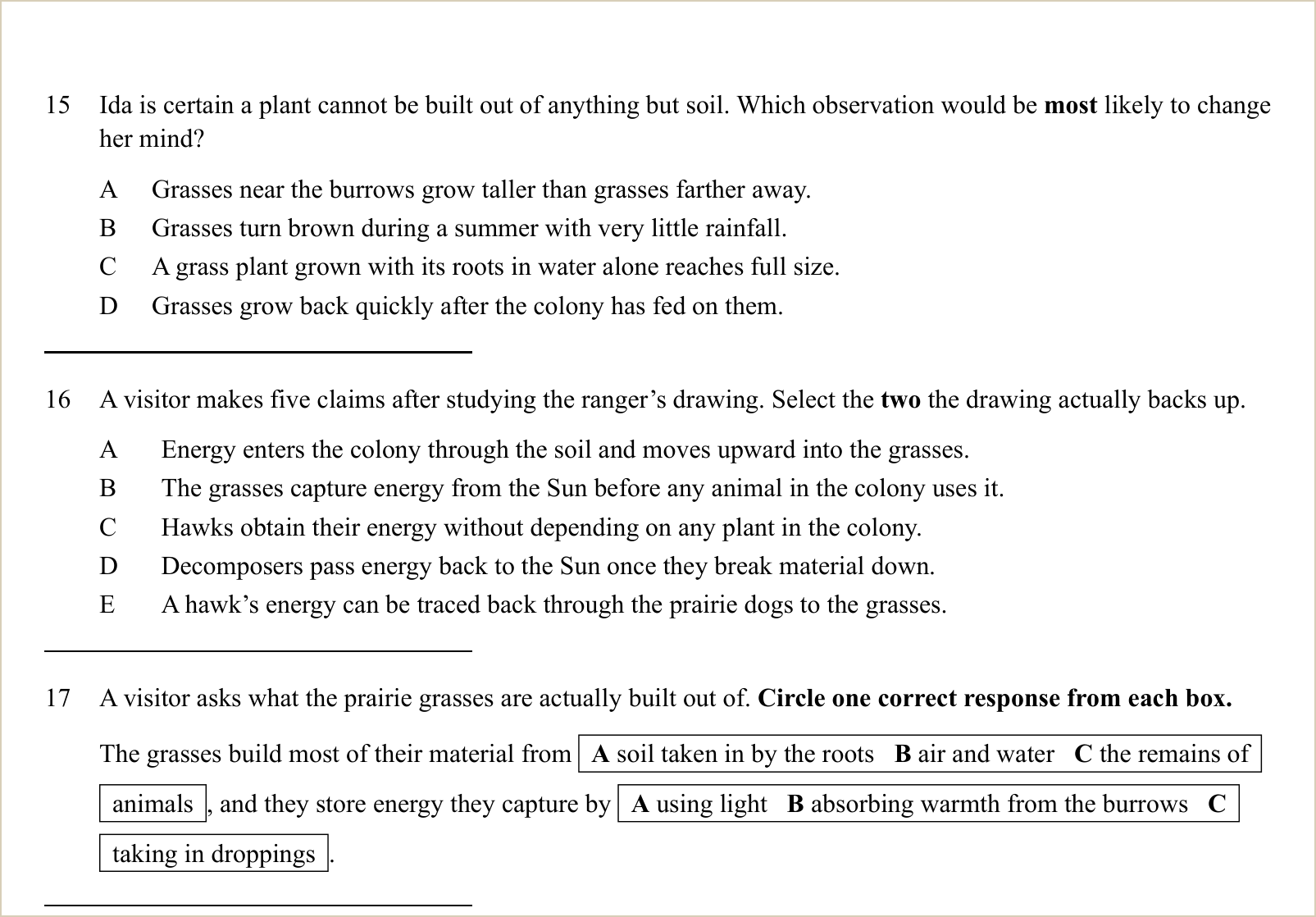
Why parents and teachers choose Smart Stars
- Written by educators working from Colorado’s own CMAS Science Assessment Framework and released practice resources
- Every question mirrors test day — no surprises in format, content or rigor
- Explanations teach the “why,” not just the “what,” so students learn from every mistake
- Built to Colorado’s real weighting, including the heavy written-response share