About this book
Give your third grader the confidence to succeed on the Tennessee Comprehensive Assessment Program (TCAP) Science test.
This book contains five full-length practice tests — 150 questions total — aligned to the Tennessee Academic Standards for Science, Grade 3, and designed to match the format, difficulty, and content of the real Grade 3 TCAP Science test.
Take a look inside
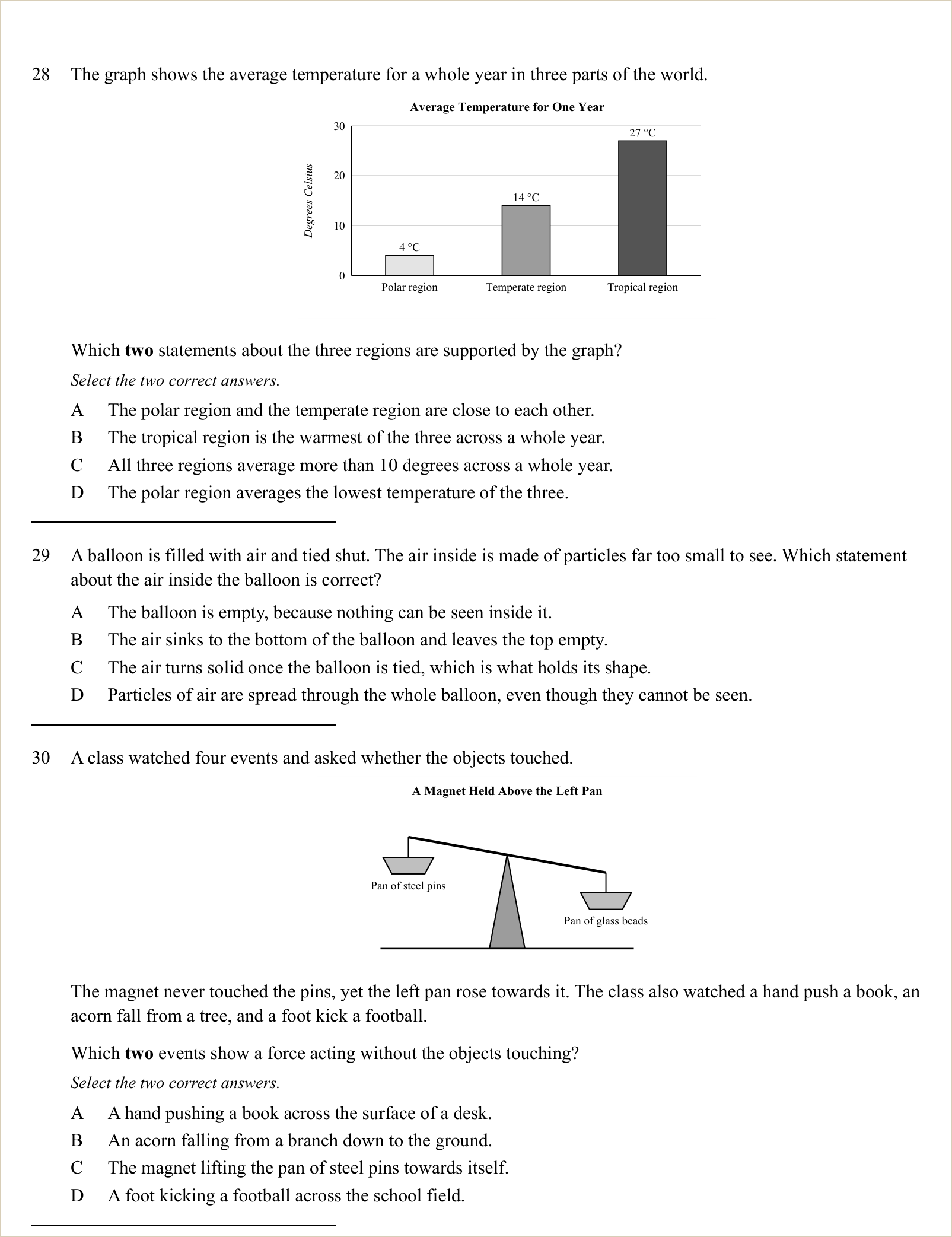
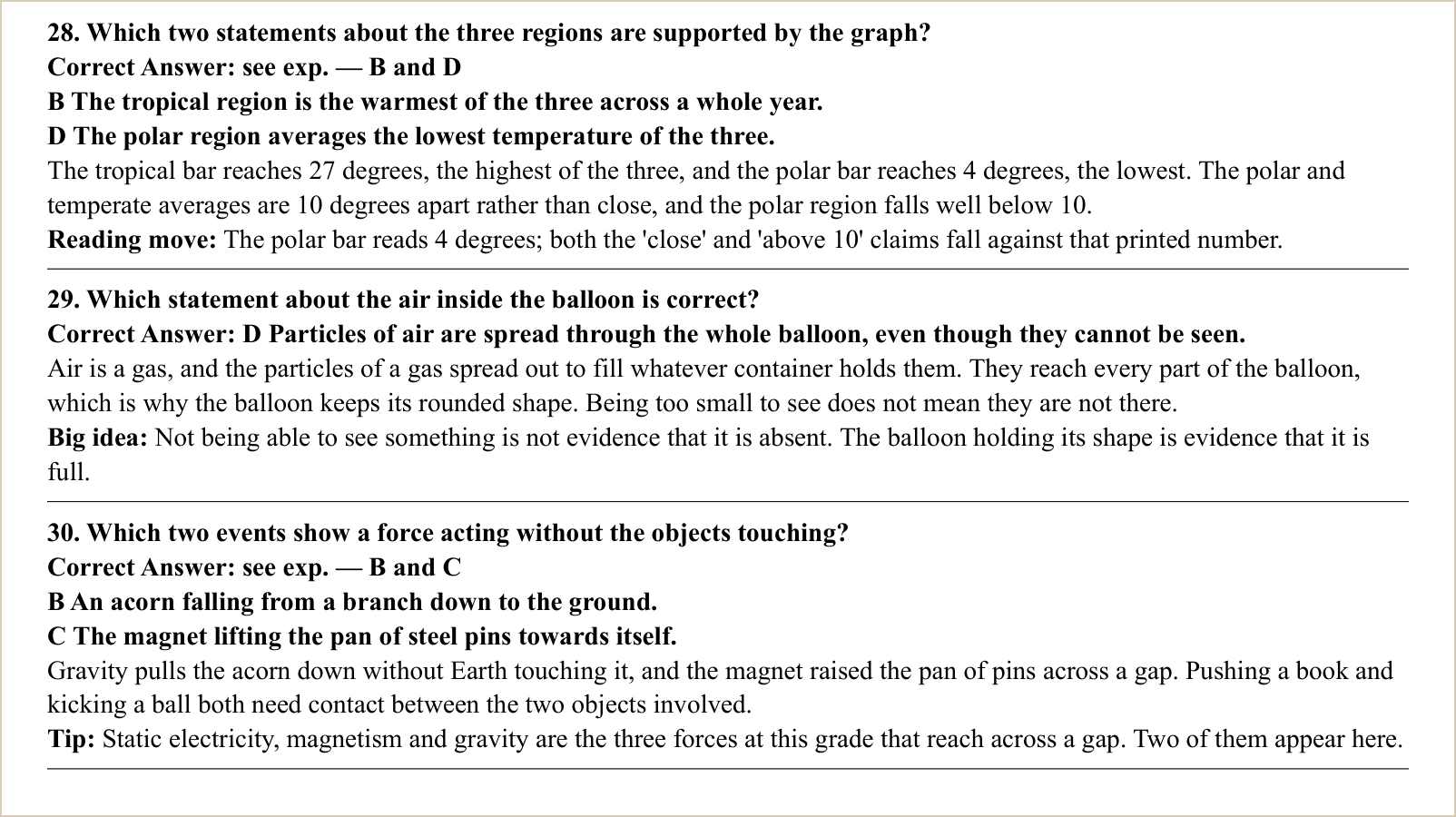
- Length: a real Grade 3 form asks about thirty questions but Tennessee scores only 25 to 26 of them.
- Field-test items: the rest are embedded field-test questions, being tried out for use on future tests. They look exactly like all the others and your child cannot tell them apart, which is precisely why the sitting feels as long as it does.
- Each practice test here: the same thirty questions, so a practice sitting is the same length as test day and your child builds real endurance for the full sitting — the difference being that every one of the thirty here is a scored-style question with a full explanation.
So no practice time is spent on questions that would not have counted.
What’s inside
- 5 complete 30-question practice tests (150 questions total)
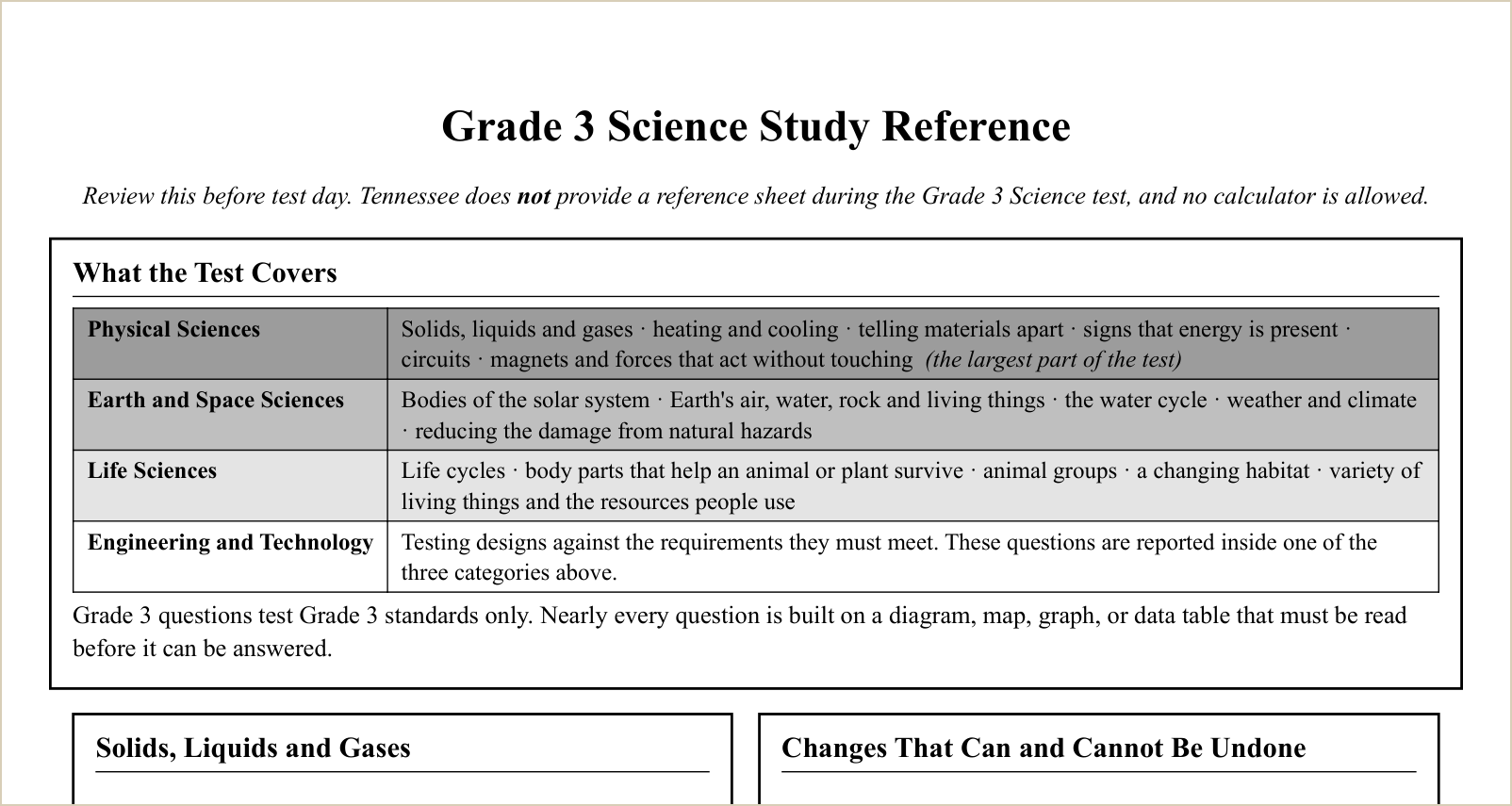
- Weighted the way Tennessee weights the real test — Physical Science is the largest category, then Earth and Space Science, then Life Science, in the proportions the state’s own Grade 3 blueprint sets
- Engineering and design questions handled the way Tennessee reports them: never as a category of their own, but folded inside one of the three science categories, exactly as on the real test
- Built for the paper test third graders actually sit — Tennessee gives Grade 3 a consumable booklet that the student writes in, rather than the separate answer document used in later grades, so this book is a workbook to be written in too
- Detailed answer explanations for every question — not just the correct letter, but step-by-step reasoning that builds real understanding
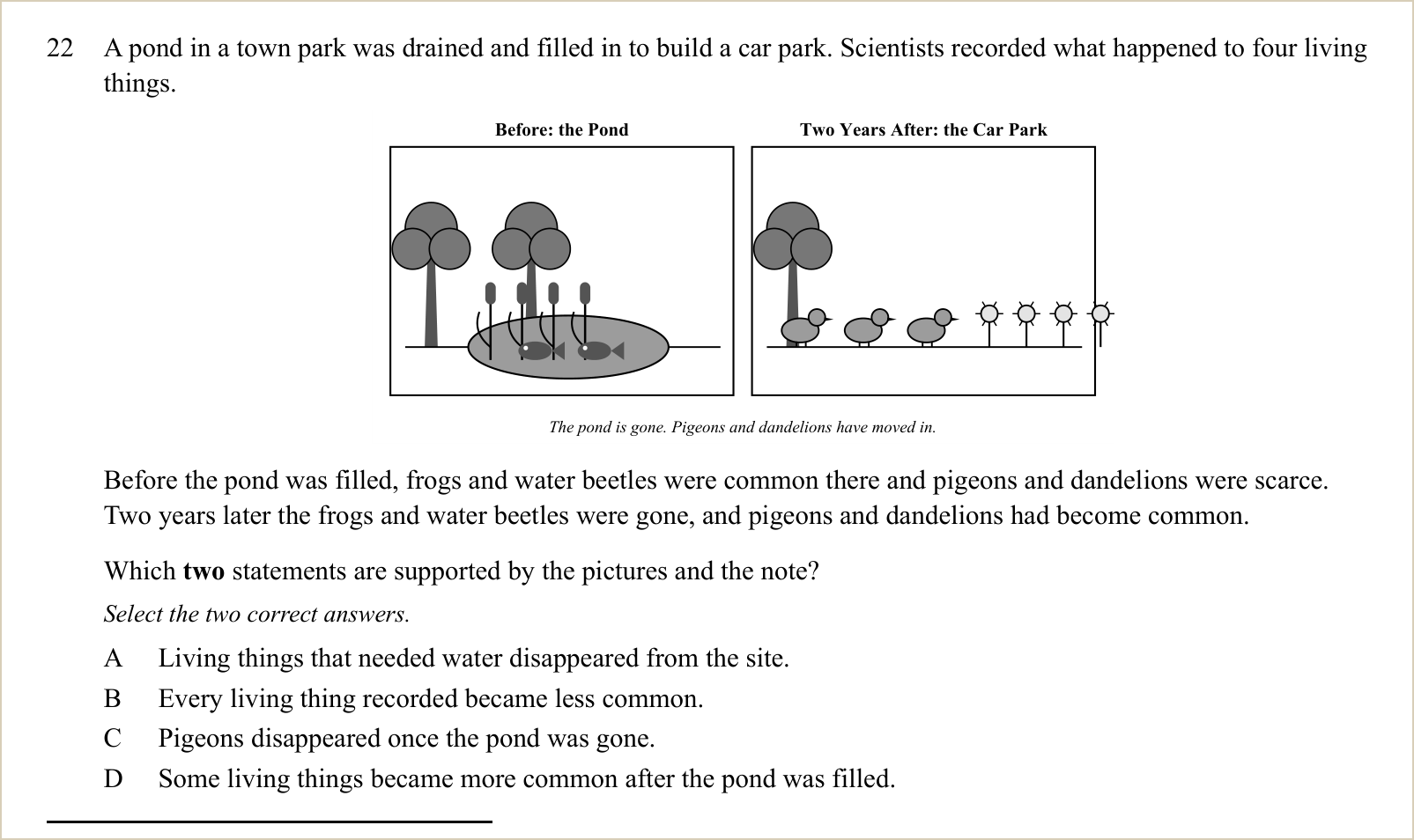
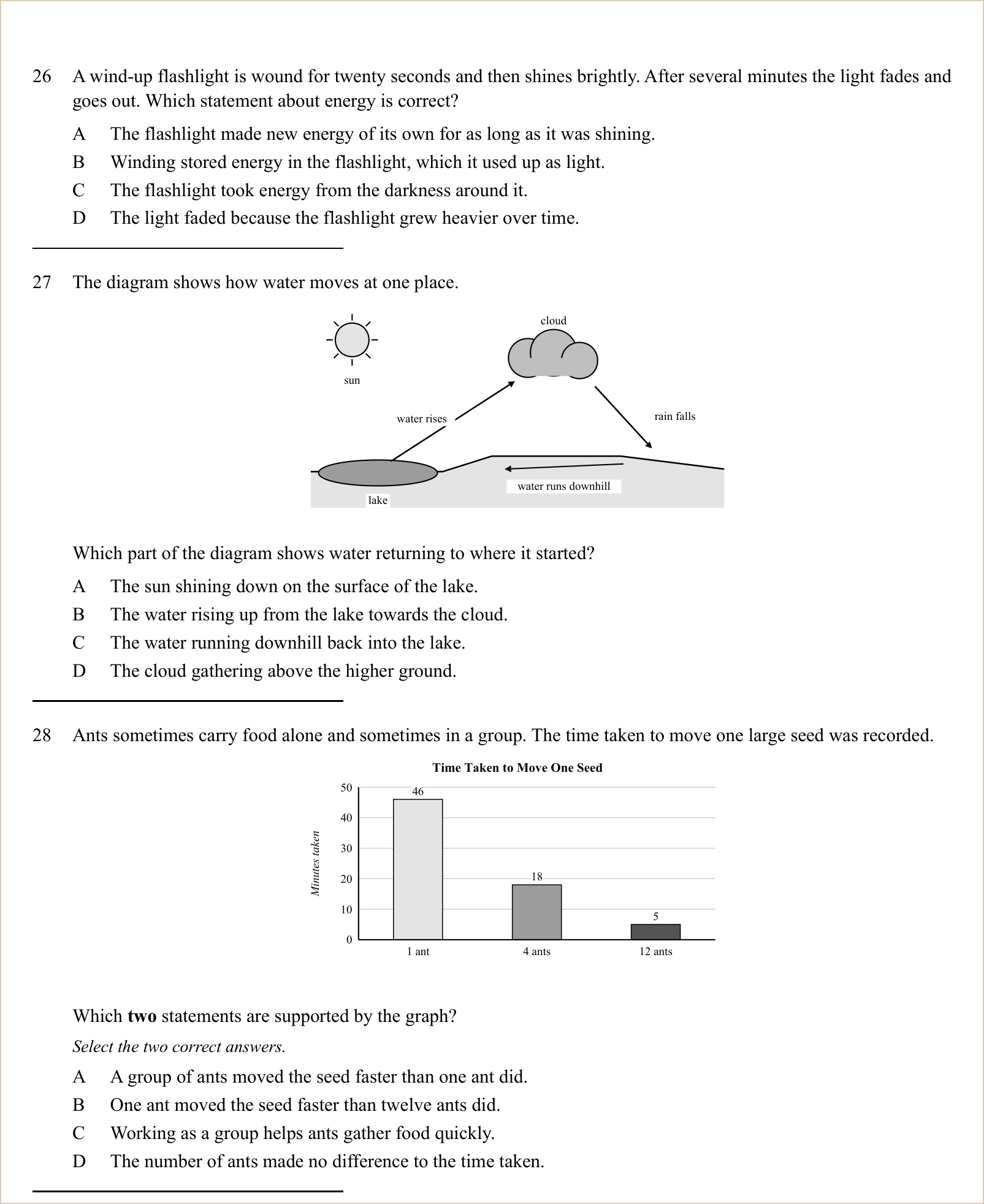
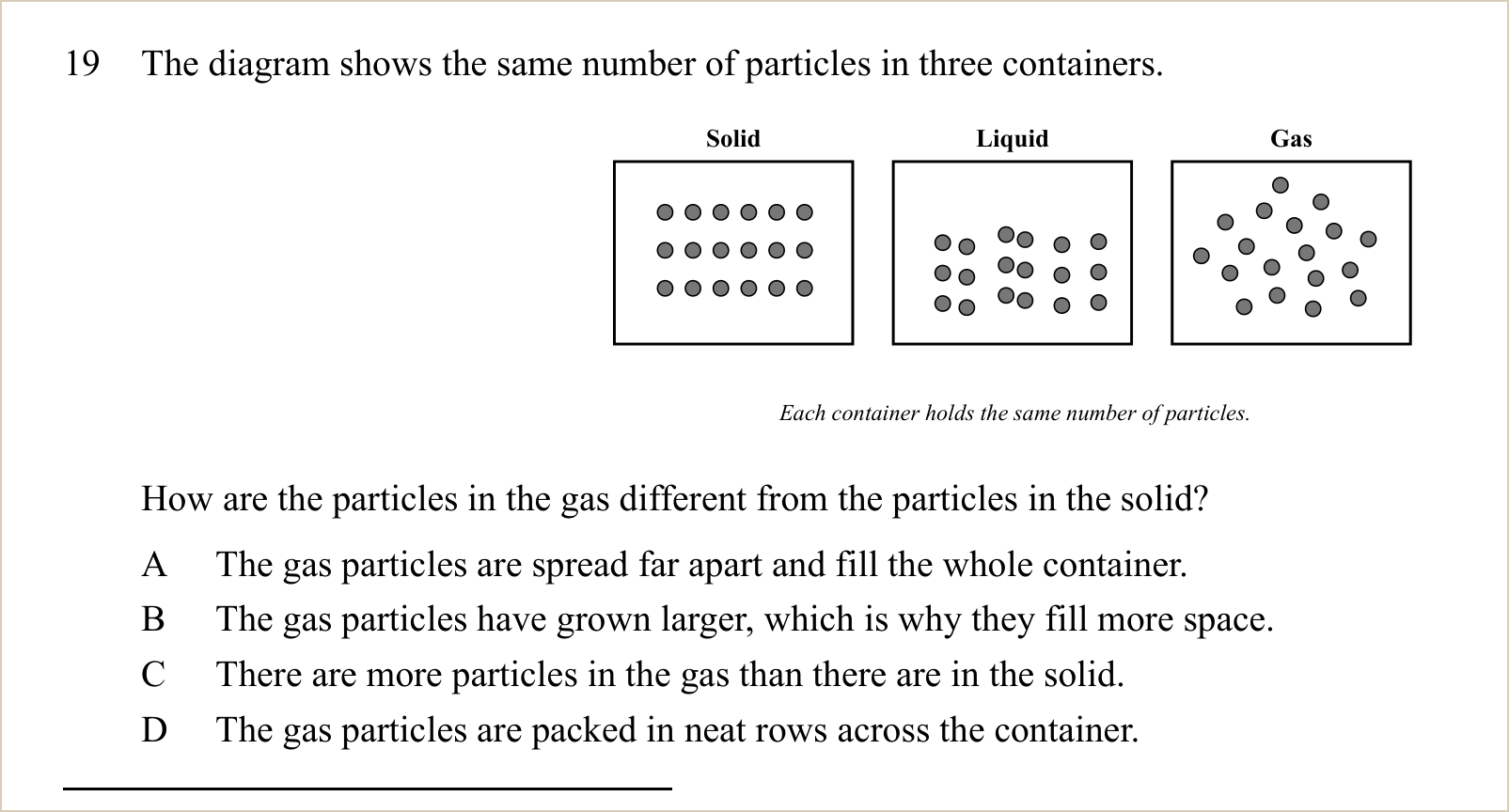
- Over a hundred original diagrams, graphs, and data tables drawn in high-contrast greyscale, so every bar, band, and shaded region is still distinguishable in a black-and-white printed book
- Item types, names, and contexts varied across all 5 tests, so students never see the same problem twice in the same slot
- A parent letter with test-taking tips, plus a Grade 3 Science Study Reference for use while studying — Tennessee does not give students a reference sheet during the Grade 3 Science test, and the book says so plainly rather than implying one will be there
- A quick-reference answer key for all five tests for fast scoring
Topics covered
- Solids, liquids, and gases, and the particle models that explain how each one behaves
- Changes that heating and cooling can undo, and changes such as burning and cooking that they cannot
- Identifying a material from its properties, and why one property is rarely enough
- Forces that act without touching — gravity, magnetism, and static electricity — and how each weakens as the gap grows
- Magnets, poles, and changing an object’s motion without touching it
- Evidence that energy is present: sound, light, heat, and motion
- Electric circuits, including open and closed paths and the difference between series and parallel
- The bodies of the solar system and how they compare in size
- Earth’s air, water, rock, and living things, and how those systems interact
- The water cycle, and following water from a lake to a cloud and back to the ground
- Weather, climate, and reading weather data from tables and graphs
- Natural hazards, and judging whether a design actually reduces the damage
- Life cycles, including the ones that pass through a pupa and the ones that do not
- Body parts and structures that help an animal or plant survive where it lives
- Animals that live in groups, and the advantage a group provides
- Habitats that change, and what happens to the living things already there
- The variety of living things in a place, and the resources people take from them
- Testing a design against the requirements it has to meet, and choosing between designs on evidence
Why parents and teachers choose Smart Stars
- Written by experienced educators who study Tennessee’s official TCAP Science blueprint, practice materials, and standards documents
- Every question mirrors what students will see on test day — no surprises in format, content, or rigor
- Explanations teach the “why,” not just the “what,” so students learn from every mistake
- Item types and contexts varied across the five tests — just like a real exam, every question feels fresh
- Nearly every question is built on something to read — a diagram, a map, a graph, or a data table — because that is how Tennessee asks Grade 3 science, not as bare recall