About this book
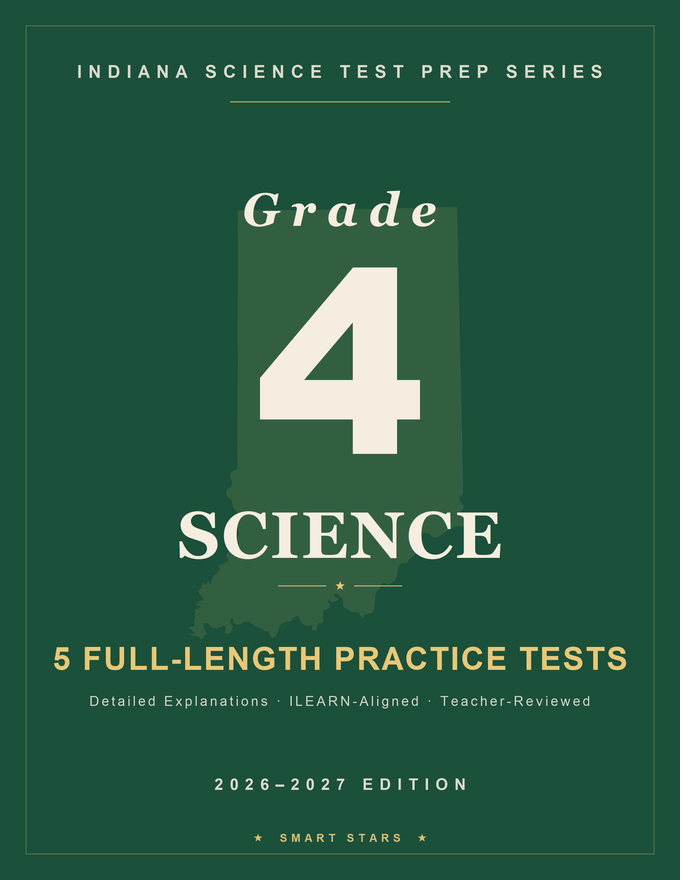
Give your fourth grader the confidence to succeed on the Indiana ILEARN Grade 4 Science assessment.
This book contains five full-length practice tests, 235 questions total, built around the Indiana Academic Standards for Science and for Computer Science at Grade 4 and designed to match the format, difficulty, and content of the real Grade 4 ILEARN Science exam.
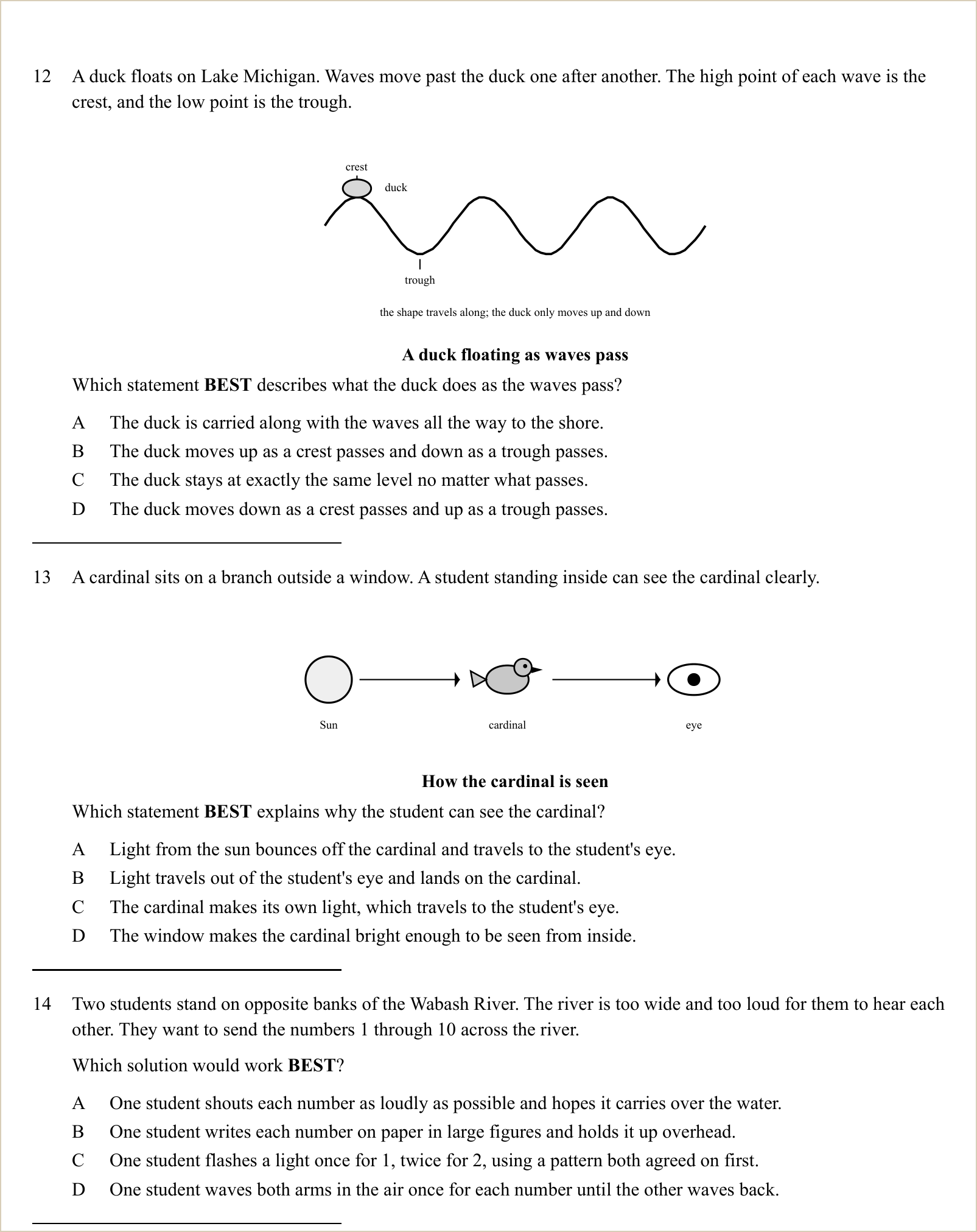
Take a look inside
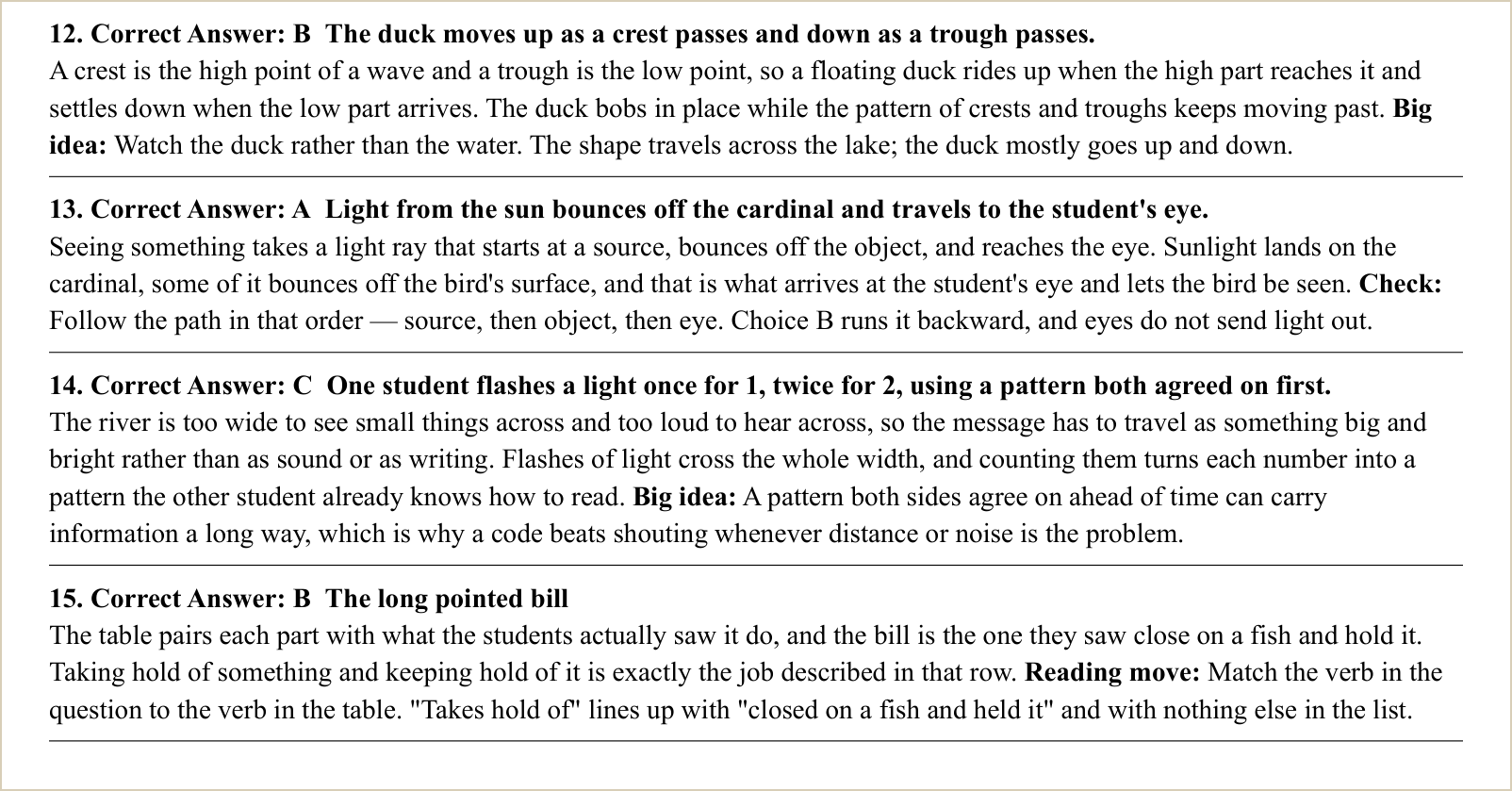
About the question count:
- Indiana builds each test from 23 items, but an item is not always one question
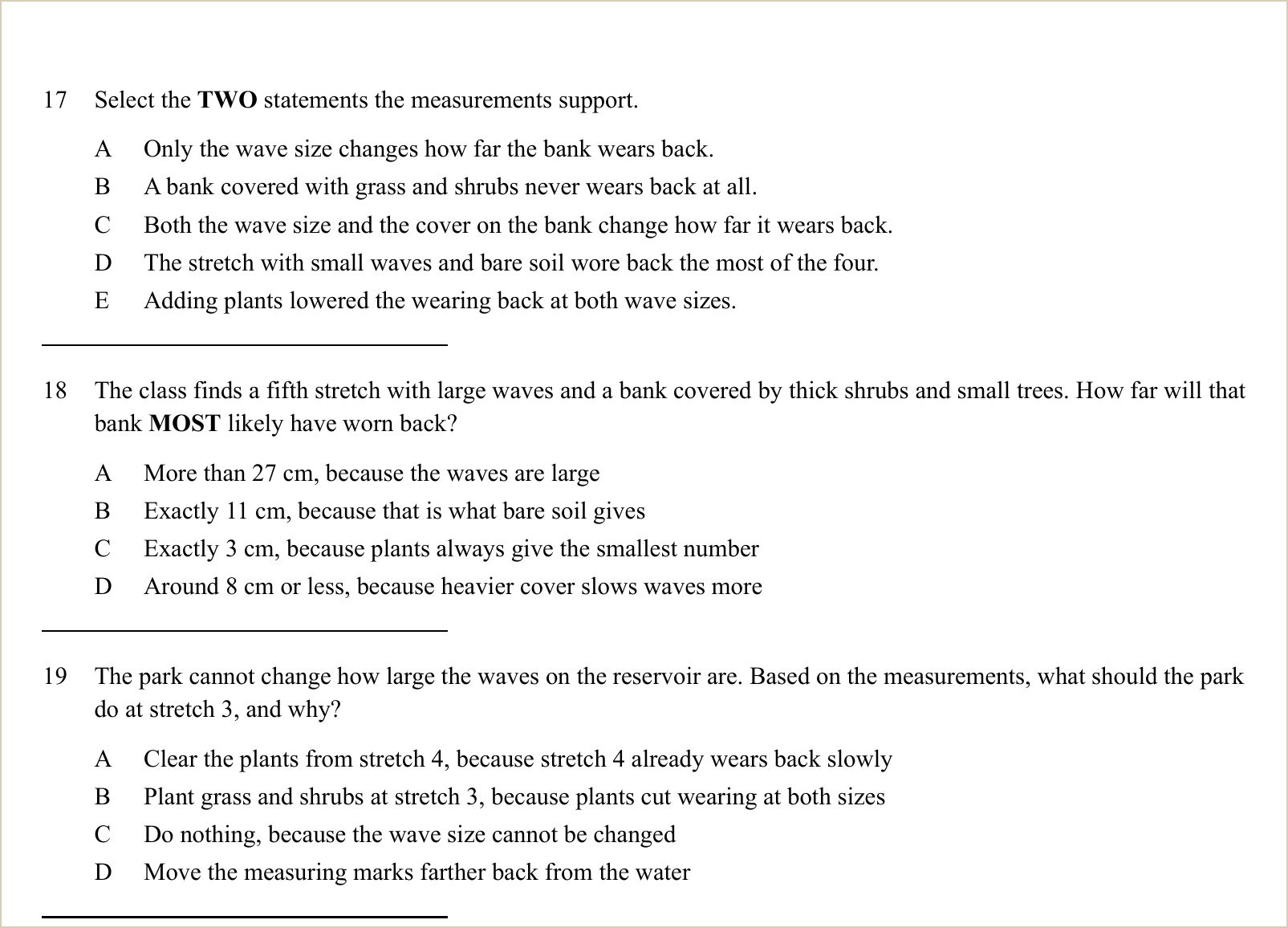
- Most of the test is question sets: a set opens with an observation, diagram, or table, then asks several questions about it, and Indiana counts the whole set as one item
- Counted the way a student meets them, a form works out at about 47 questions
- That is what each test here contains, so a practice sitting matches test day
On test day: the test is untimed and student-paced, finished in one sitting, and a four-function calculator is available.
What’s inside
- 5 complete 47-question practice tests, 235 questions in all
- Built in two parts, as ILEARN Science is given: a science segment and a shorter computer science segment, combined into one score, with the computer science questions last under their own heading
- Question sets built on a real phenomenon, with questions that all depend on reading it
- Detailed answer explanations for every question: not just the correct letter, but step-by-step reasoning
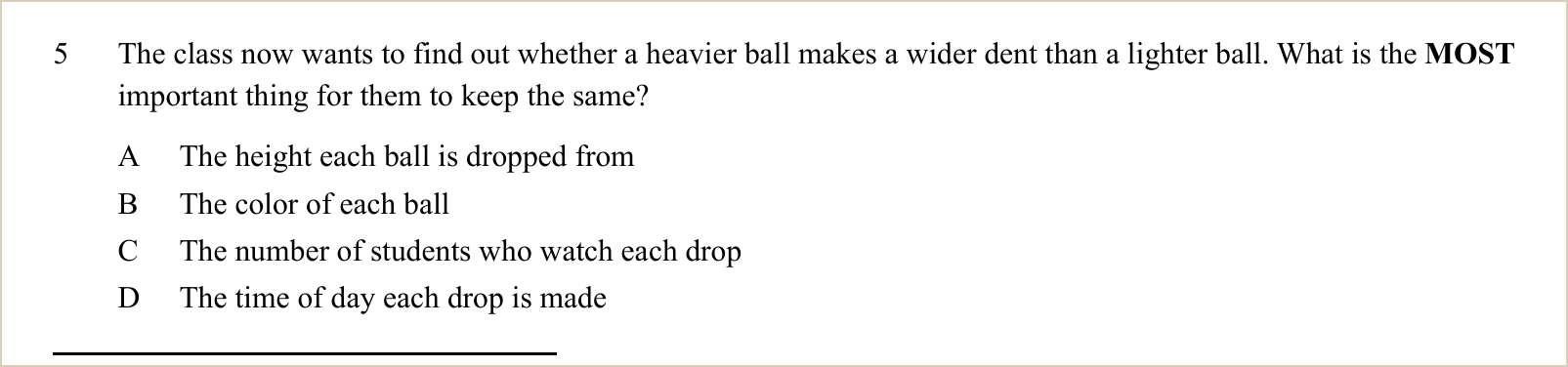
- Item types, names, and contexts vary across all five tests, so no problem repeats in the same slot
- Reporting categories weighted as on the official test: Physical Science 30 percent, Earth and Space Science 28 percent, Life Science 26 percent, and Computer Science 16 percent
- A parent letter with test-taking tips, plus a Science Study Reference for studying, since Indiana gives no reference sheet during the test
- A quick-reference answer key for all five tests
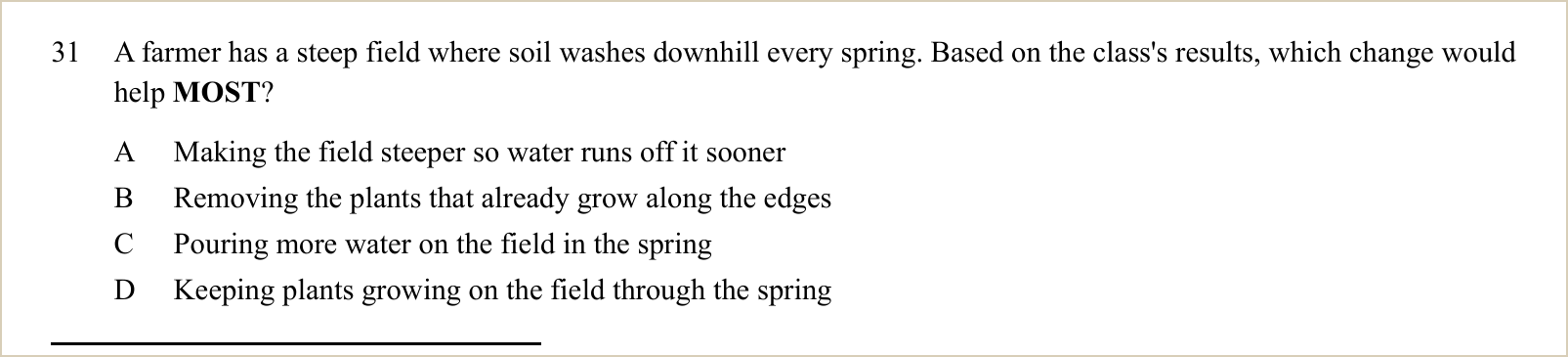
Topics covered
- Speed and energy, and how a faster object carries more energy
- Energy transfer by light, heat, and sound, and what happens in collisions
- Designing and evaluating a device that changes energy from one form to another
- Waves: amplitude, wavelength, and how a wave moves energy, not matter
- Light, reflection, and why an object is seen only when light from it reaches the eye
- Using patterns to send information
- Internal and external structures that help plants and animals survive and reproduce
- How animals take in information, process it, and respond
- Weathering, erosion, and deposition, and which conditions slow them
- Rock layers and fossils as evidence of past environments
- Reading maps of Earth’s features for patterns
- Energy and fuels from natural resources, and their environmental effects
- Reducing the damage from natural hazards, and weighing a solution against limits
- Computer science: breaking a problem into parts, organizing data, variables, troubleshooting, the parts of a computing device, building and debugging block programs, and the effects of technology
Why parents and teachers choose Smart Stars
- Written by experienced educators who study Indiana’s ILEARN blueprint and item specifications
- Every question mirrors what students will see on test day, with no surprises in format or rigor
- Explanations teach the “why,” not just the “what,” so students learn from every mistake
- Includes the computer science segment many practice books leave out, though it counts toward the same score