Built to feel like test day: Written to teach the why behind every answer.
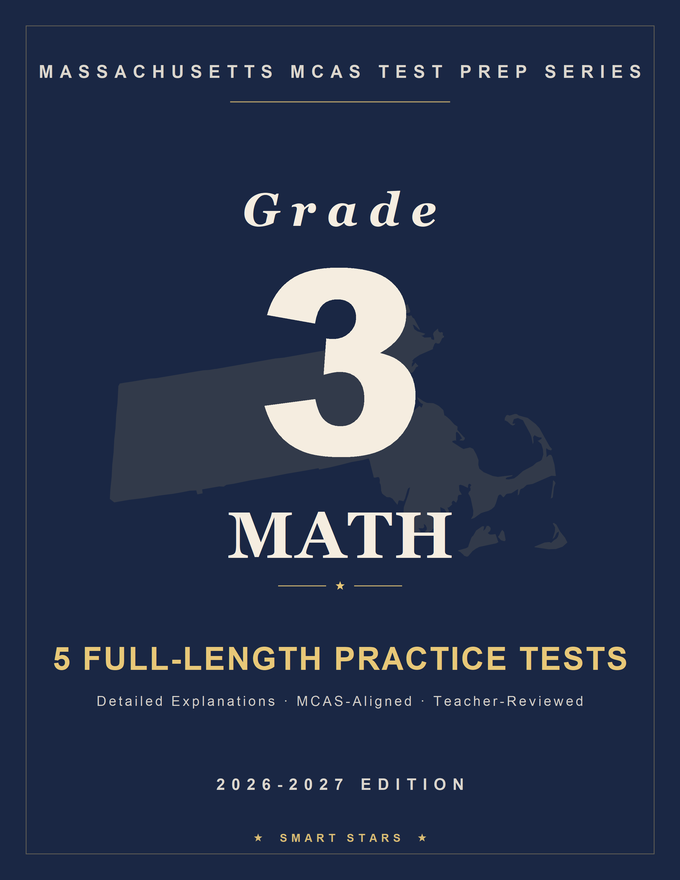
This book gives your third grader five full-length practice tests for the Massachusetts Comprehensive Assessment System (MCAS) Grade 3 Mathematics exam — 230 items in all, written and reviewed by educators and aligned line-for-line to DESE’s 2017 Massachusetts Curriculum Framework for Mathematics.
Take a look inside
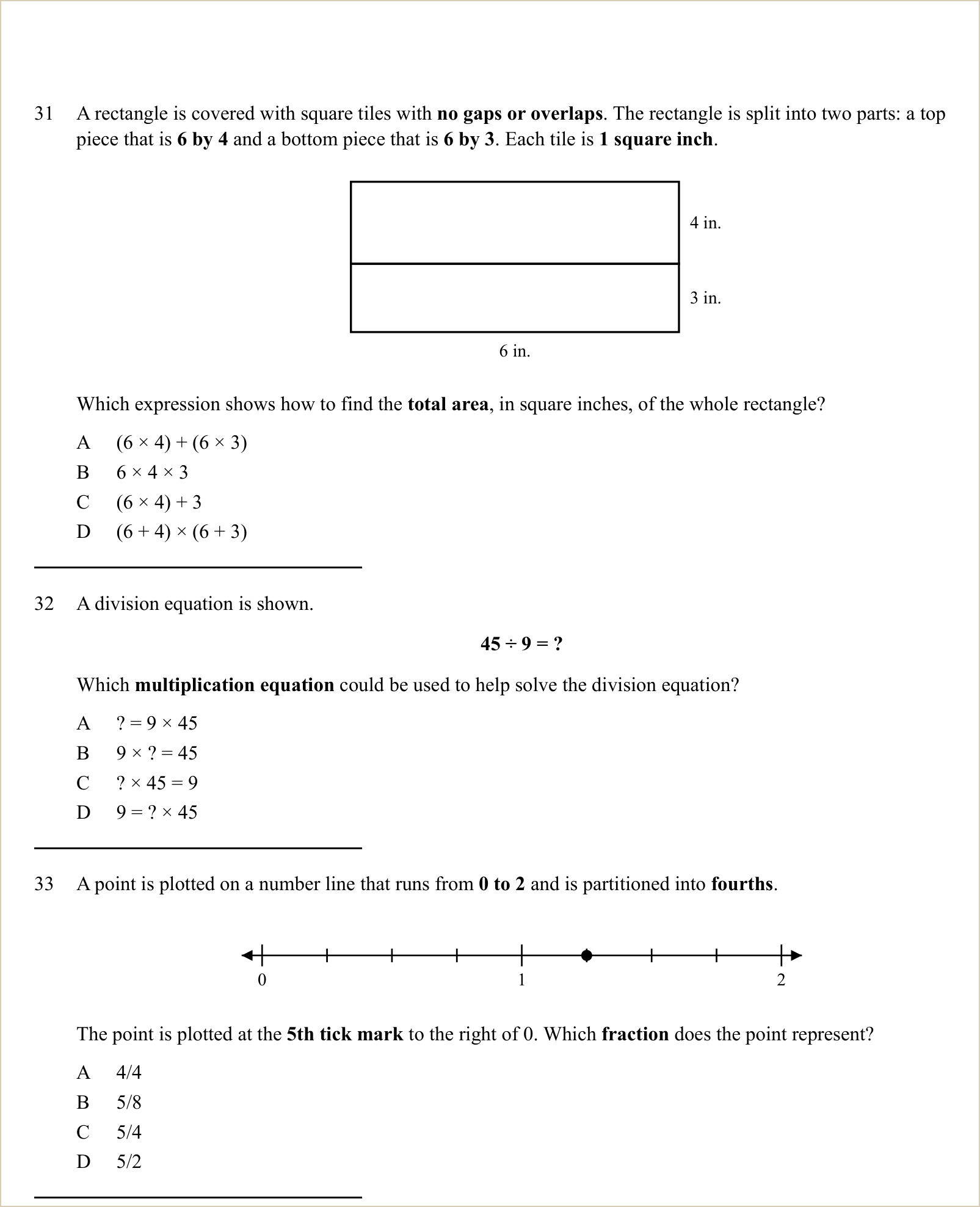
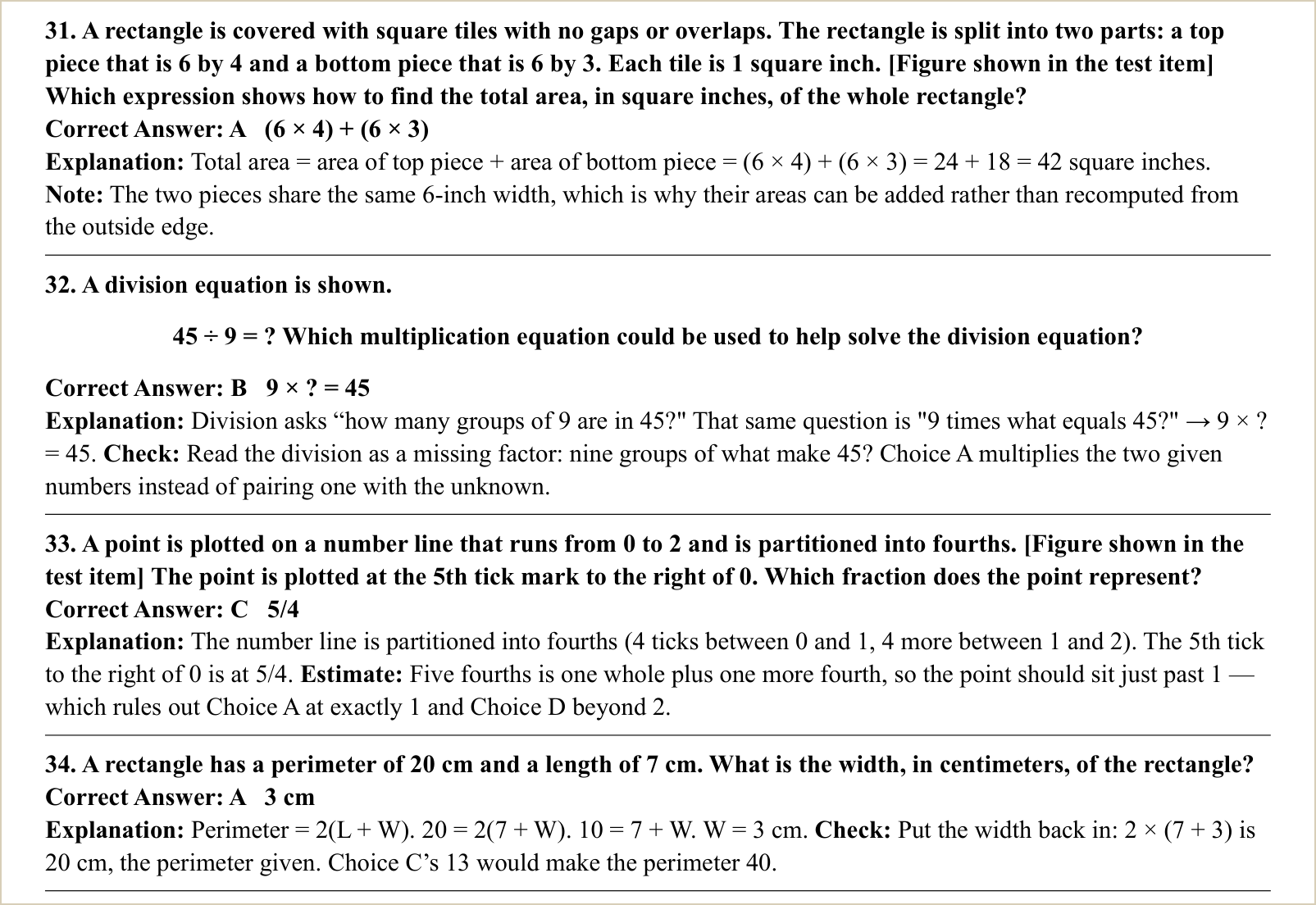
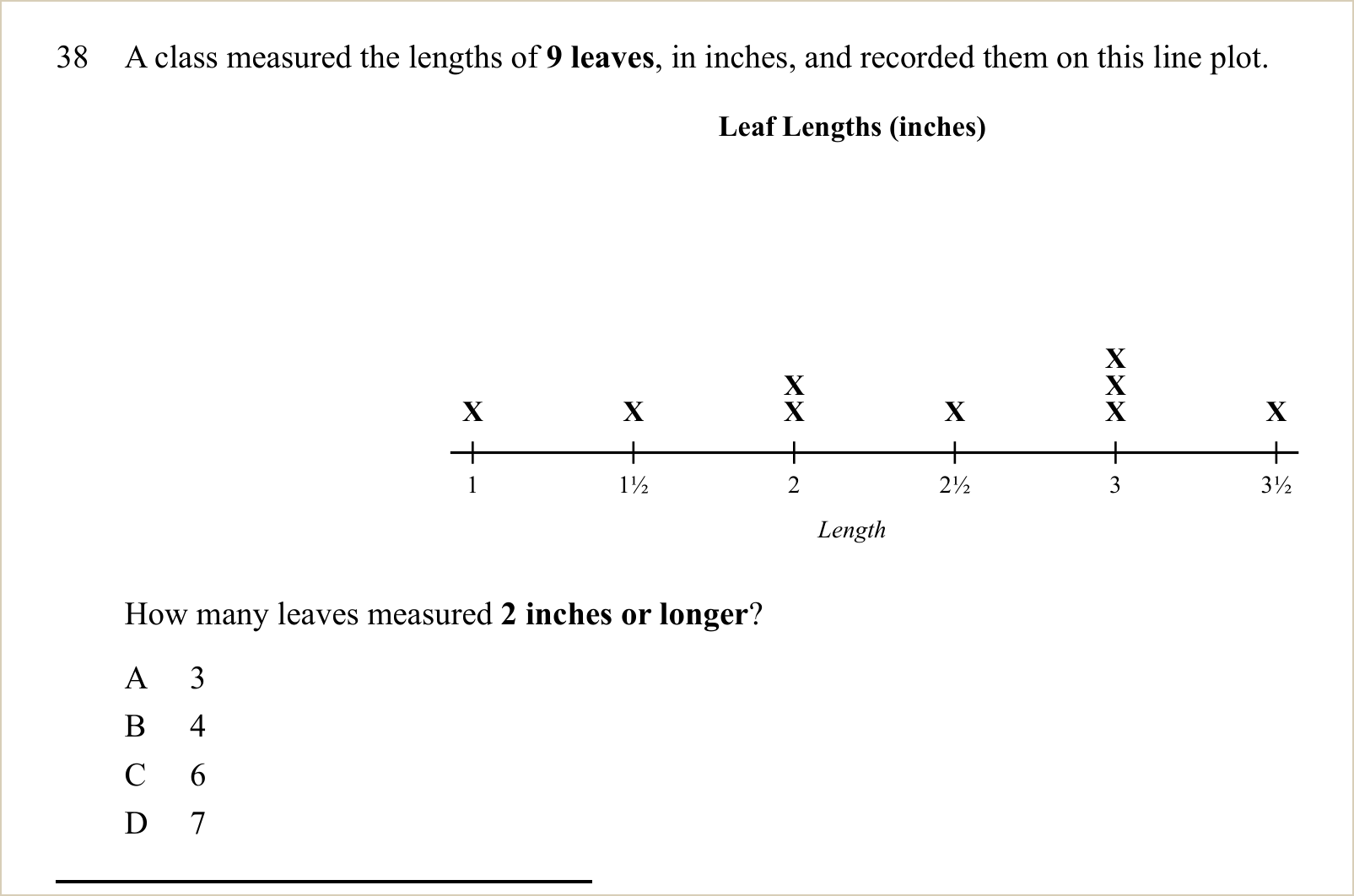
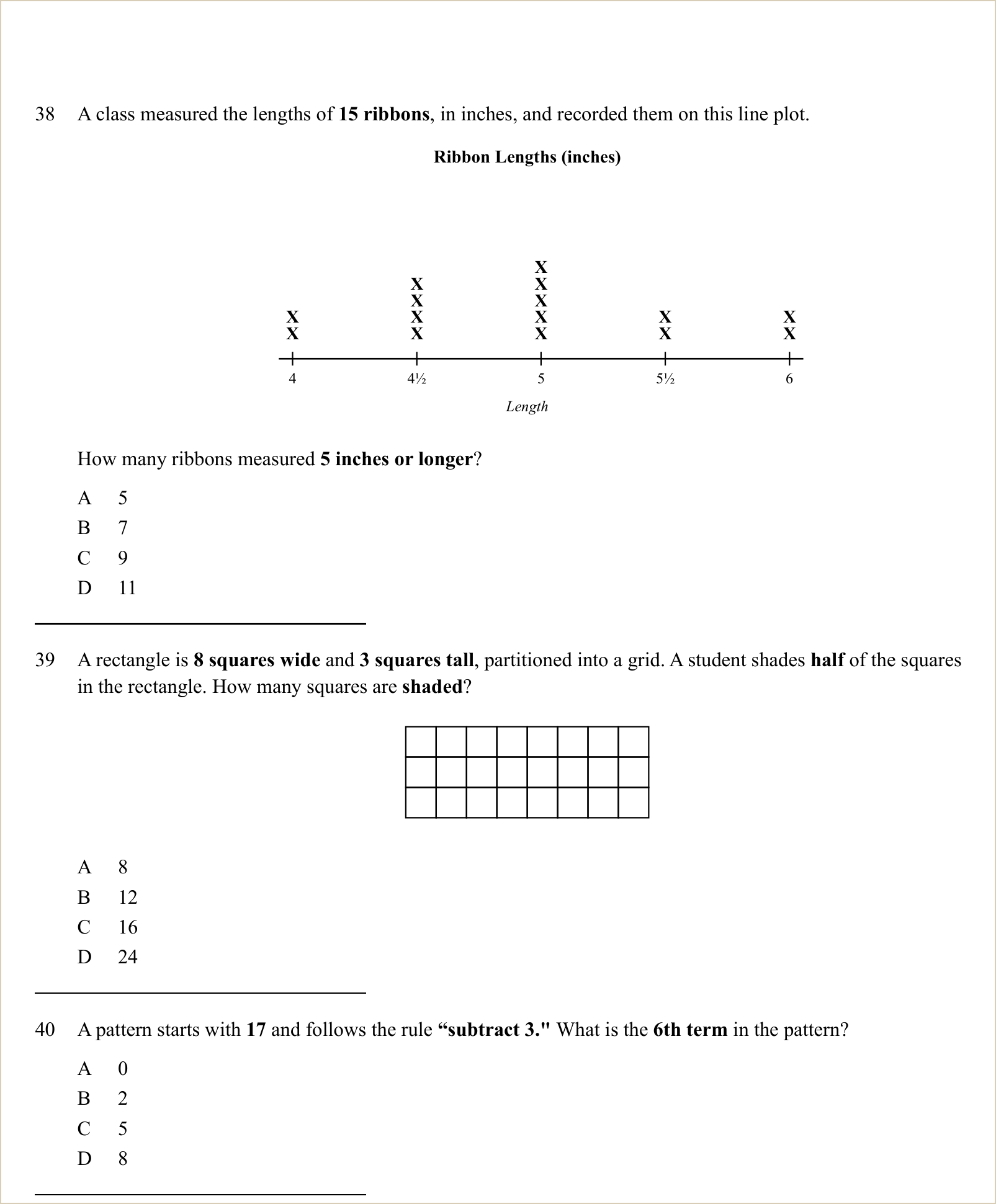
Every test in this book mirrors what your child will actually see on MCAS test day: the same 46-item operational load, the same two-session structure with a clear STOP marker between sessions, the same no-calculator rule across the entire test, and the same item formats (multiple-choice, multi-select, short-answer, and three-point constructed-response).
About the question count — and why field-test items matter: On the official MCAS Grade 3 Math, 40 items count toward your student’s score: 36 multiple-choice, multi-select, or short-answer items plus 4 three-point constructed-response items. The real test also includes 6 unscored *field-test* items that DESE uses to develop future exams. Students never know which items count and which are field-test, so on test day every question must be worked with full focus and full energy. Each practice test in this book delivers the full 46-item scored load — matching the real testing experience — so your child builds the realistic *endurance* MCAS demands.
On test day: the Grade 3 MCAS Mathematics test is untimed, and no calculator is allowed in either session.
What’s inside
- 5 complete 46-item practice tests (36 multiple-choice / multi-select / short-answer items + 4 three-point constructed-response items + 6 unmarked field-test items per test — exactly the operational MCAS form)
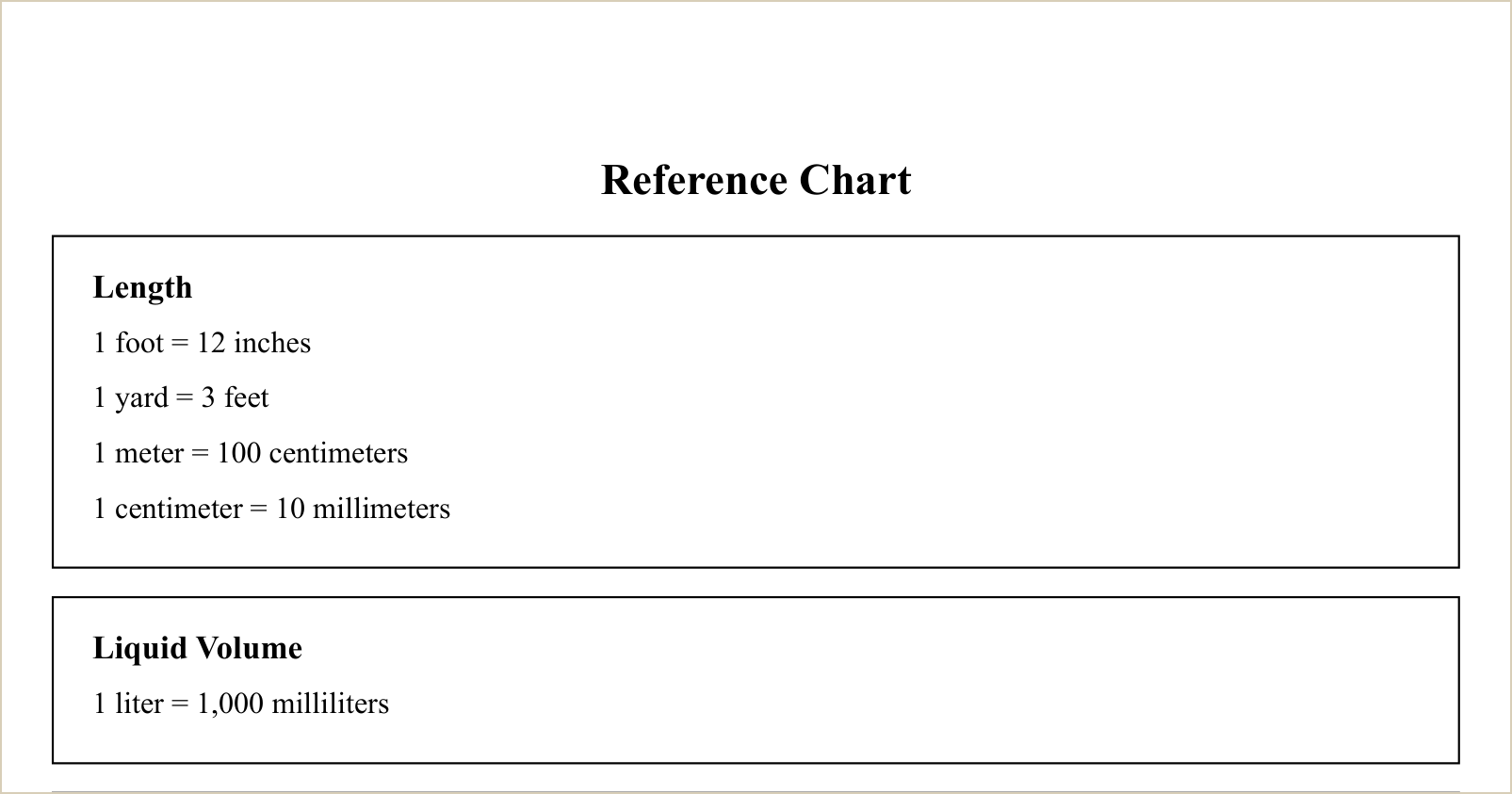
- A clearly printed Reference Chart with unit conversions students may need (length, mass, liquid volume, time, money, rectangle area and perimeter) — placed on its own page before each test so students learn to look there instead of inside the questions
- Step-by-step answer explanations for every question, teaching the *why* behind every correct answer — not just the letter
- Items, names, contexts, and slot positions varied across all 5 tests, so no two tests feel the same and no student can game the layout
- A parent letter with the required materials list (pencil, scratch paper, ruler), test-taking tips for Grade 3 MCAS Math, and a guide to pacing the five tests over several weeks
- A quick-reference answer key for the full 230-item book
Topics covered
- Multiplication and division within 100; meanings of multiplication and division
- Properties of operations (commutative, associative, distributive) as strategy
- Addition and subtraction within 1,000 with regrouping
- Place value through 1,000; rounding to the nearest 10 and nearest 100
- Fractions with denominators 2, 3, 4, 6, and 8 — modeling, comparing, equivalence, and placement on a number line
- Telling time to the nearest minute and elapsed-time problems (within an hour and crossing the hour)
- Measuring and estimating liquid volumes and masses (grams, kilograms, liters, milliliters)
- One-step and two-step word problems with all four operations
- Area of rectangles by tiling and by multiplication; relating area to multiplication and addition
- Perimeter of polygons, including finding an unknown side length
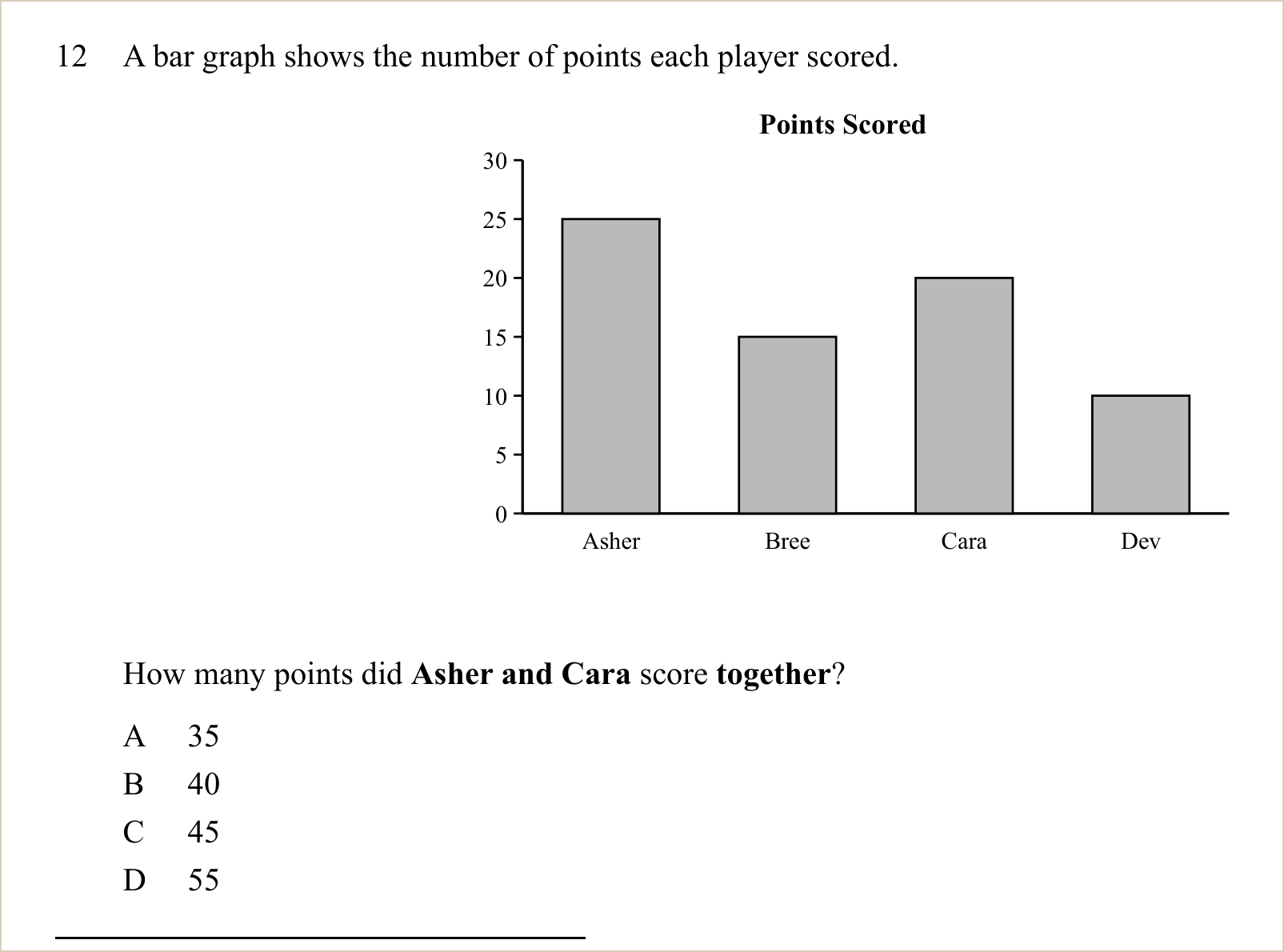
- Picture graphs, bar graphs (scaled), and line plots with halves and quarters
- Classifying quadrilaterals (square, rectangle, rhombus, parallelogram, trapezoid); partitioning shapes into equal parts as a fraction of the whole
- Identifying and extending arithmetic patterns
Why parents and teachers choose Smart Stars
- Written and reviewed by educators with deep classroom and university teaching experience — not generic test-prep authors
- Every question mirrors what students actually see on the MCAS: We study DESE’s released items, scoring guidelines, and curriculum framework for every state we publish for — so there are no surprises on test day
- The deepest answer explanations in third-grade test prep: Every explanation teaches reasoning, not just the letter — because students who understand *why* an answer is correct keep that skill long after the test
- Item types, contexts, and slot positions varied across the five tests, so every test feels fresh — exactly like the real exam