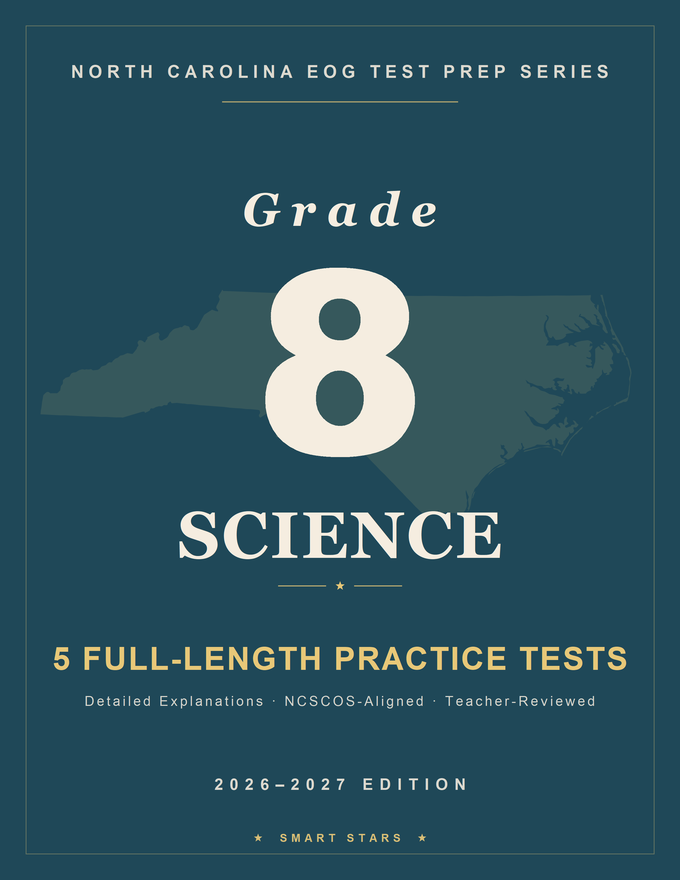
Built to feel like test day: Written to teach the why behind every answer.
This book gives your eighth grader five full-length practice tests for the North Carolina End-of-Grade (EOG) Grade 8 Science exam — 220 questions in all, written and reviewed by educators and aligned objective-by-objective to the North Carolina Standard Course of Study for Science.
Take a look inside
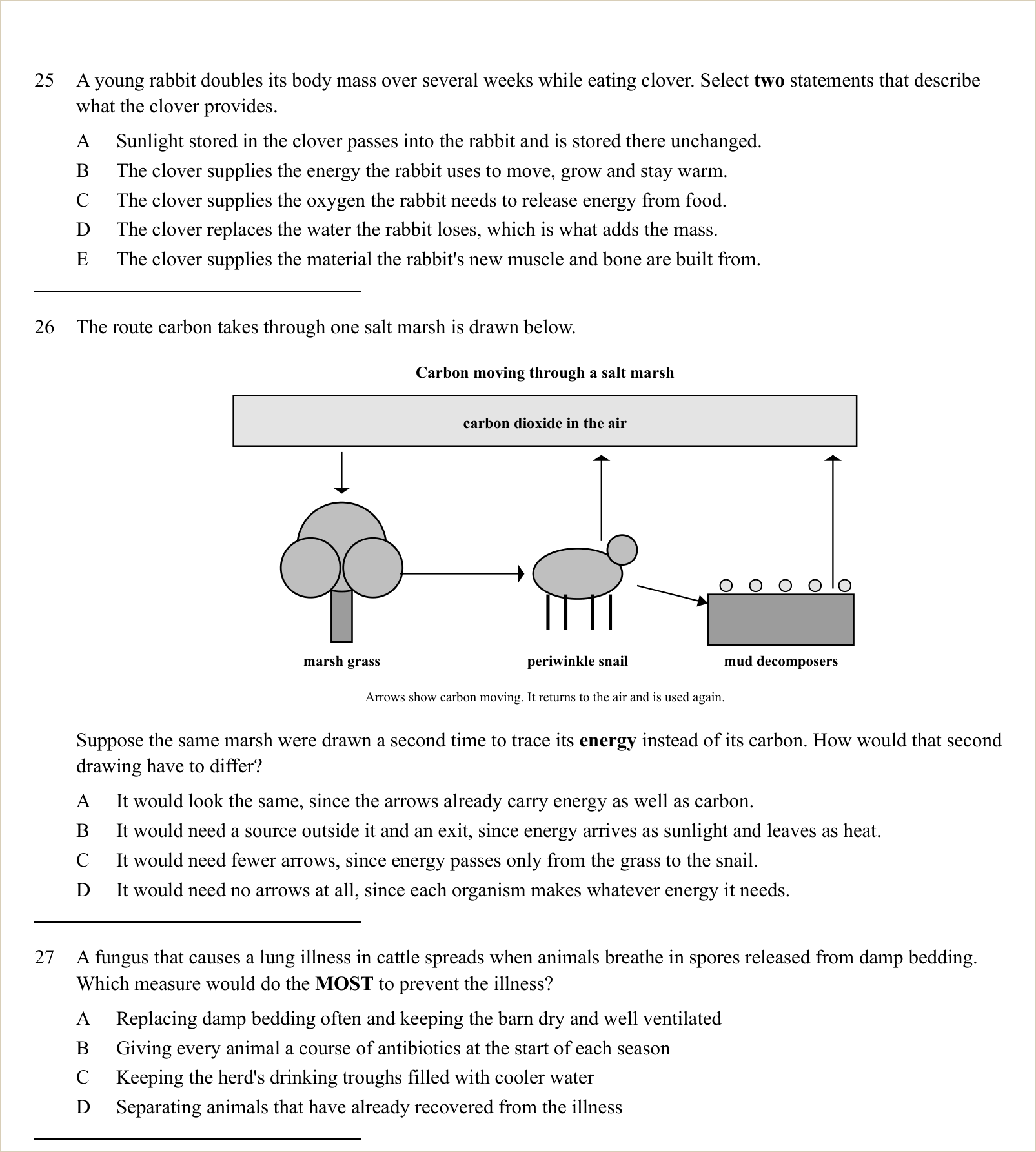
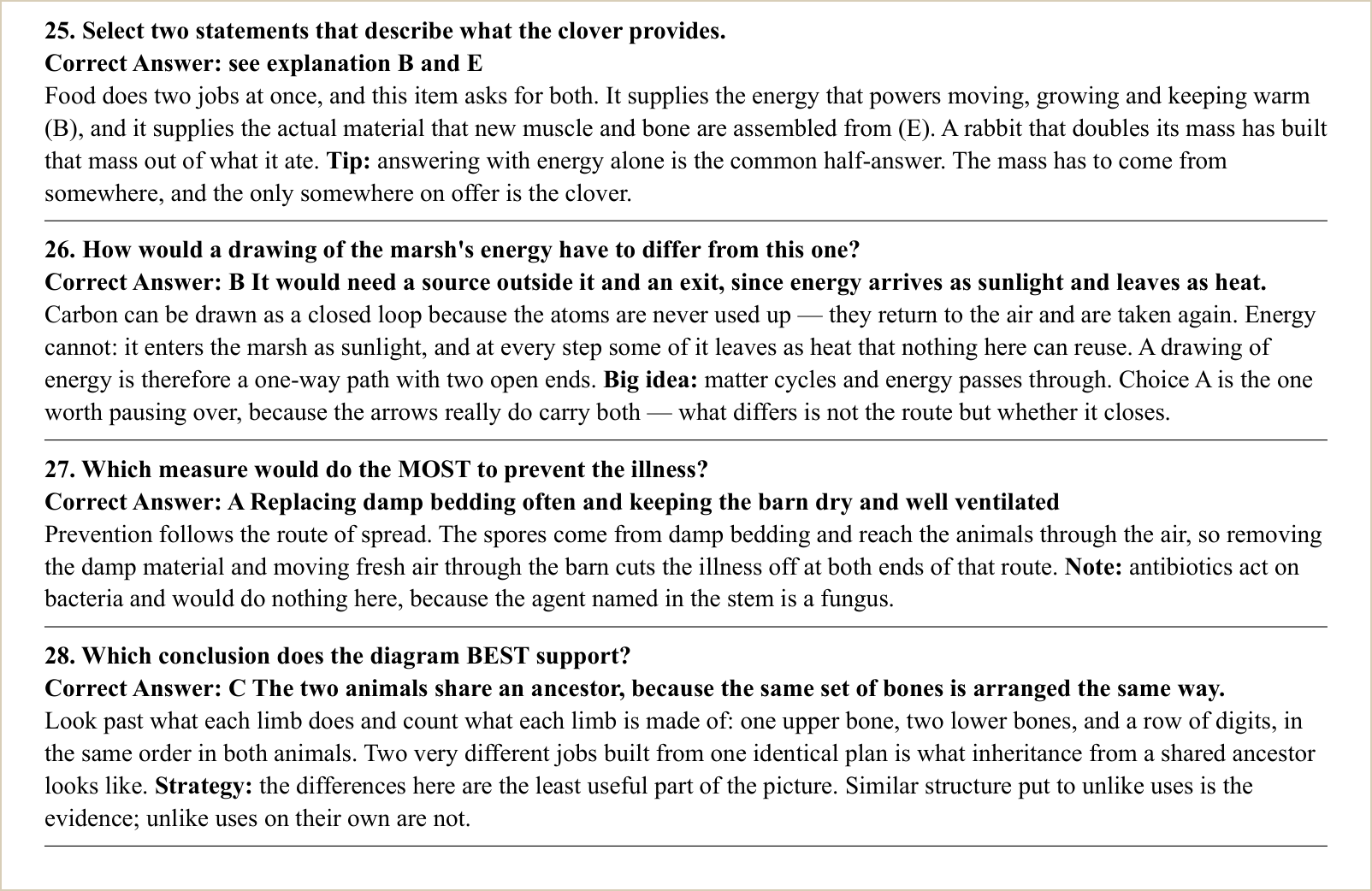
Every test mirrors what your child will see on EOG test day: the 44-question scored load, a single sitting on one school day, the two five-question item sets built on a shared scenario, and the NCTest item formats — multiple-choice, multiple-select, targeted-drop, and drag-and-drop.
About the question count — and why field-test items matter: Only 44 questions count toward a student’s score, but the real test shows 52. The extra eight are unscored field-test questions NCDPI uses to develop future exams, and they look exactly like the rest — no student can tell which is which. Every question in this book is a scored-style question with a full explanation, so no practice sitting is spent on questions that would not have counted.
What’s inside
- 5 full-length practice tests, 44 questions each — 220 questions total
- Earth and Space Science weighted heaviest, exactly as the real blueprint requires
- All 23 Grade 8 science objectives covered, every one of them more than once
- Two shared-scenario item sets per test, matching the real form’s structure
- Multiple-choice, multiple-select, targeted-drop and drag-and-drop items in print-friendly form
- A Grade 8 Study Reference sheet, including a full periodic table
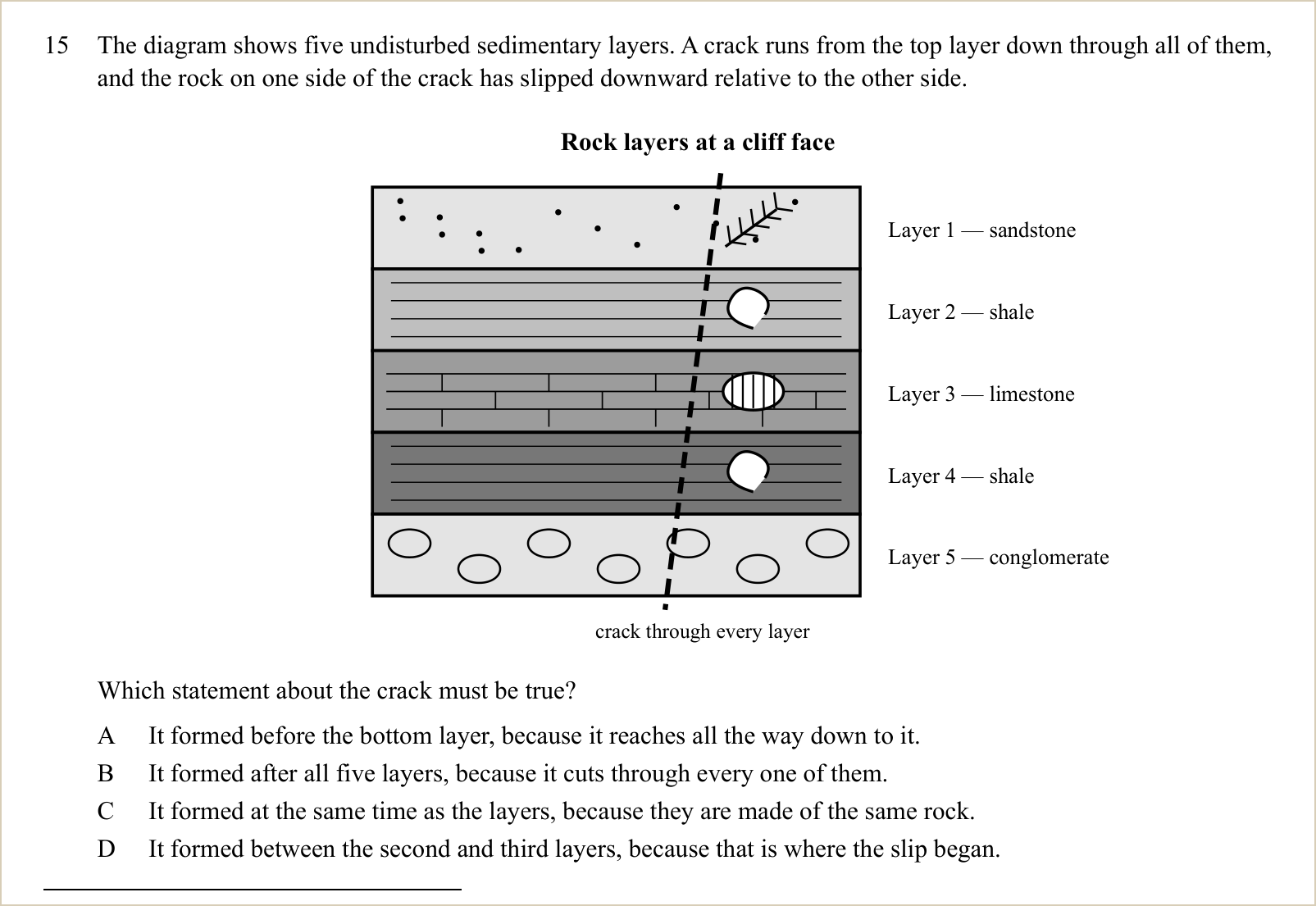
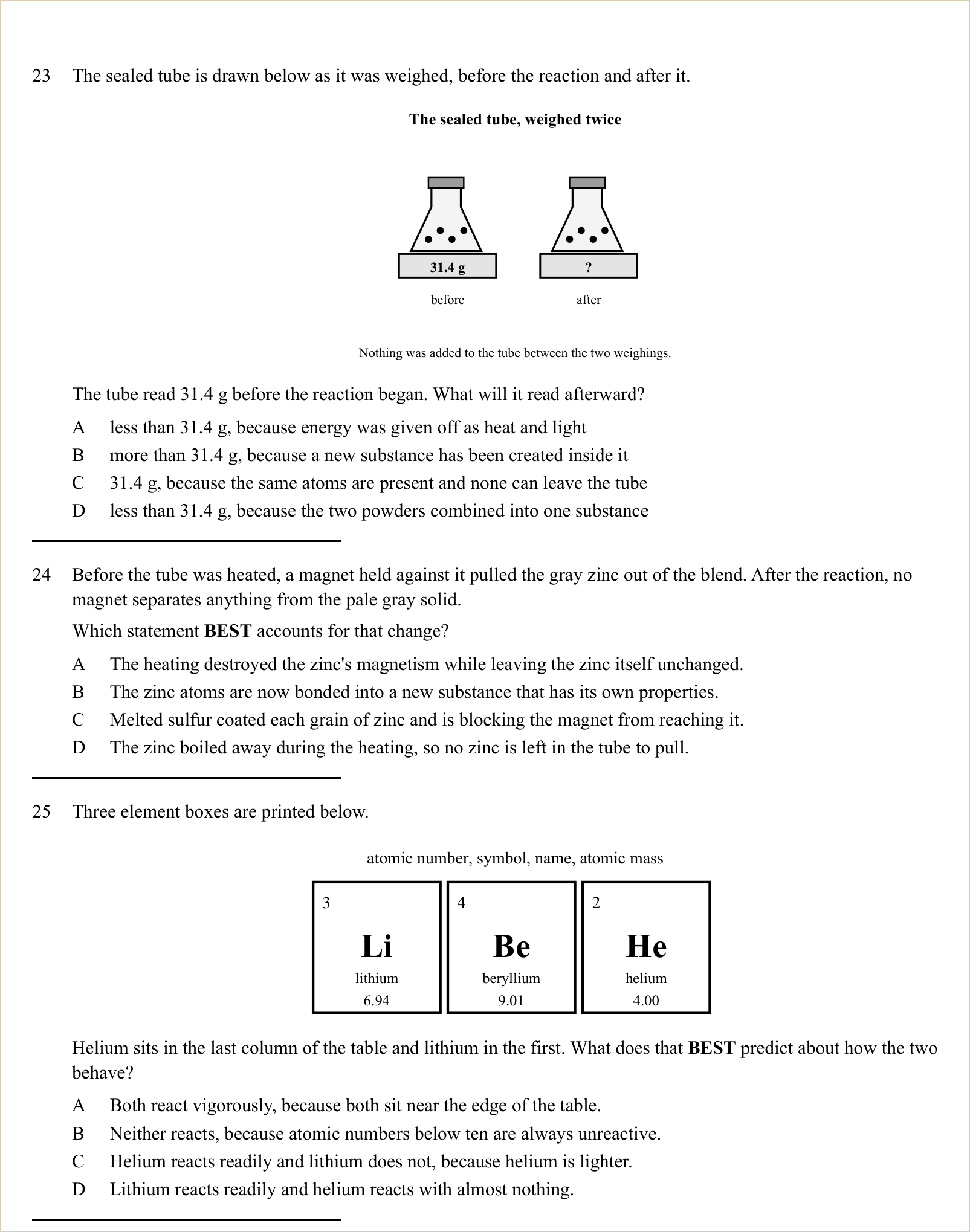
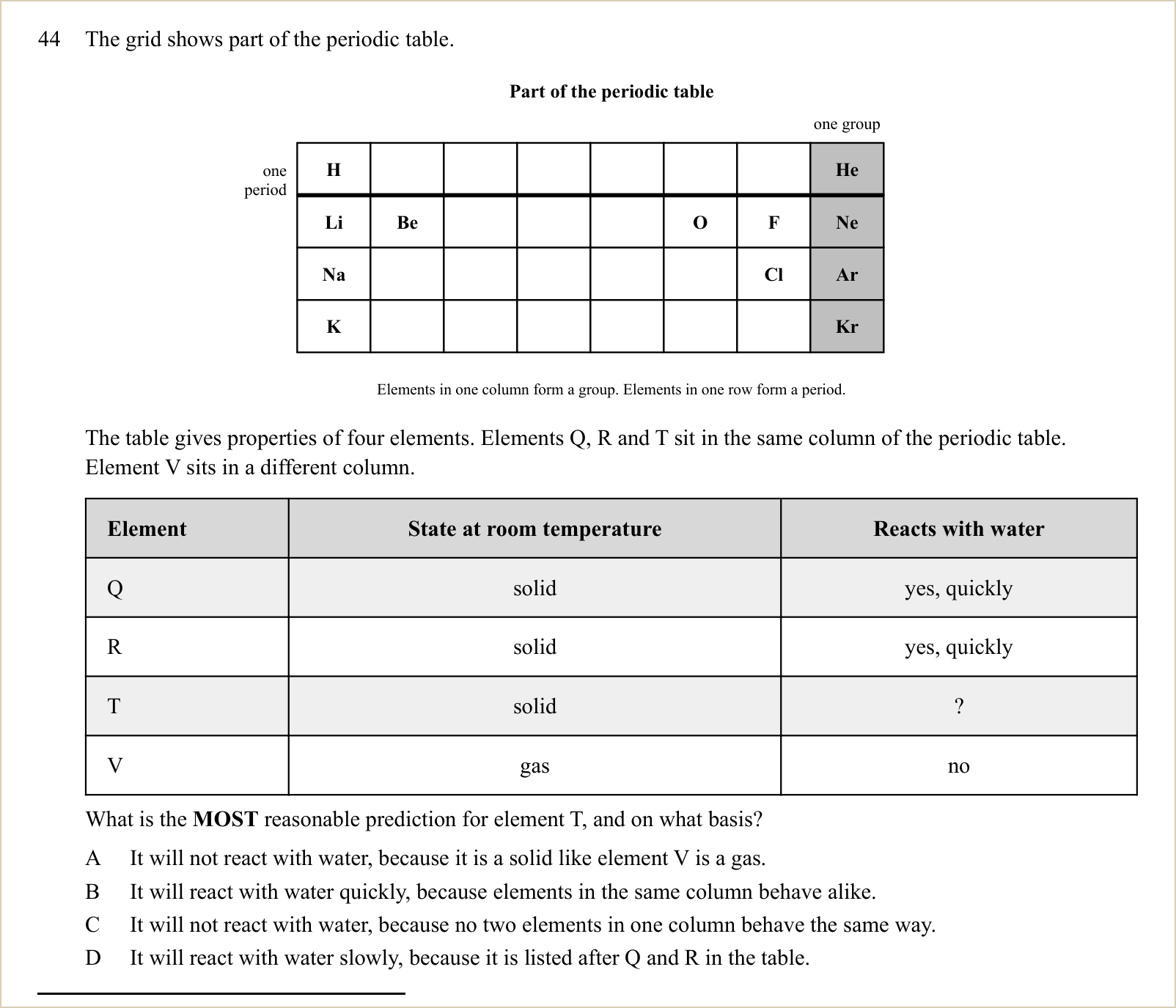
- 161 original diagrams, graphs, maps and models — drawn for this book, not recycled
- A complete answer explanation for every one of the 220 questions
- A Quick Answer Key for fast scoring
- A letter to families explaining the test, its four achievement levels, and how to use the book
Topics covered
- Elements, compounds and mixtures, and how atoms are arranged
- Atomic structure — protons, neutrons and electrons
- The periodic table and how position predicts reactivity
- Physical and chemical changes, and conservation of mass in sealed and open systems
- Cells, organisms and the levels of biological organization
- Ecosystems, food webs, energy flow and the carbon cycle
- Biotechnology, and how populations change over time
- Natural selection, variation and evidence for common ancestry
- Microorganisms, disease, epidemics and pandemics
- Earth’s structure, rock layers, fossils and relative dating
- The hydrosphere — watersheds, groundwater, estuaries and ocean currents
- Water quality indicators and what makes water safe to drink
- Renewable and nonrenewable energy resources and their trade-offs
- Reading and interpreting graphs, tables, maps and scientific models
Why parents and teachers choose Smart Stars
- Written and reviewed by experienced educators — not generic test-prep authors
- Every question mirrors what students actually see on the EOG — we study NCDPI’s released forms and test specifications
- The deepest answer explanations in eighth-grade test prep — explanations teach reasoning, not just the letter
- Field-test items built in (unmarked) for true test-day endurance from the first sitting