About this book
Give your fifth grader the confidence to succeed on the North Carolina End-of-Grade (EOG) Science test.
This book contains five full-length practice tests — 220 questions total — aligned to the 2023 North Carolina Standard Course of Study for Science and designed to match the format, difficulty, and content of the real Grade 5 EOG Science test.
Take a look inside
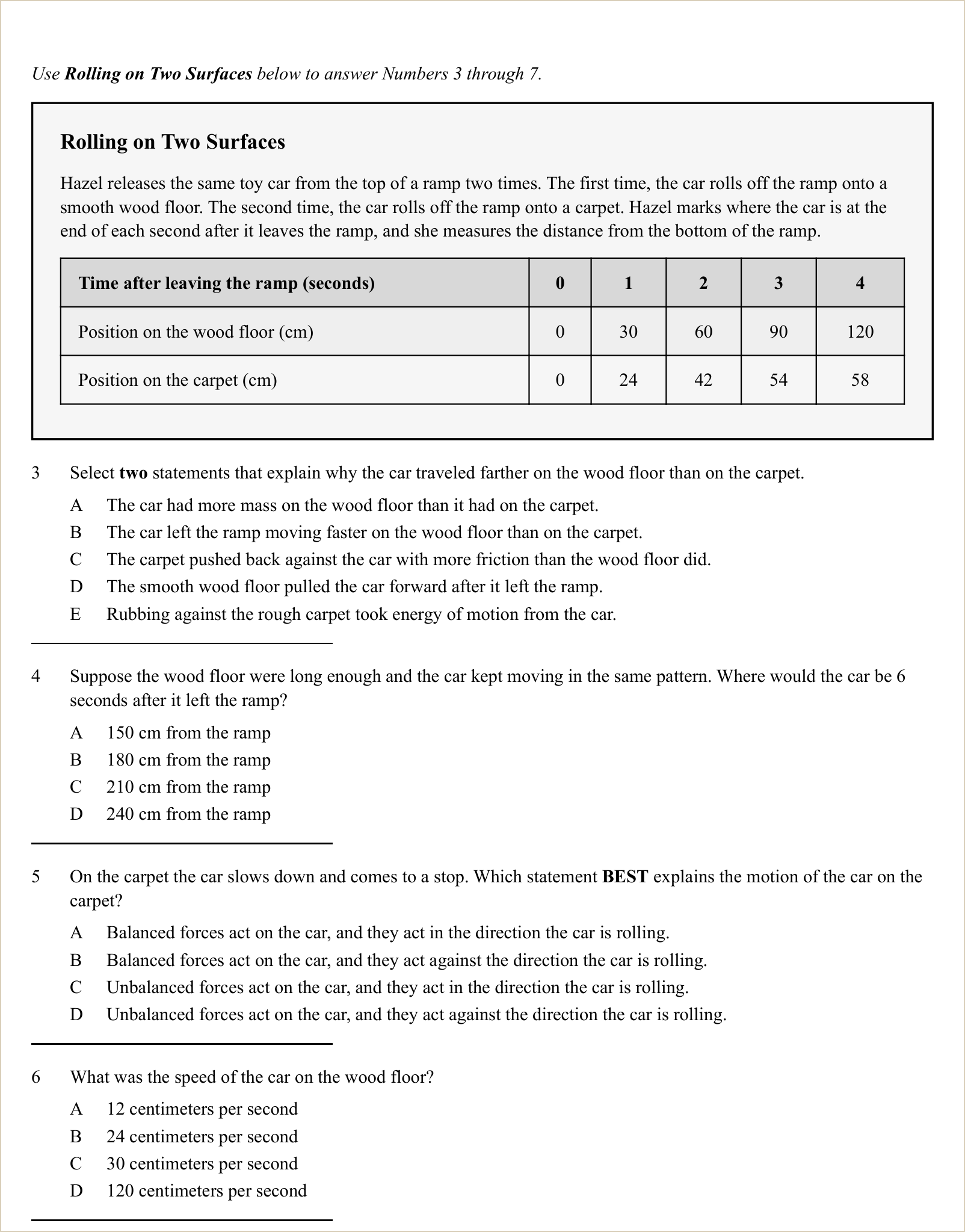
- Length: a real Grade 5 form actually shows a student 52 questions, but only 44 of them count.
- Field-test items: the other eight are field-test questions being tried out for use on future tests — they look exactly like the rest and there is no way to tell them apart.
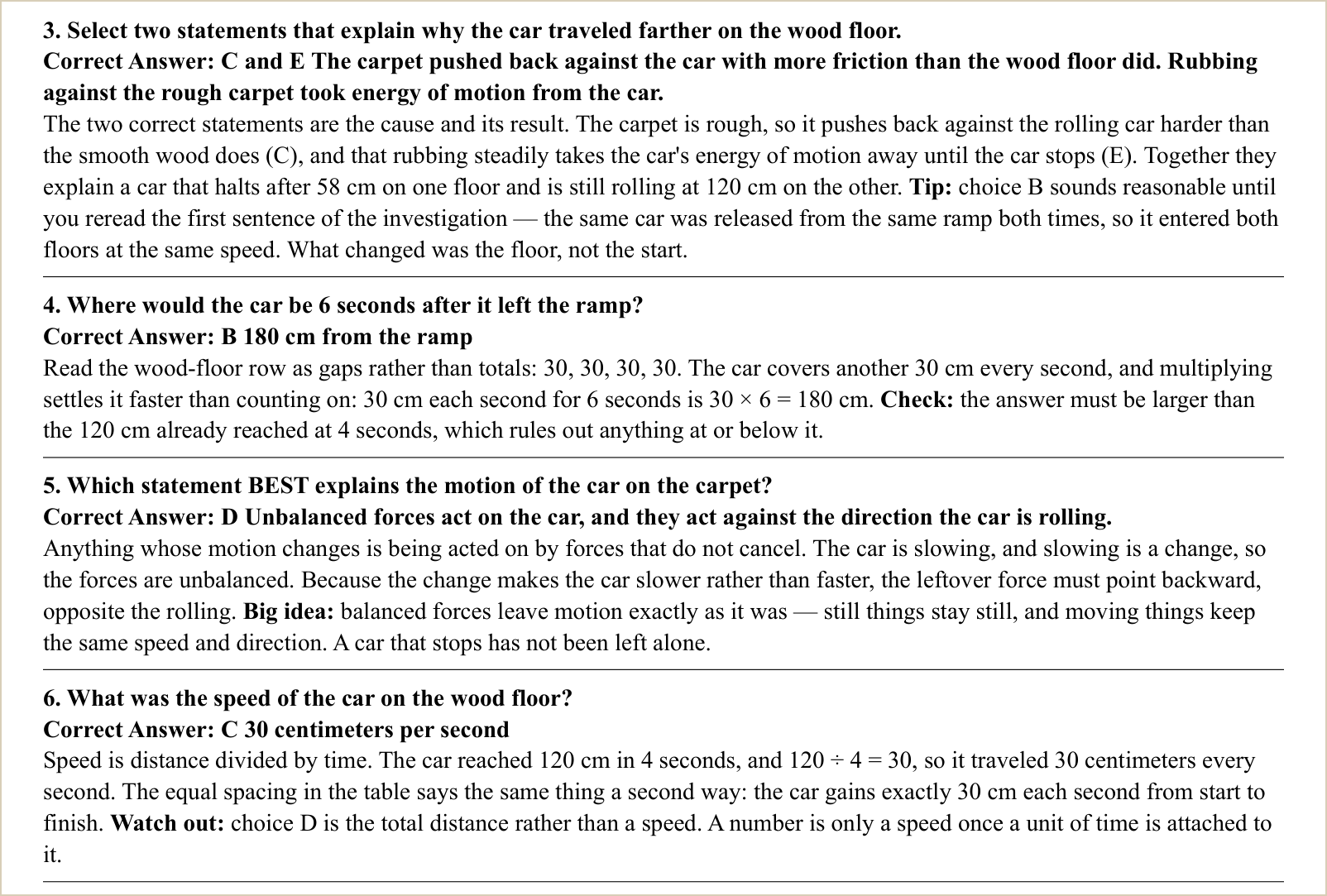
- Each practice test here: the same 44 scored-style questions in the same one-sitting length, and every one of the 44 carries a full explanation.
So no practice time is spent on questions that would not have counted.
On test day: the Grade 5 EOG Science test is given in one sitting during the last ten instructional days of the year, and most students finish in about 120 minutes, with 180 the maximum allowed.
What’s inside
- 5 complete 44-question practice tests (220 questions total)
- Built to North Carolina’s own blueprint, where the three reporting categories are deliberately not equal — Life Science is the largest by a wide margin, and this book matches that weighting question for question
- 34 stand-alone questions plus exactly two five-question sets per test, each set opening with a single scenario, table, diagram or map that all five of its questions draw on — the same shape as a real form
- Every question worth one point, and on a select-three or fill-the-blank question every part must be right to earn it — scored the way North Carolina scores it
- Detailed answer explanations for every question — not just the correct letter, but step-by-step reasoning that builds real understanding
- Item types, names, and contexts varied across all 5 tests, so students never see the same problem twice in the same slot
- Reporting categories grouped exactly as on the official test: Physical Science, Life Science, and Earth and Space Science
- A parent letter with test-taking tips, plus a Grade 5 Science Study Reference gathering all sixteen Grade 5 objectives into study cards — North Carolina does not give students a reference sheet during the grade 5 science test, and the book says so plainly rather than implying one will be there
- A quick-reference answer key for all five tests for fast scoring
Topics covered
- Whether the weight of a set of objects changes after they are mixed, react, or are separated again
- Mixtures versus new substances, and the evidence that a new substance has formed
- Heating and cooling changing a material’s state, what happens to the particles, and choosing a material to suit a job
- Gravity, friction, unbalanced forces, and what a greater mass does to the same push
- Working out position, direction, and speed from measurements, and predicting where an object will be next
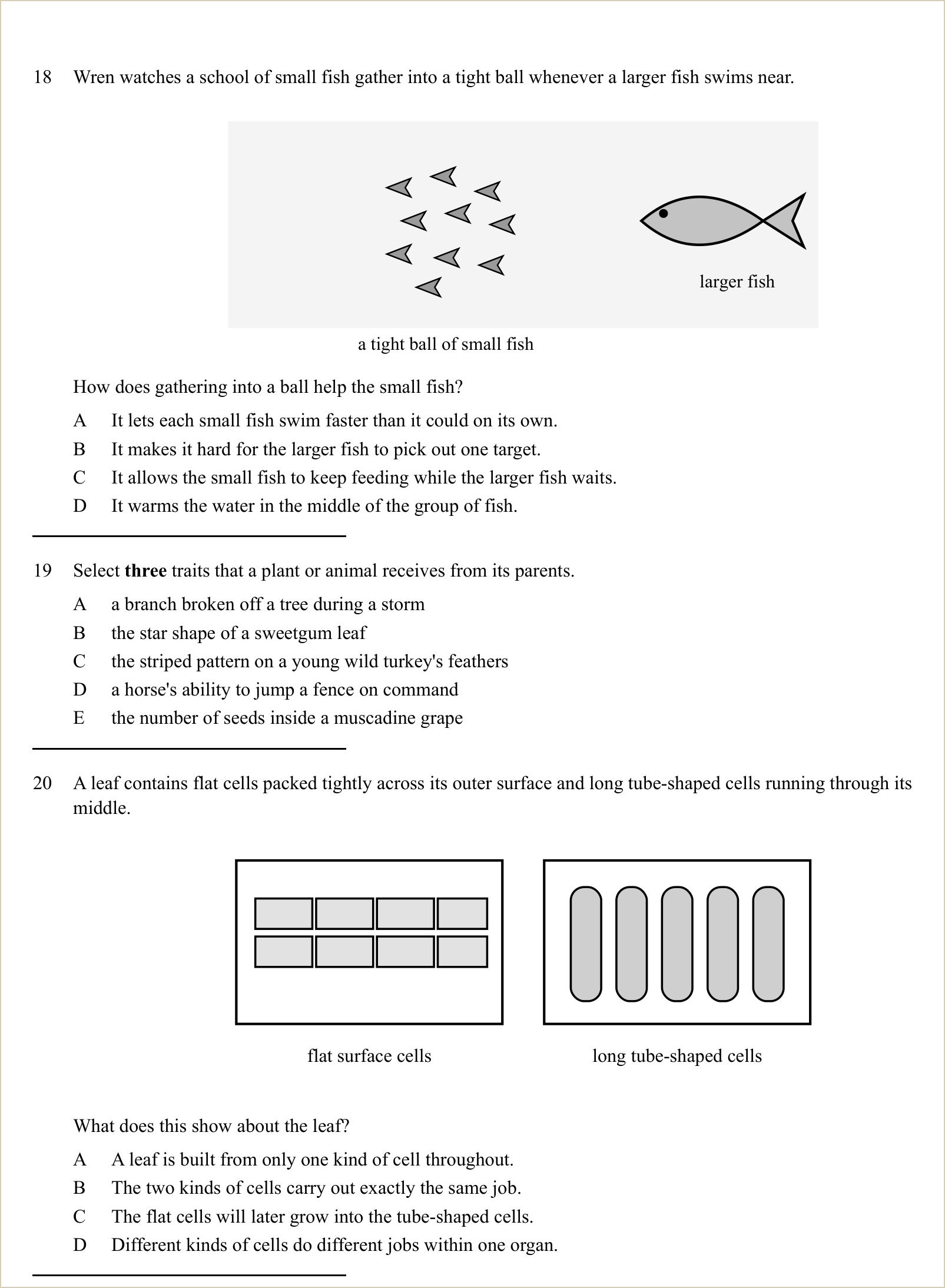
- How a body is organized — cells into tissues, tissues into organs, organs into systems
- Body systems working together, and what happens when one of them cannot act
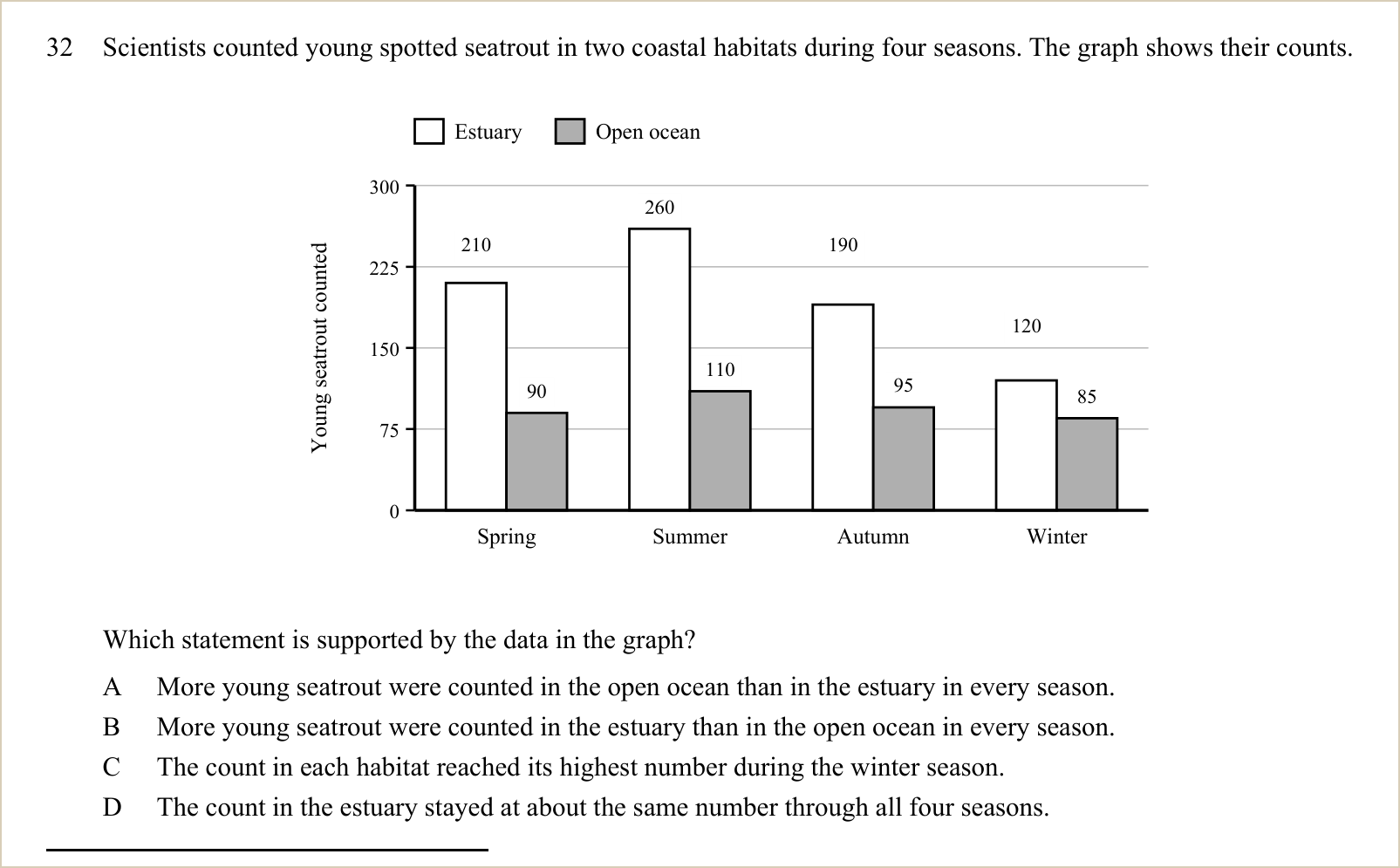
- North Carolina’s ecosystems — estuaries and salt marshes, the ocean, lakes and ponds, rivers and streams, forests and grasslands — and the conditions each one provides
- Producers, consumers, and decomposers, and how matter moves through a food web
- What happens to an ecosystem when a population is removed or a habitat is disrupted
- Instinct and learned behavior, and group behavior as a survival advantage
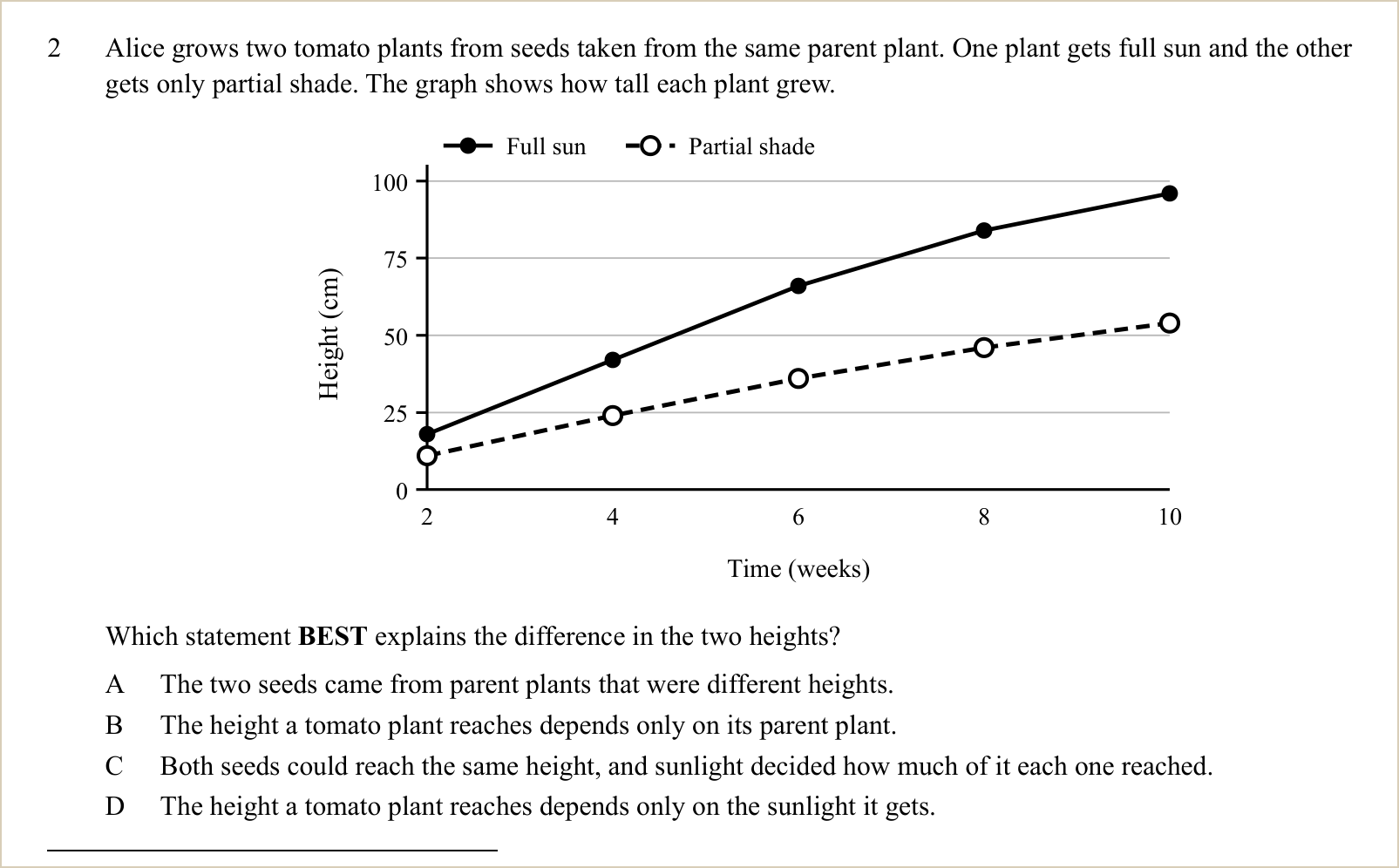
- Inherited traits, acquired traits, and traits shaped by both
- Reading weather measurements for daily and seasonal patterns
- Forecasting current and coming weather from data, including hurricanes and severe weather
- The ocean’s influence on weather and climate here in North Carolina
- The water cycle — evaporation, transpiration, condensation, and precipitation — and where Earth’s water is stored
Why parents and teachers choose Smart Stars
- Written by experienced educators who study North Carolina’s own EOG Science test specifications, assessment briefs, and released forms
- Every question mirrors what students will see on test day — no surprises in format, content, or rigor
- Explanations teach the “why,” not just the “what,” so students learn from every mistake
- Item types and contexts varied across the five tests — just like a real exam, every question feels fresh
- Built to North Carolina’s actual weighting, so study time goes where the test puts it: a student who divides revision into equal thirds has under-prepared for nearly half the test