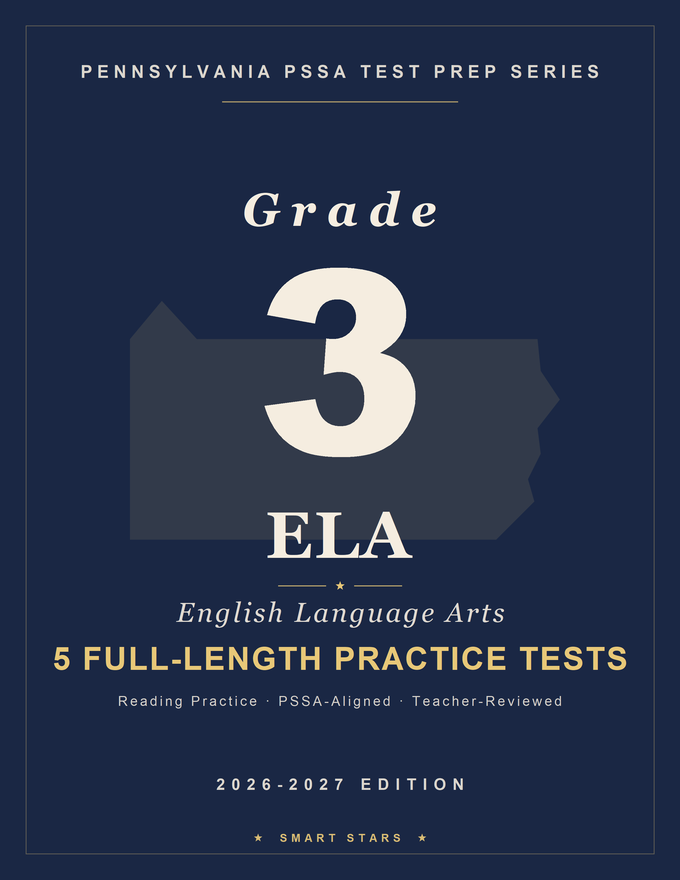
Give your third grader the confidence to succeed on the Pennsylvania PSSA Grade 3 English Language Arts test.
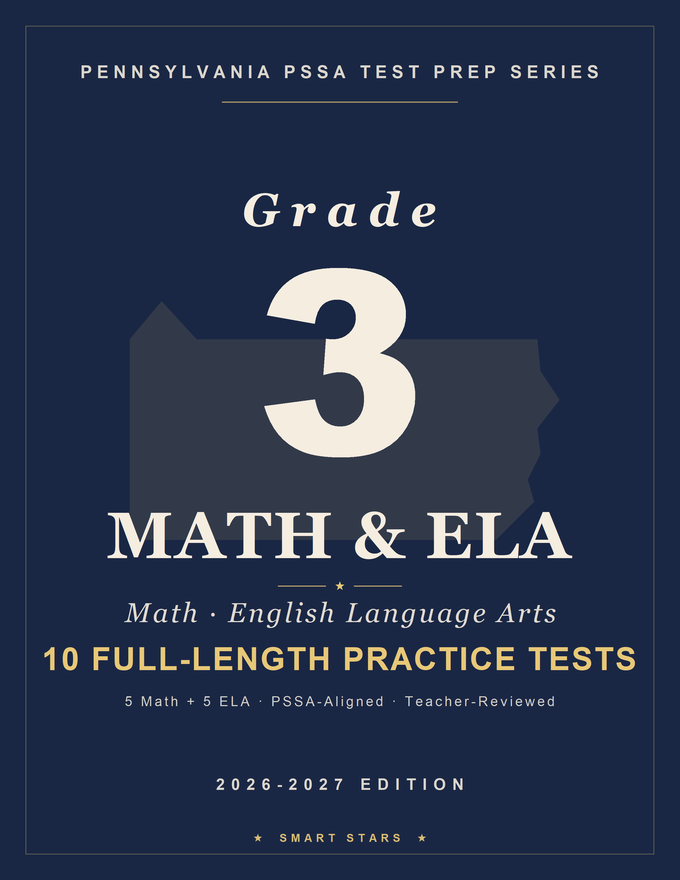
This Smart Stars practice book provides five full-length, standards-aligned practice tests that mirror the length, item mix, and question types of the real PSSA spring assessment in English Language Arts.
Take a look inside
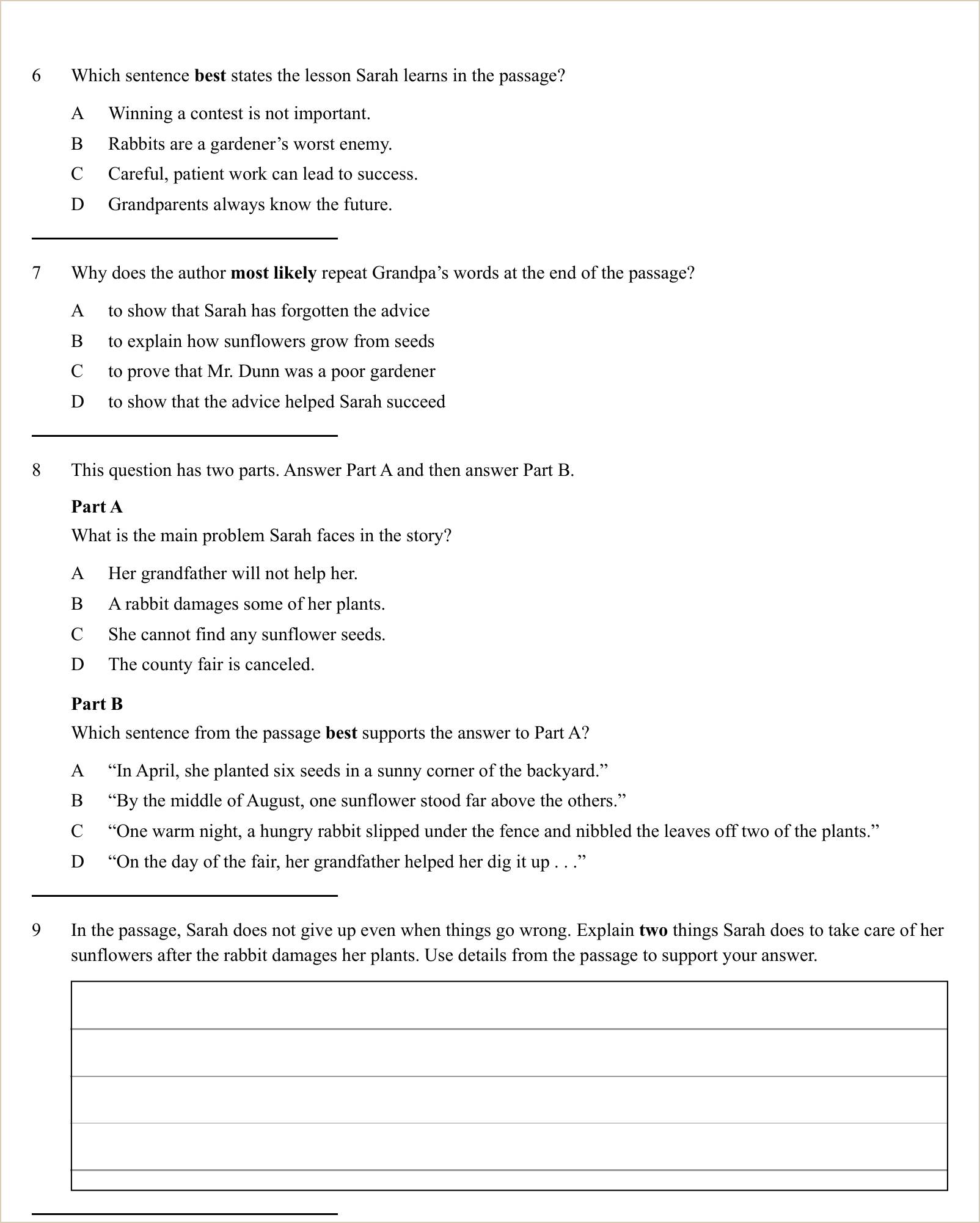
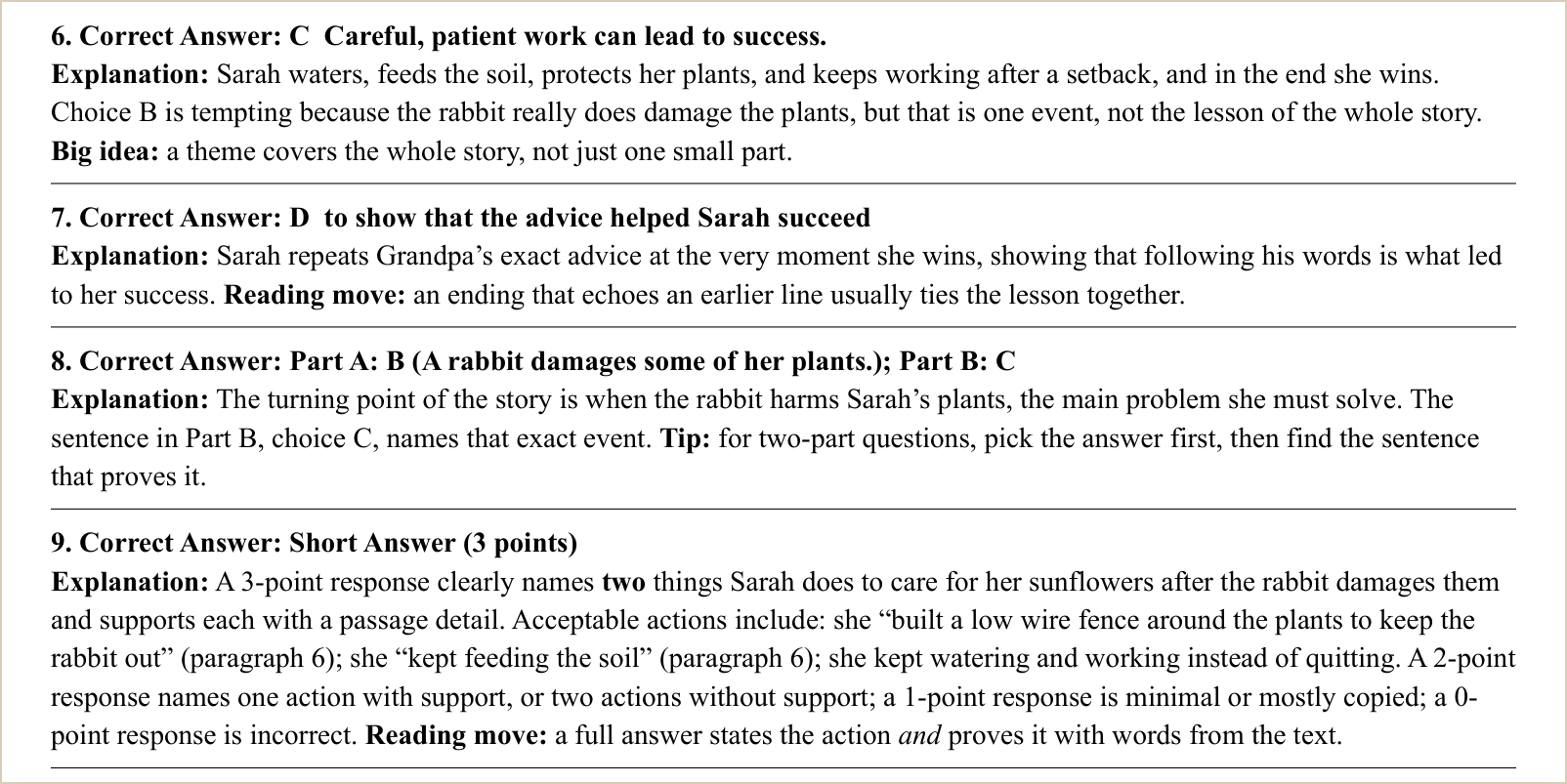
Every passage and question was written by experienced educators, reviewed for accuracy, and built around the Pennsylvania Core Standards and the Grade 3 Assessment Anchors and Eligible Content (the E03 codes) — Pennsylvania’s own standards — so the reading demands and skill emphasis match what Pennsylvania students actually see.
The PSSA — the Pennsylvania System of School Assessment — is the test the Pennsylvania Department of Education gives to every public-school student in Grades 3-8.
- Delivery: delivered by Data Recognition Corporation (DRC), untimed, online in most schools and on paper in some.
- Format: the Grade 3 ELA test is built on 45 core points across three sections that mix reading and language questions.
- Question types: single-answer multiple choice with two-part evidence-based questions and text-dependent short-answer items scored on a 0-3 rubric.
- Written response: Grade 3 is the one grade with no Text-Dependent Analysis essay — the TDA begins in Grade 4 — so this book puts the emphasis exactly where the real Grade 3 test does.
- Each practice test here: 50 questions in three sections, 250 questions across the book, to build true test-day endurance.
What’s inside
- Five full-length practice tests, with detailed Answers and Explanations after every test
- Twenty-five original reading passages — fifteen literary and ten informational — every one written for this book, with no passage, topic, setting, or character name repeated anywhere in the five tests
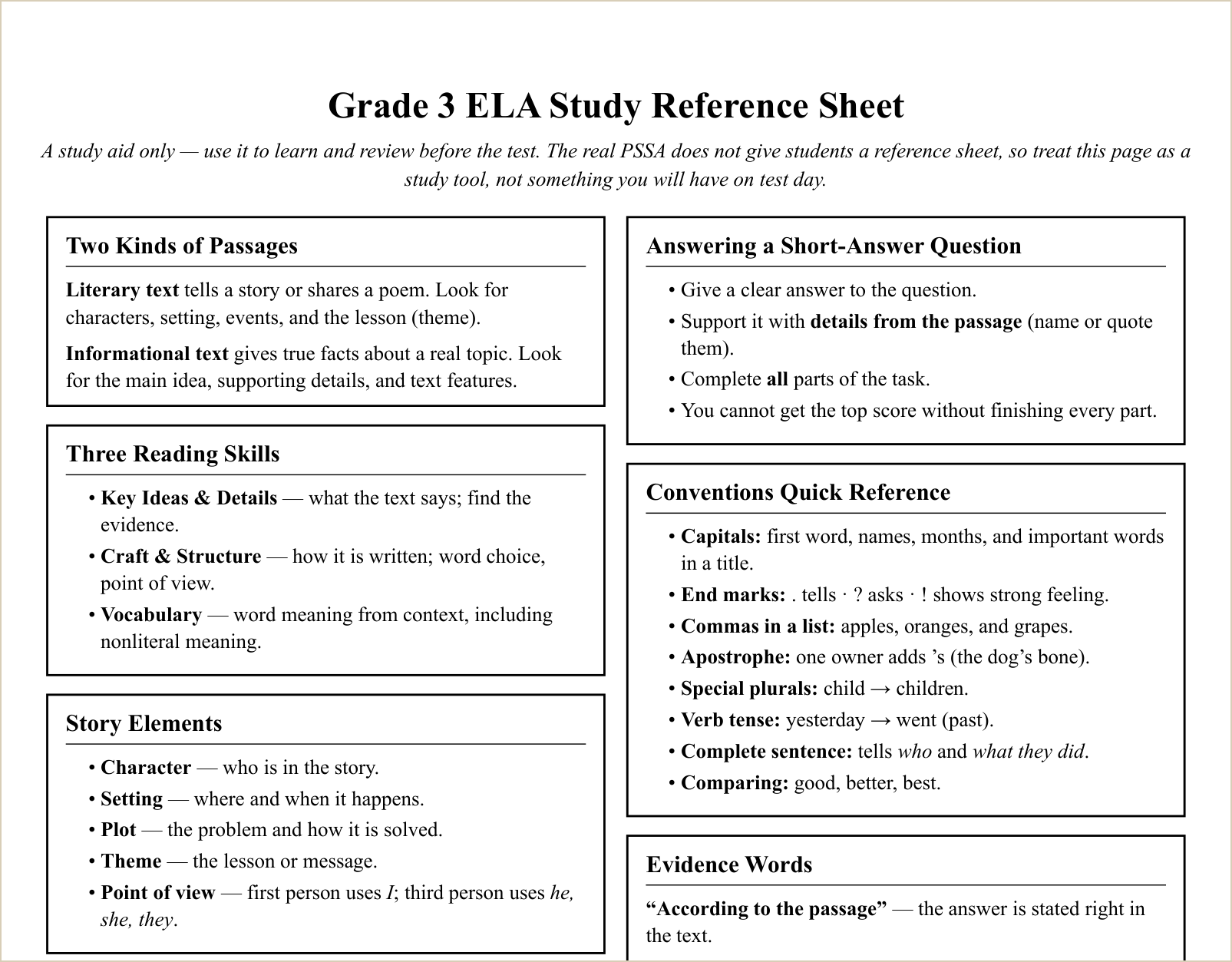
- Coverage of every Grade 3 ELA area Pennsylvania reports — Literature Text, Informational Text, and Conventions of Standard English — in the official proportions, with the Key Ideas and Details, Craft and Structure, and Vocabulary skills reported alongside them
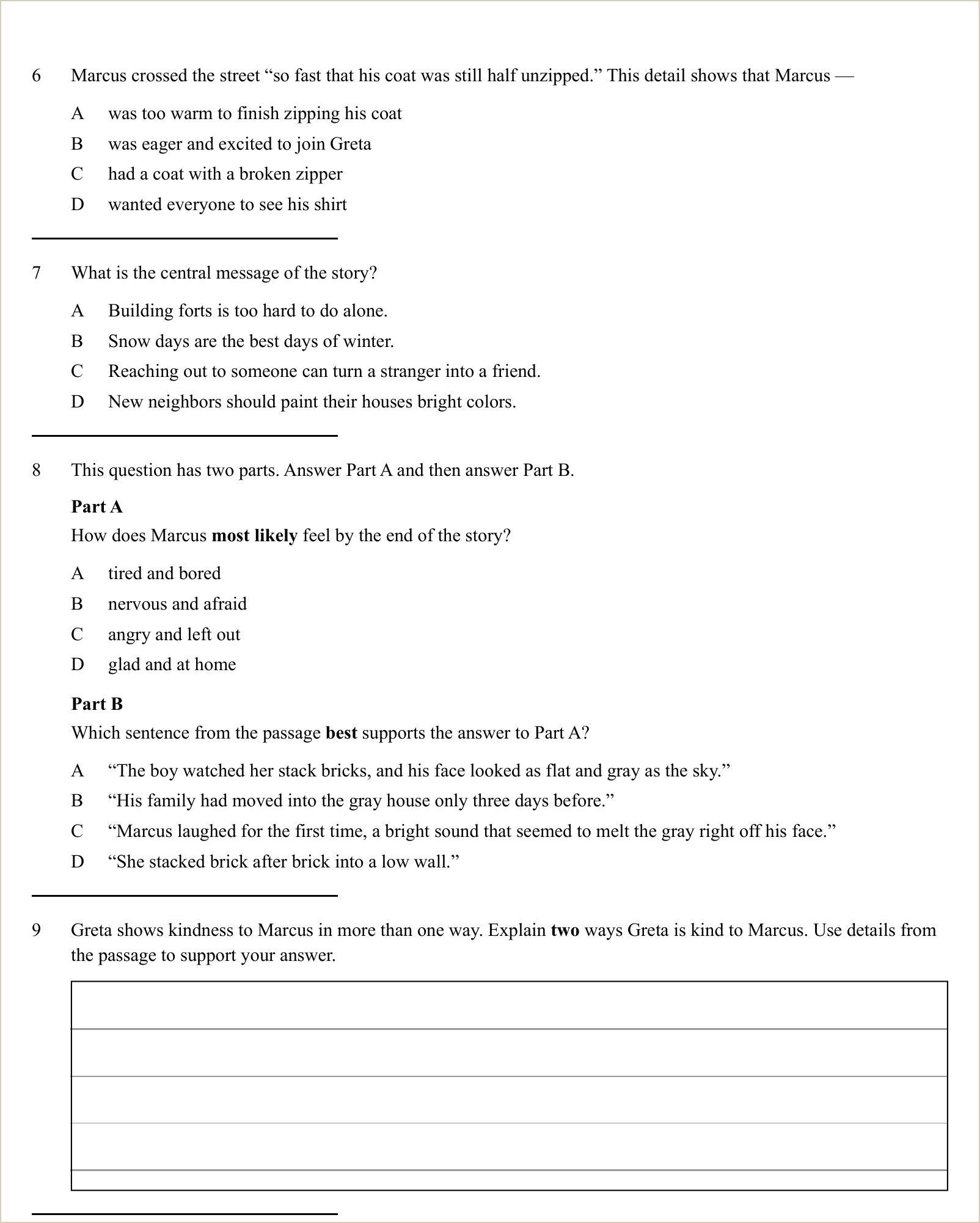
- Practice in every PSSA Grade 3 item format rendered for paper: multiple choice, two-part evidence-based questions that ask for the answer and then the sentence that proves it, and text-dependent short-answer questions with ruled response space and a 0-3 scoring guideline
- Targeted distractor coaching on the questions that need it, naming the tempting wrong choice and the specific misreading behind it — detail mistaken for theme, a feeling from the beginning of a story instead of the end, a real dictionary meaning the context rules out
- A combined Quick Answer Key covering all five tests for fast self-grading
- A family letter, a test-taking tips section, and clearly marked three-section structure matching the real test
No essay at Grade 3: The real Grade 3 PSSA includes no Text-Dependent Analysis essay, so this book does not add one. Students practice exactly the reading, evidence, and short-answer work the test actually asks for — plus the Conventions questions that stand on their own at the end of each test.
Topics covered
- Central message, theme, and lesson in stories, fables, and folktales, and distinguishing the lesson from a single supporting detail
- Main idea and key details in informational text about science, history, and the world
- Asking and answering questions by referring explicitly to the text, and locating the sentence that best supports an answer
- Two-part evidence questions: choosing the answer, then choosing the quotation that proves it
- Character feelings, motivations, and how a character changes from the beginning of a story to the end
- Author’s purpose and why an author includes a particular detail, word, or ending
- Vocabulary in context, including figurative and non-literal language, and using nearby definitions and examples as clues
- Text structure and organization, cause and effect, and comparing details across a passage
- Point of view and the narrator’s role
- Text-dependent short-answer responses supported with two details from the passage
- Nouns, plurals including irregular plurals, and possessives
- Subject-verb agreement, verb tense, and complete sentences versus fragments
- Capitalization of titles, names, places, and dates
- Commas in a series and in addresses, quotation marks in dialogue, and end punctuation
- Coordinating and subordinating conjunctions, and choosing the joining word that fits how two ideas connect
- Grade-appropriate spelling patterns and commonly confused words such as their, there, and they’re
Why parents and teachers choose Smart Stars
- Educator-authored: Every passage and question is written and reviewed by classroom-experienced educators.
- Mirrors test day: Each practice test matches the official PSSA Grade 3 shape, three-section structure, item mix, and question formats — including the two-part evidence questions and 0-3 short-answer items — with no Grade 4 essay bolted on.
- Built for Pennsylvania: Aligned to the Pennsylvania Core Standards and the Grade 3 Assessment Anchors and Eligible Content, with grade-appropriate contexts and a wide cast of student names.
- Explanations teach the why: Every Answers and Explanations entry quotes the passage word for word, shows the full reasoning, and closes with a labeled coaching line so students learn the reading move.
- Varied and graduated: Passages, topics, question types, answer positions, and slot order rotate test to test, and the five tests step up in difficulty — the later tests lean on longer passages, more inference, and more evidence-matching — so no two feel like the same practice run.