This book holds four flashcard decks: 140 cards written to the 85 STEELS performance expectations the Grade 5 PSSA Science test draws on, from grades 3, 4 and 5. Every card is a new item, not a reprint of the Smart Stars practice-test book. Read the front, answer in your head, then turn the page to flip it. (The real test carries 42 scored questions worth 48 points in two untimed sections; its four reporting categories share it almost evenly, and the cards are spread the same way: 35 Life Sciences and Environmental Literacy, 35 Physical Sciences, 35 Earth and Space Sciences, 35 Technology and Engineering.)
What’s inside
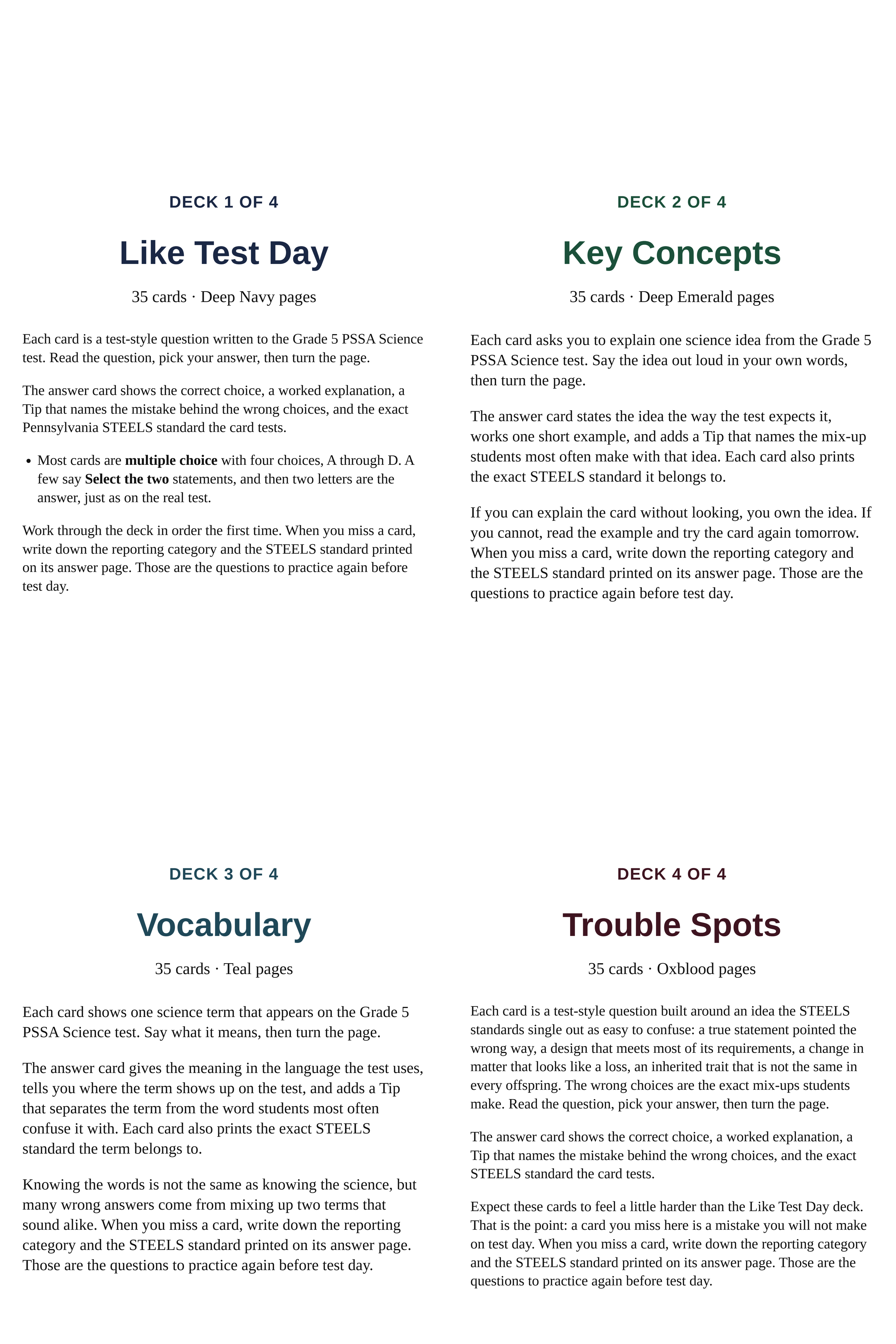
- Four color-coded decks of 35 cards each: Like Test Day (test-style questions), Key Concepts (one idea per card), Vocabulary (the terms the test uses), and Trouble Spots (the ideas Pennsylvania’s standards single out as easy to confuse)
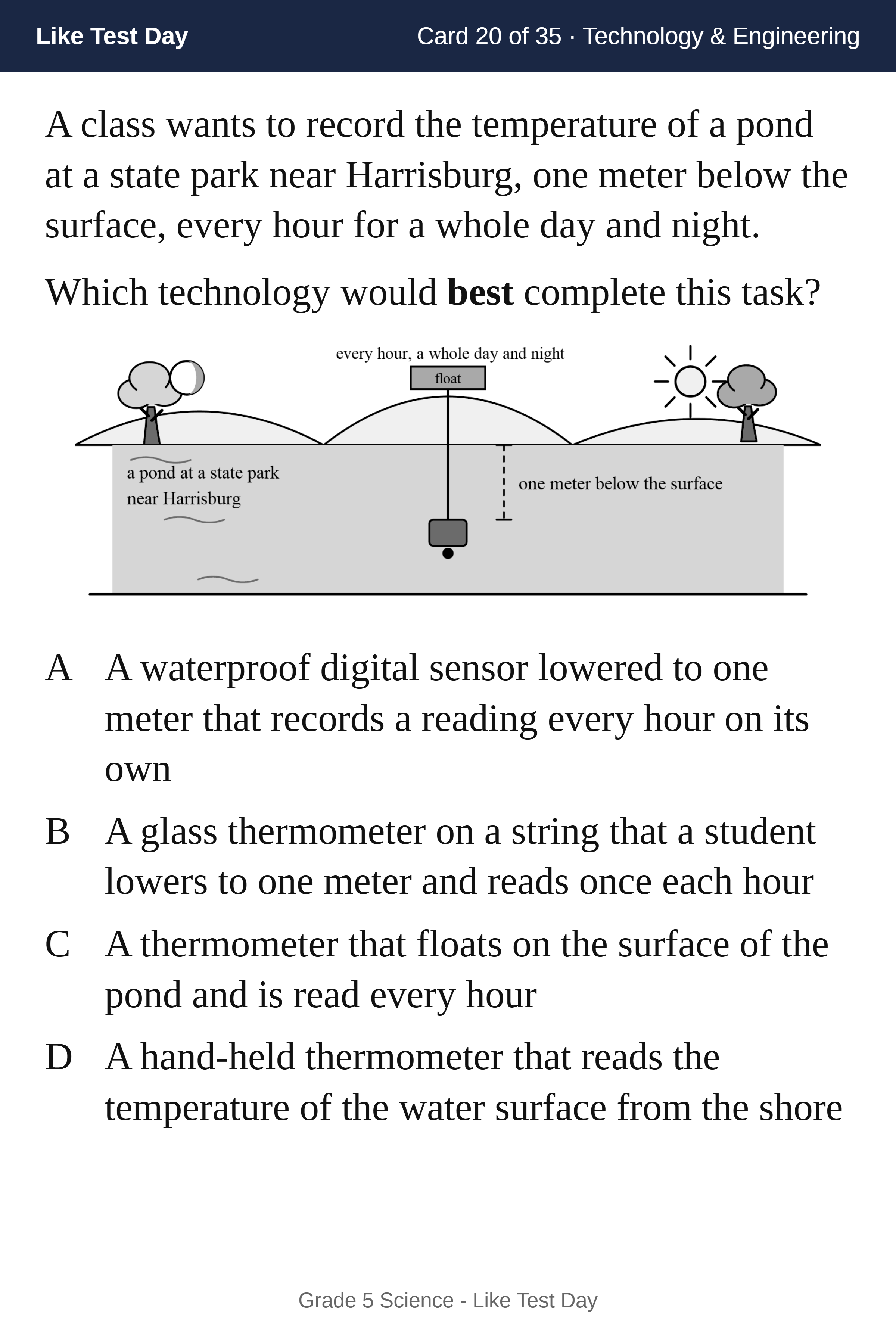
- Like Test Day cards written the way the PSSA asks them: multiple choice and select-two questions with tables, diagrams, and data
- Key Concepts cards that ask your child to explain an idea, then show the principle and one worked example
- Vocabulary cards that define each term in the language the test uses
- Trouble Spots cards whose wrong choices are the exact mix-ups students make
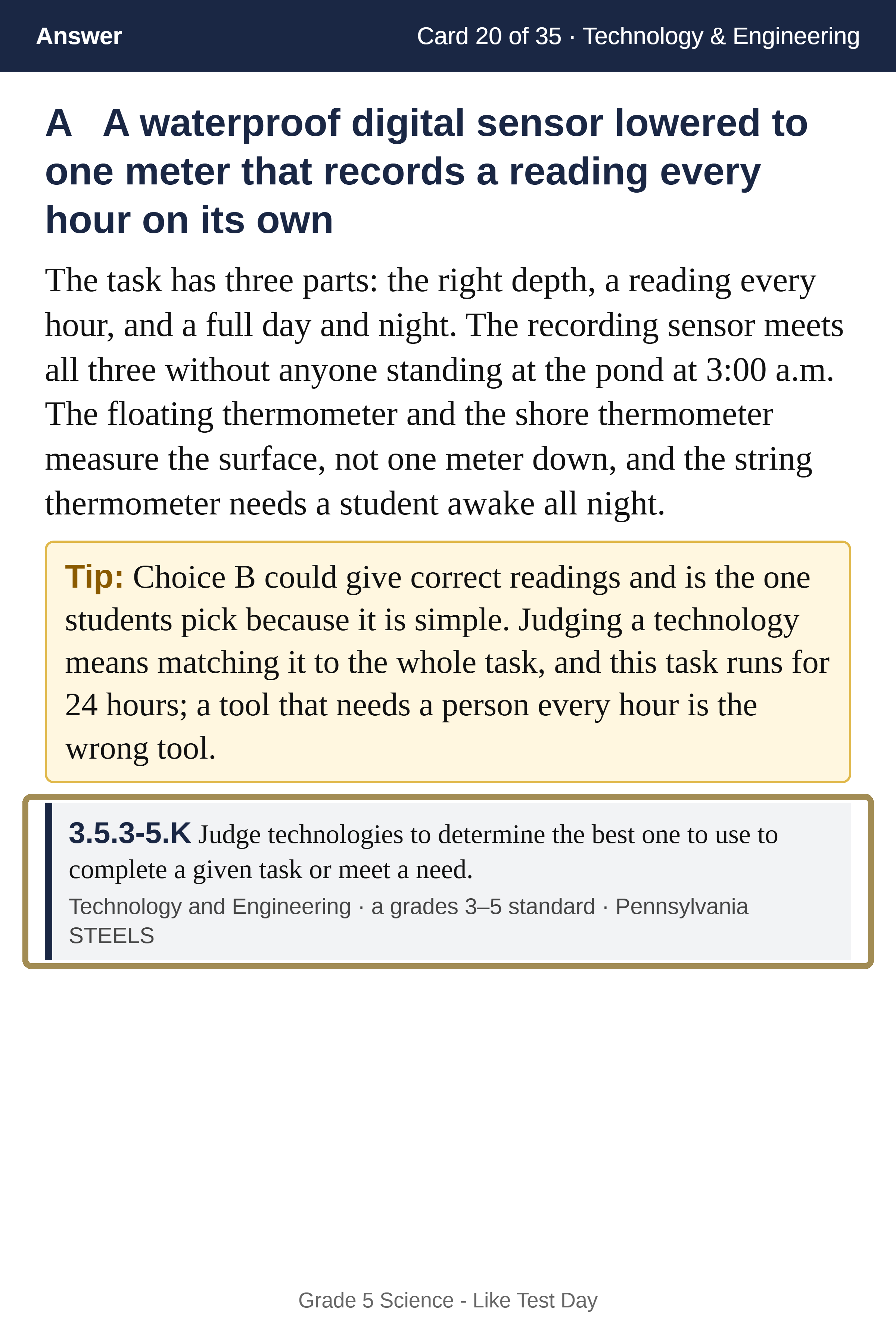
- The answer on the very next page: the correct answer, a plain-language explanation, and a Tip that names the mistake behind the wrong choices
- A drawing on every question card and answer page (140), plus 21 data tables
- The STEELS standard each card tests, printed on the back word for word with its grade, so a parent sees which standard a missed card belongs to
- Each deck in its own color; the amber box is always a Tip
- A letter to families on how the test is built and scored, with test-taking tips
- A Study Reference that maps all 85 STEELS codes to their topics (Pennsylvania gives no reference sheet on test day)
- A Quick Answer Key for the two question decks
Topics covered
- Life cycles, inherited traits and variation, and how the environment influences traits
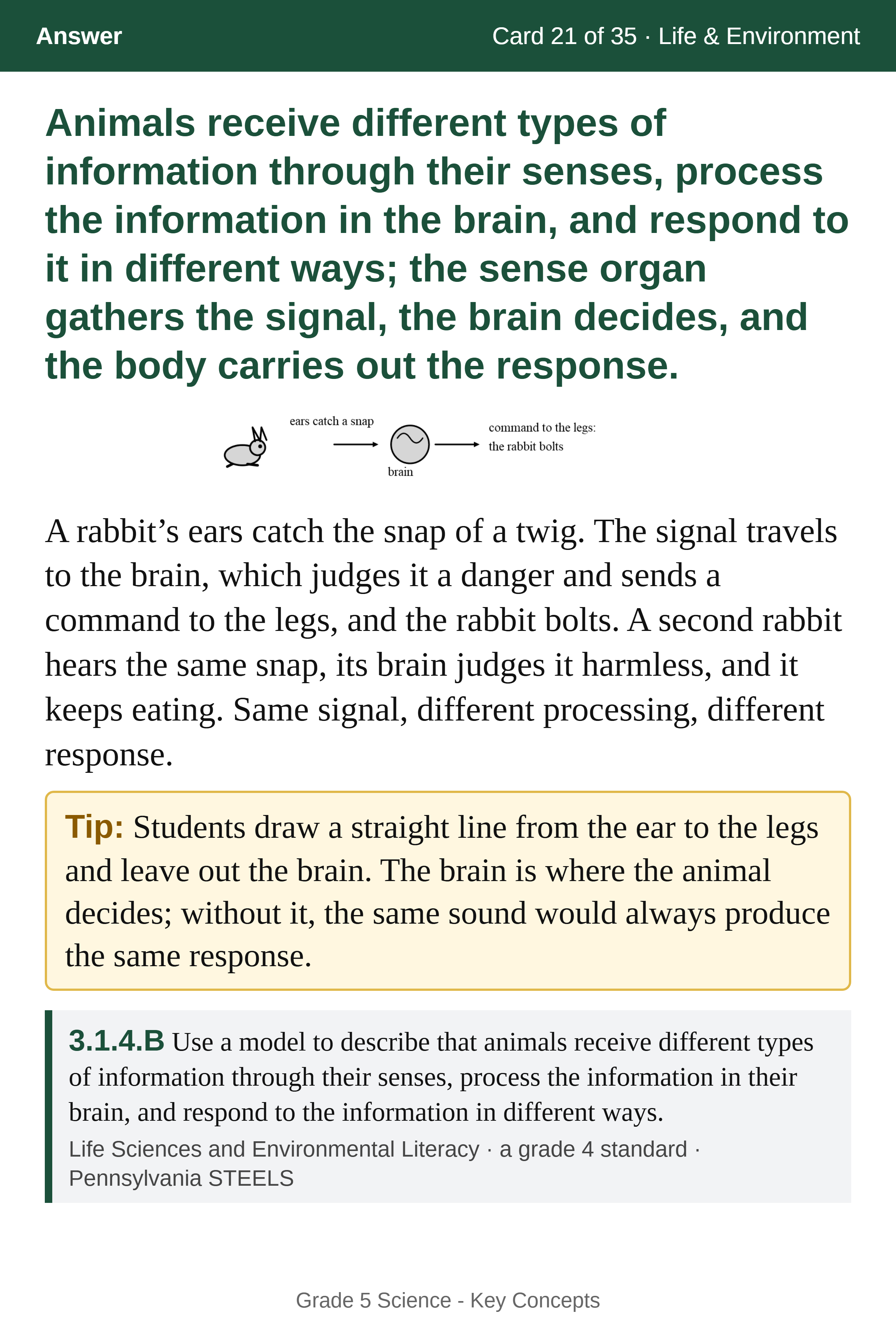
- Structures that support survival; senses, brain, and response; animal groups
- Fossils, habitats, and solutions when an environment changes
- Plants built from air and water; matter moving among plants, animals, and decomposers
- People and the environment: watersheds, resource use, and civic actions
- Forces and motion, patterns that predict motion, and energy in collisions
- Energy transfer by sound, light, heat, and electric current; waves; seeing by light
- Particles, properties of materials, mixtures, and the conservation of matter
- Weather and climate, weathering and erosion, rock layers, and maps of Earth’s features
- The sun and stars, shadows and seasons, Earth’s spheres, and Earth’s water
- Criteria and constraints, the engineering design process, prototypes, and trade-offs
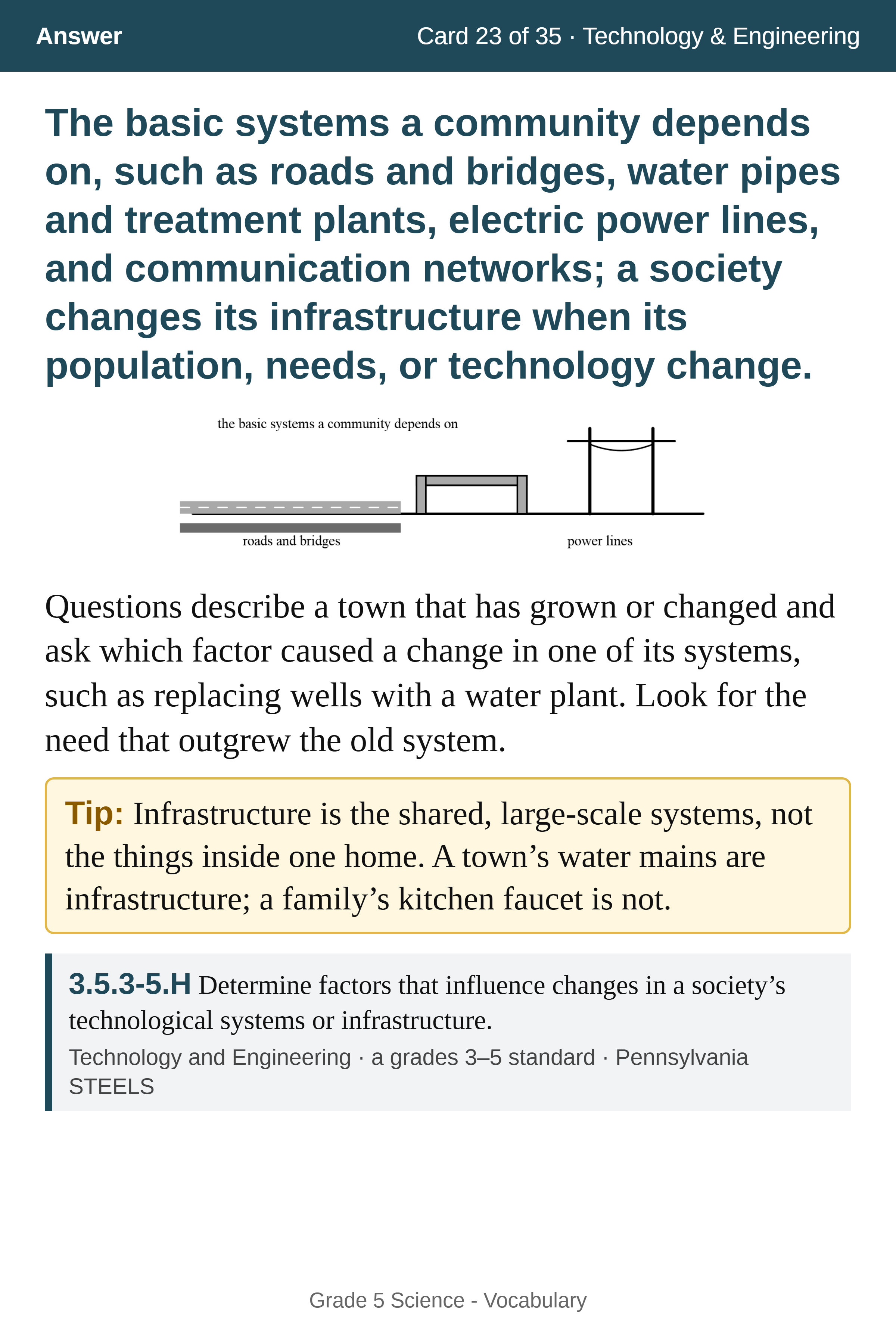
- Systems and subsystems, materials, and the helpful and harmful effects of technology
Why parents and teachers choose Smart Stars
- Written by educators who study Pennsylvania’s test design, item samplers, and standards
- Four ways to study the same 85 standards instead of one worksheet format repeated
- All 140 cards are original items, never repeated from the practice-test book
How to use this book
Work through one deck in order the first time; after that, jump to any deck from the table of contents. Answer before turning the page, then read the back even when you were right, and note the standard on every missed card. Start with Like Test Day and save Trouble Spots for last. Ten to fifteen cards a day beats one long sitting.
The four decks
- Like Test Day (35 cards): Each card is a test-style question written to the Grade 5 PSSA Science test.
- Key Concepts (35 cards): Each card asks you to explain one science idea from the Grade 5 PSSA Science test.
- Vocabulary (35 cards): Each card shows one science term that appears on the Grade 5 PSSA Science test.
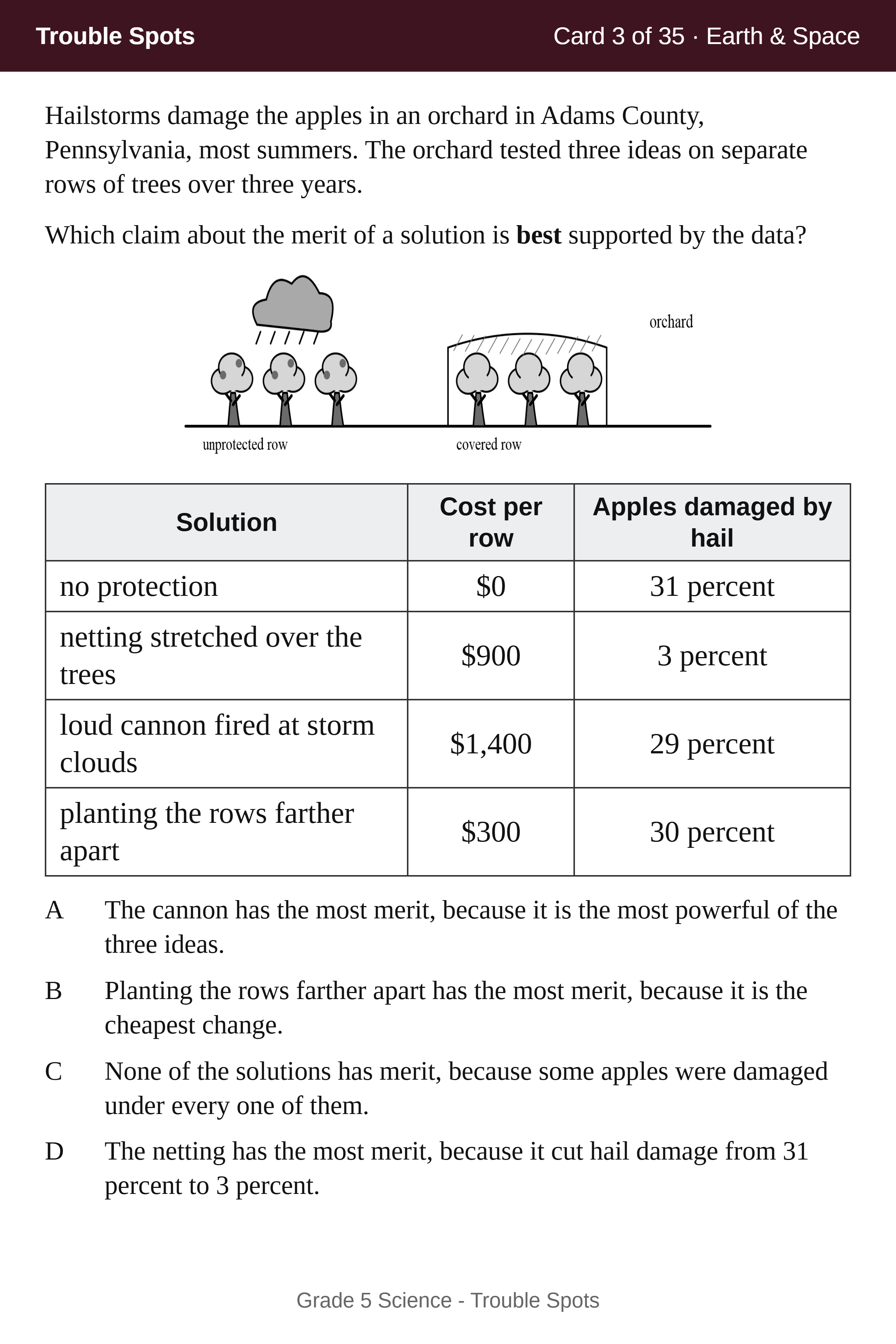
- Trouble Spots (35 cards): Each card is a test-style question built around an idea the STEELS standards single out as easy to confuse: a true statement pointed the wrong way, a design that meets most of its requirements, a change in matter that looks like a loss, an inherited trait that is not the same in every offspring.
How the cards work
Read the front of a card, answer it in your head, then turn the page to flip it. The answer card shows the correct answer, a worked explanation, a Tip naming the mistake behind the wrong choices, and the exact STEELS standard the card tests. When you miss a card, write down the reporting category and the STEELS standard printed on its answer page. Those are the questions to practice again before test day.
Color code. Each deck has its own color on every card, so you always know which deck you are in. The amber box is always a Tip.
Pair it with the practice tests
Pennsylvania PSSA Grade 5 Science Practice Tests
Work through full-length practice tests in the same test format, then use these cards to review what each test turns up.