This book holds four flashcard decks: 140 cards written to all six of the Grade 4 science standards in the Wyoming Content and Performance Standards for Science, 2023 (emended February 2025). Grade 4 is one of only three grades Wyoming tests in science, with grades 8 and 10. Every card is a new item. Read the front, answer in your head, then turn the page to flip it. (Wyoming publishes the share of the test each reporting category carries and does not publish how many questions a science test holds, what they are worth, or what shapes they come in. This book therefore prints no item count and no point total rather than repeat a figure from a retired blueprint that described a different test. The published split is Physical Science 58 to 64 percent, Life Science 22 to 28 percent, Earth and Space Science 10 to 15 percent, with engineering reported inside Physical Science. The 140 cards follow those shares: 84 Physical Science, 36 Life Science, 20 Earth and Space Science.)
What’s inside
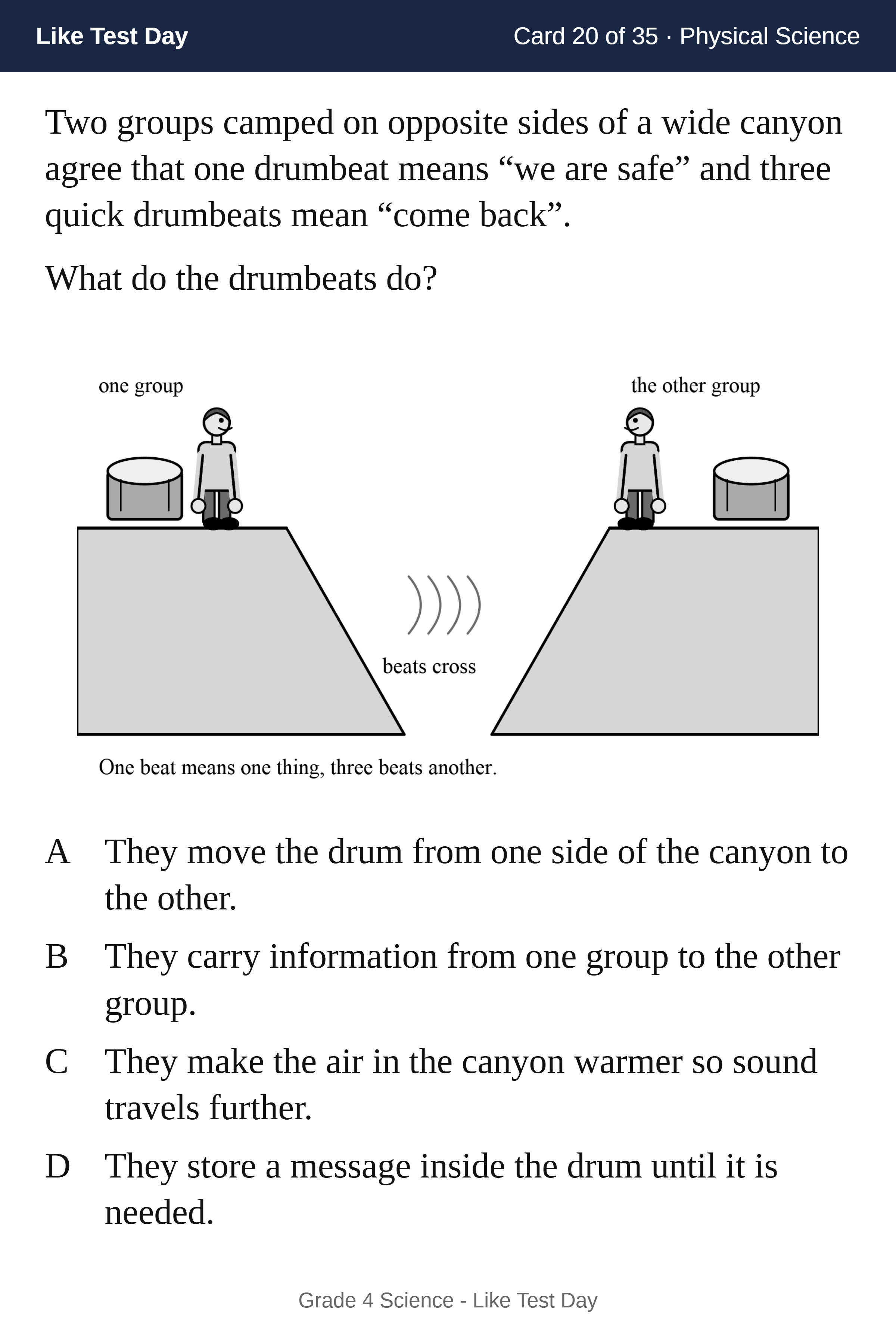
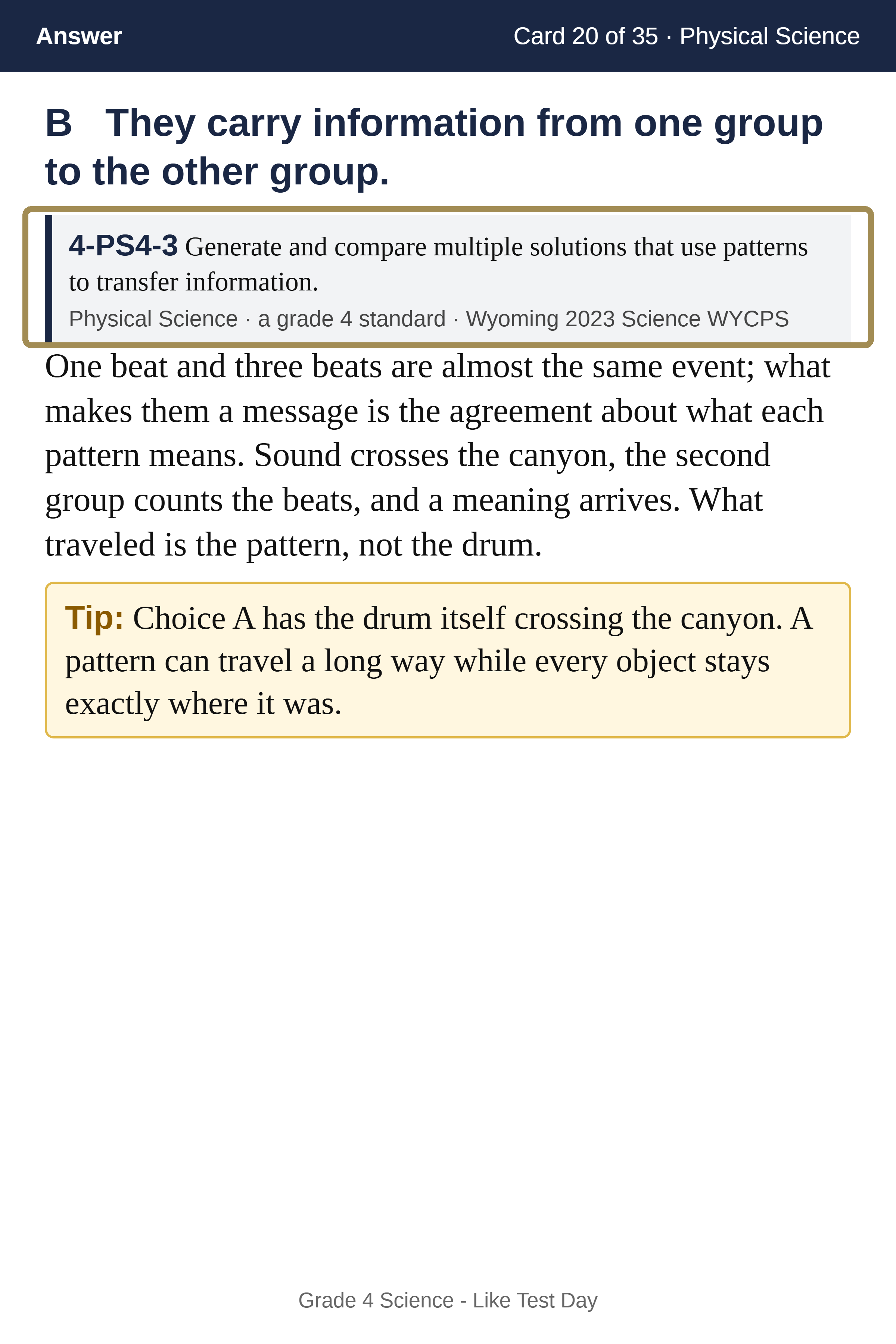
- Four color-coded decks of 35 cards each: Like Test Day (test-style questions), Key Concepts (one science idea per card), Vocabulary (the terms the standards use), and Trouble Spots (the ideas the standards single out as easy to confuse)
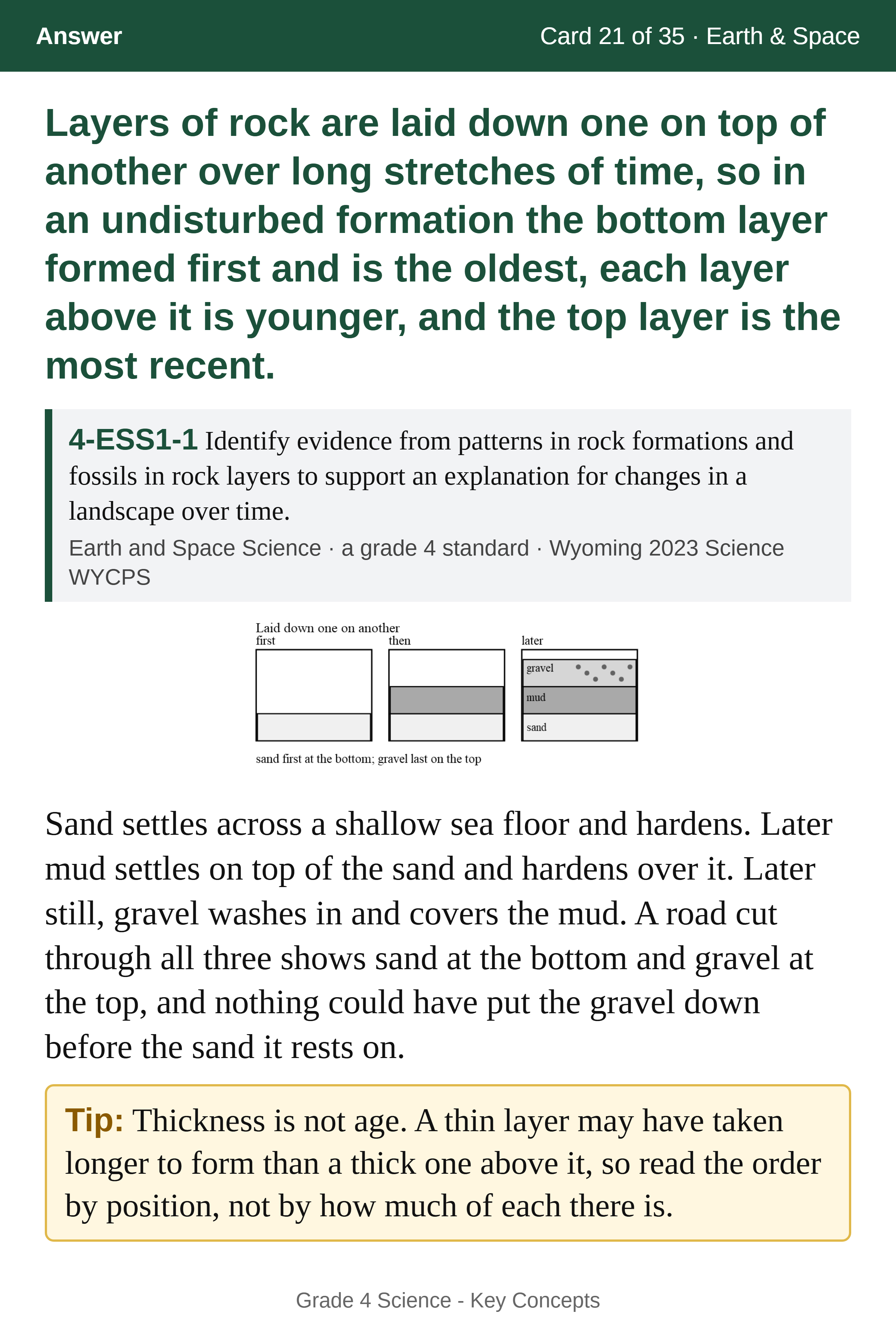
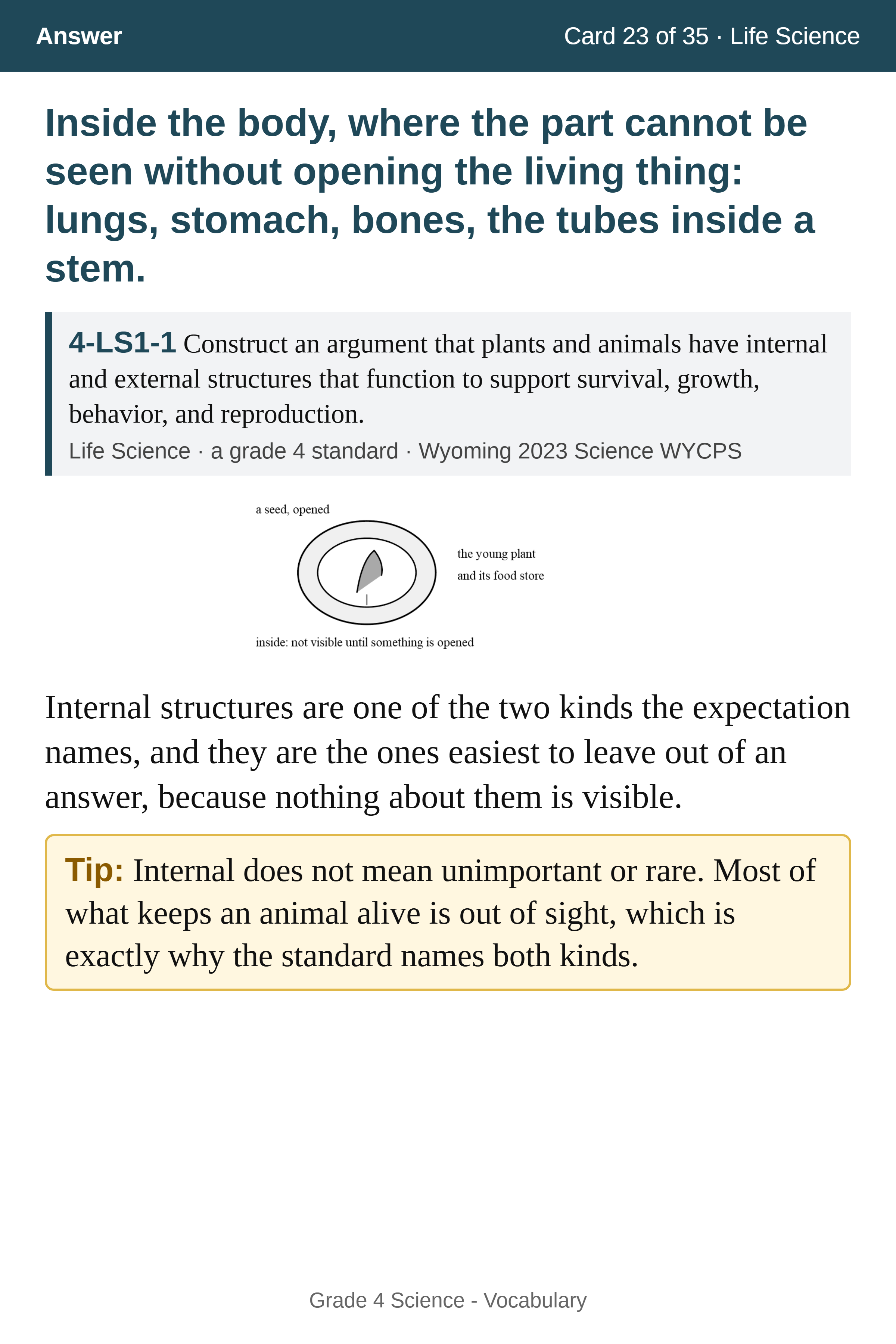
- A drawing on every card: 140 figures, each computed from that card’s own numbers
- Key Concepts cards that ask your child to explain an idea, then show the principle and one worked example
- Vocabulary cards that define each term in the standards’ own language
- Trouble Spots cards whose wrong choices are the mix-ups students make, including claims to judge. Some of those claims are correct
- The answer on the very next page: the correct answer, a worked explanation in plain language, and a Tip that names the mistake behind the wrong choices
- The Wyoming standard each card tests, printed on the back word for word with its reporting category and grade, so a missed card points to a standard
- Each deck in its own color on every page; the amber box is always a Tip
- A letter to families on how the test is built and reported, with test-taking tips
- A Study Reference listing the three reporting categories, the share of the test each carries, and all six standards with their topics in plain words
- A Quick Answer Key for the two question decks
Topics covered
- Waves: amplitude, wavelength, and how a wave moves an object it reaches
- Devices that convert energy from one form into another, then test and refine them
- Patterns that carry information, and comparing ways of sending a signal
- Criteria and constraints, and judging two designs against the same list
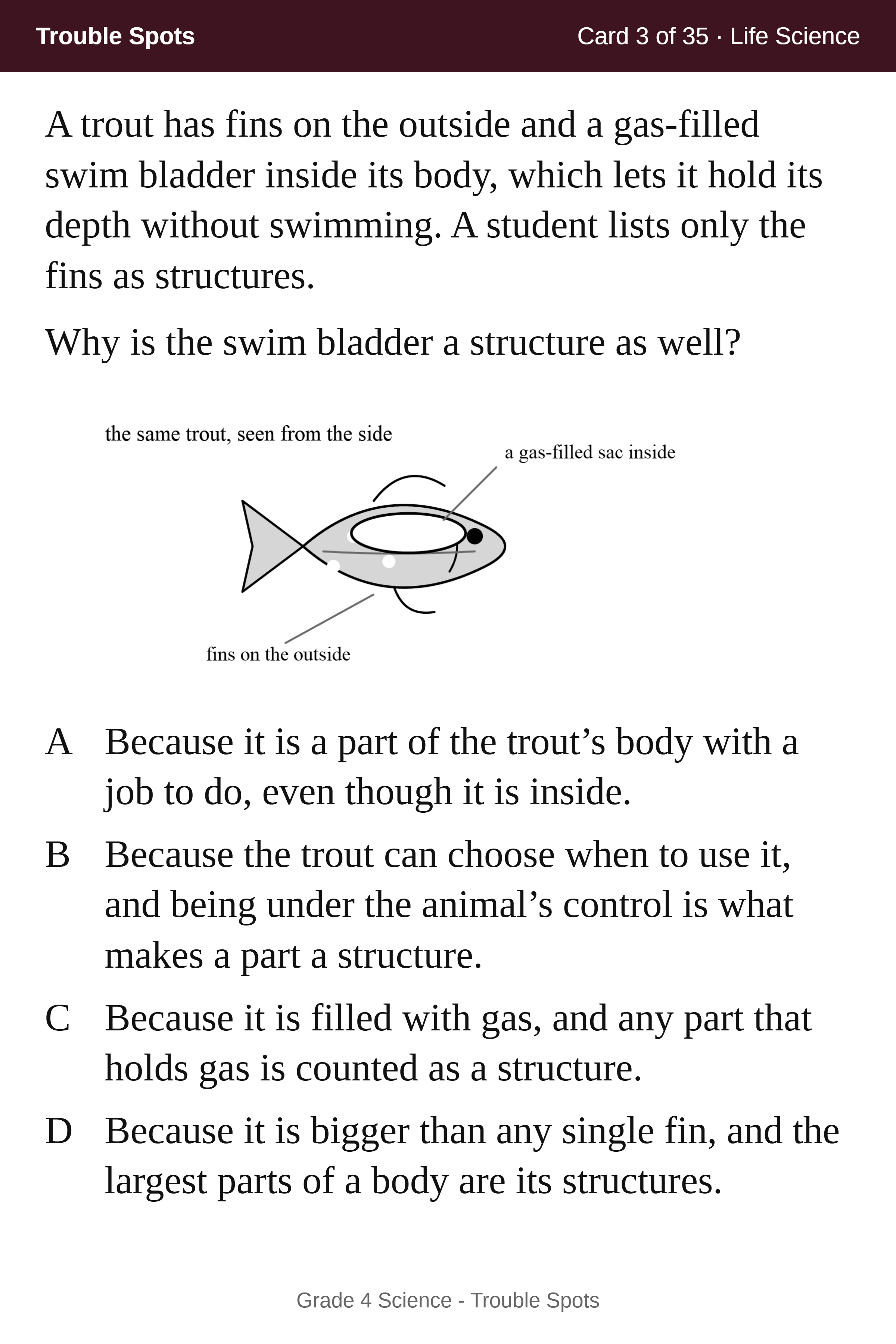
- Internal and external structures of plants and animals
- How those parts support survival, growth, behavior, and reproduction
- Rock formations and the fossils in them as evidence of a changing landscape
Why parents and teachers choose Smart Stars
- Written by experienced educators working from Wyoming’s own science standards and the published reporting-category shares
- Every card names its Wyoming standard, so study time goes to what a student is actually missing
- Four ways to study the same six standards instead of one worksheet format repeated
- Grade 4 science rests on just six standards, so this is a narrow test drilled deeply rather than a wide one sampled thinly
How to use this book
Work through one deck in order the first time; after that, jump to any deck from the table of contents. Answer before turning the page, then read the back even when you were right. Start with Like Test Day and Vocabulary, and save Trouble Spots for last. Ten to fifteen cards a day over several weeks beats one long sitting.
The four decks
- Like Test Day (35 cards): Each card is a test-style question written to the Grade 4 WY-TOPP science test.
- Key Concepts (35 cards): Each card asks you to explain one science idea from the Grade 4 WY-TOPP science test.
- Vocabulary (35 cards): Each card is a single term used on the Grade 4 WY-TOPP science test.
- Trouble Spots (35 cards): Each card is built on a distinction the Wyoming science standards draw and students most often blur: amplitude against wavelength, inside against outside, survival against reproduction, evidence against explanation.Five cards give you a claim a student wrote and ask you to judge it.
How the cards work
Read the front of a card, answer it in your head, then turn the page. The answer card shows the answer, a worked explanation, a Tip naming the mistake behind the wrong choices, and the exact Wyoming standard the card tests. When you miss a card, write down the reporting category and the Wyoming standard printed on its answer page. Those are the questions to practice again before test day.
Color code. Each deck has its own color on every card, so you always know which deck you are in. The amber box is always a Tip.