About this book
Give your fifth grader the confidence to succeed on the New York State Grade 5 Mathematics Test.
Five full-length practice tests, 220 questions total, aligned to the New York State Next Generation Mathematics Learning Standards for Grade 5 and built to match the real Grade 5 exam.
Take a look inside
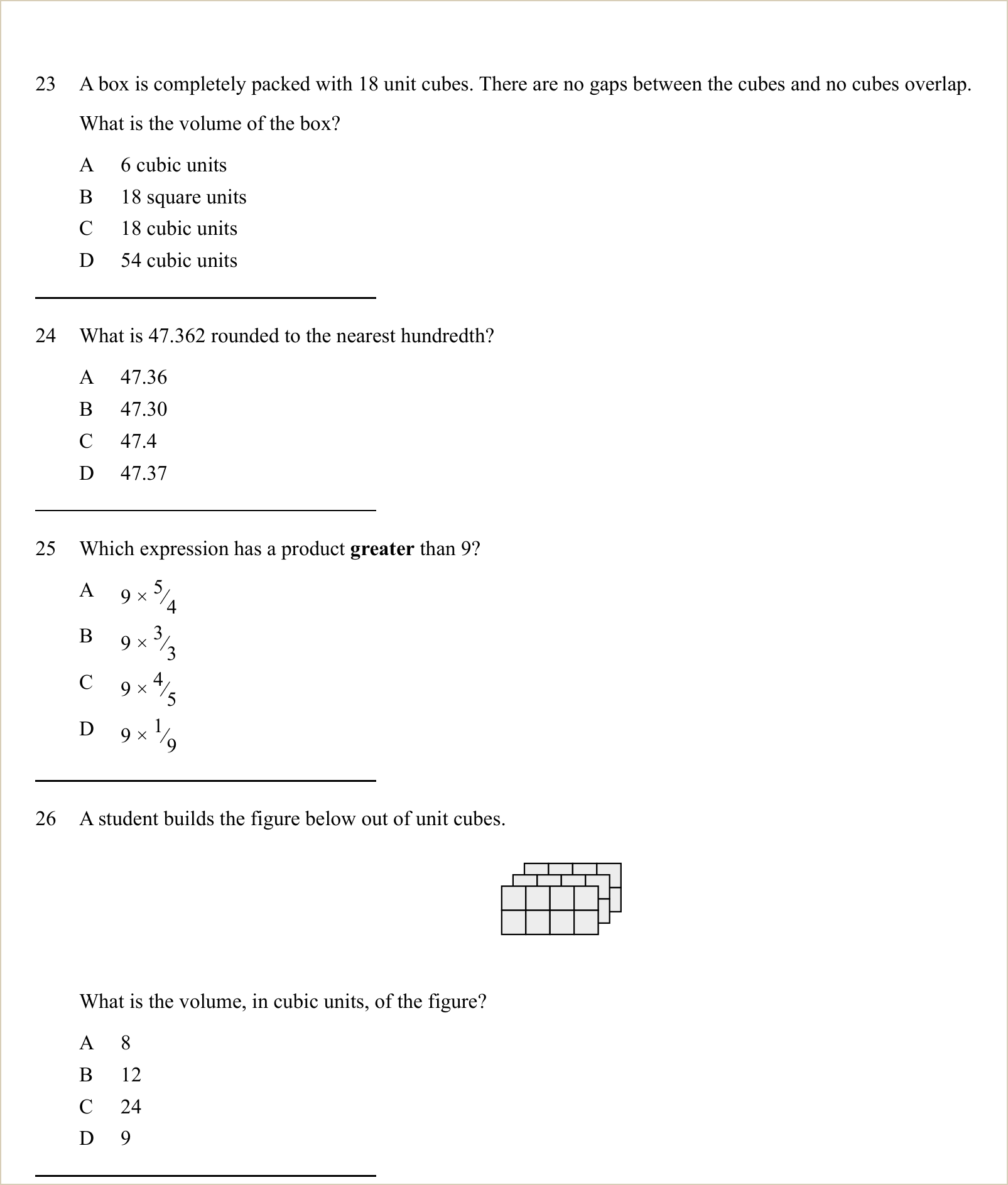
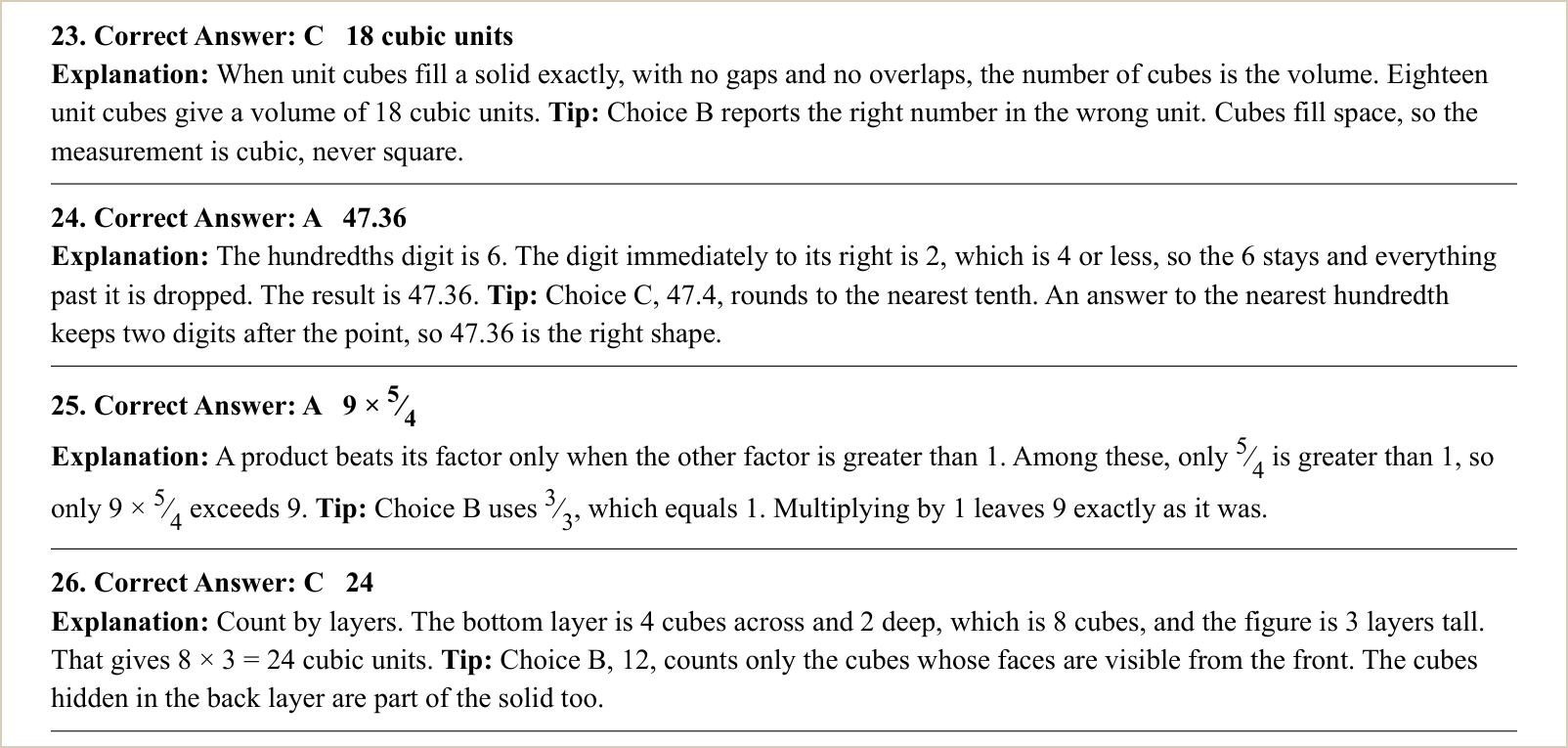
About the question count:
- A real form numbers its questions to 44, but seven Session 1 items are embedded field-test questions that do not count
- New York scores 37 of the 44, worth 44 credits
- Each test here runs the same 44 across two sessions, so a sitting matches test day
- The difference: all 44 are scored-style items with full explanations, so no practice time is wasted
Built the way the real test is built:
- Session 1 is 30 questions, all multiple choice
- Session 2 is 14 questions, five multiple choice and nine written responses, given on a second day
- Written responses scored as New York scores them: three at one credit, five at two, and one at three
- The two- and three-credit questions say Show your work, and a correct answer with no work earns no credit at all, so every written response here asks for it
- Reporting categories weighted as New York weights them, fractions largest
On test day: New York allows about 80 to 90 minutes for Session 1 and 70 to 80 for Session 2, and there is no calculator at Grade 5, though a ruler, a protractor, and the reference sheet may be used.
What’s inside
- 5 complete 44-question tests, 220 questions in all
- Detailed step-by-step explanations for every question
- Every written response prints its actual answer rather than “see explanation,” so scoring is quick and the worked solution is still there
- Item types, names, and contexts vary across all five tests
- A parent letter with test-taking tips and a Study Reference
- Grade 5 is the first year New York gives a reference sheet, so the book reproduces it exactly and marks every other study page as not on the real test
- A quick-reference answer key for all five tests
Topics covered
- Adding and subtracting fractions with unlike denominators, and mixed numbers
- Multiplying a fraction by a whole number and by a fraction
- Multiplication as scaling: whether a product will be larger or smaller
- Dividing with unit fractions, both ways
- A fraction as division, and sharing a quantity
- Area of a rectangle with fractional sides
- Place value to thousandths, and the ten-times relationship between places
- Reading, comparing, and rounding decimals to thousandths
- Powers of ten, exponents, and how the decimal point moves
- Multi-digit multiplication and division with two-digit divisors
- The four operations with decimals to hundredths
- Measurement conversion both ways within a system
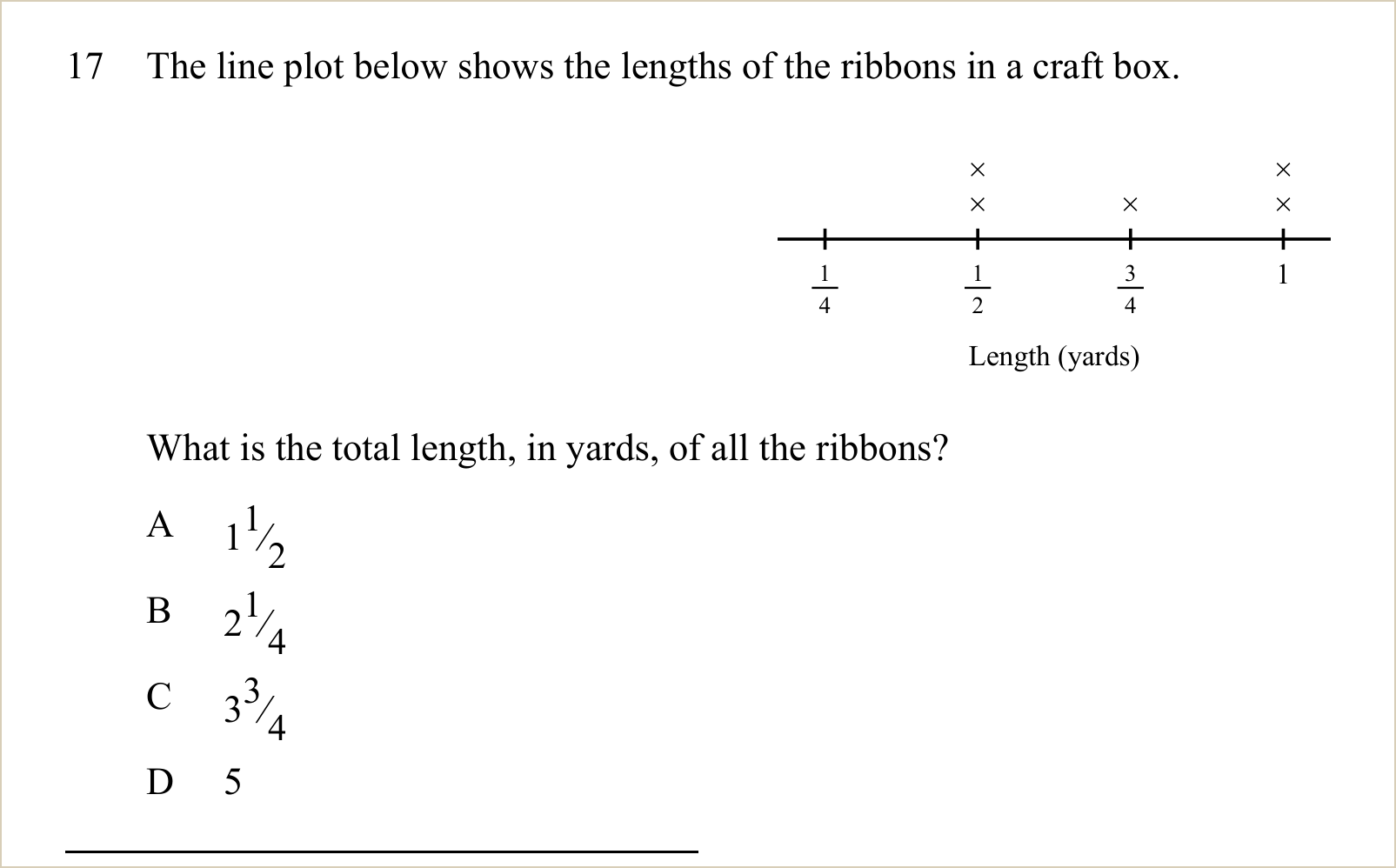
- Line plots in halves, fourths, and eighths, and operating on the data
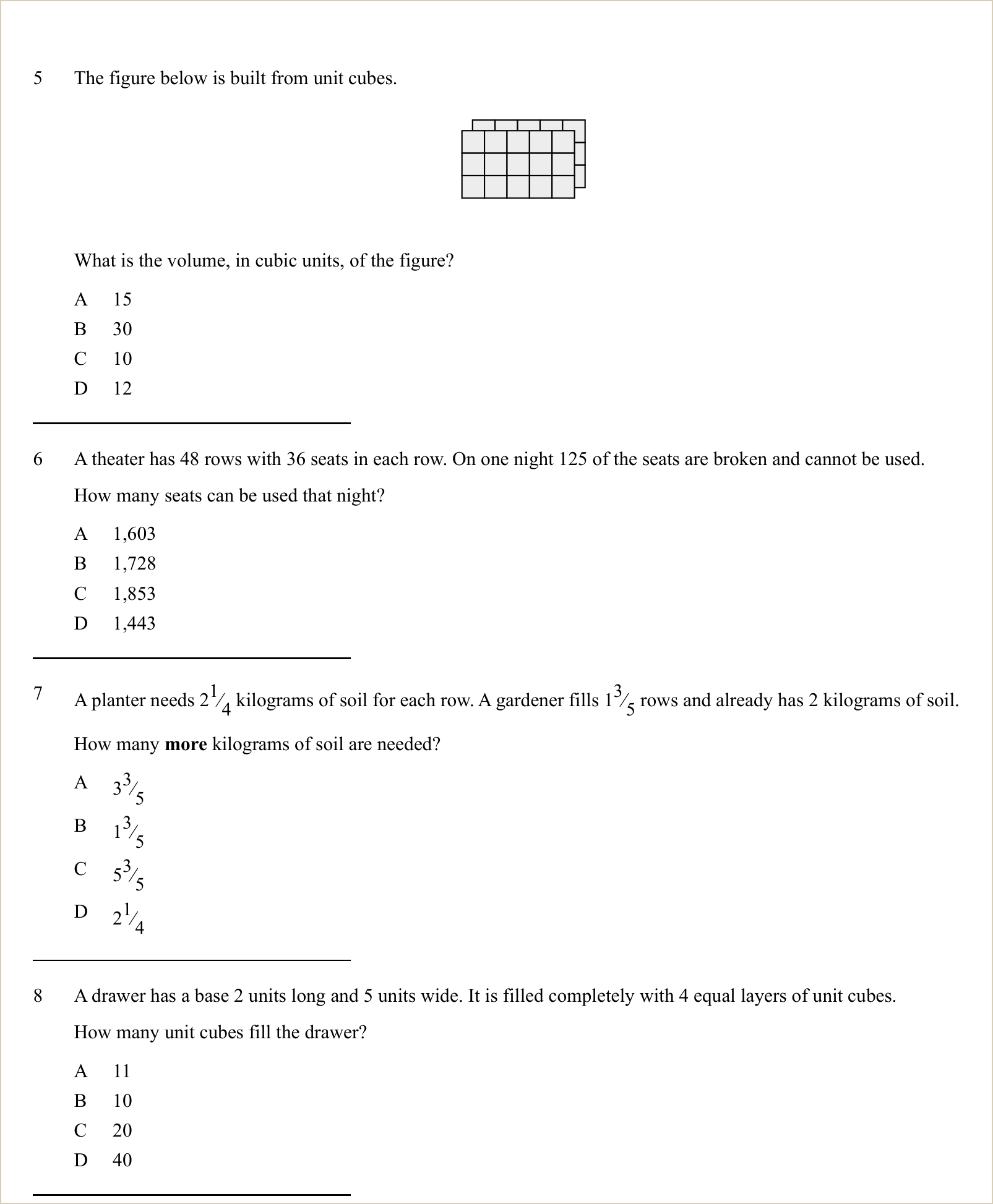
- Volume as packing with unit cubes, and why counting and multiplying agree
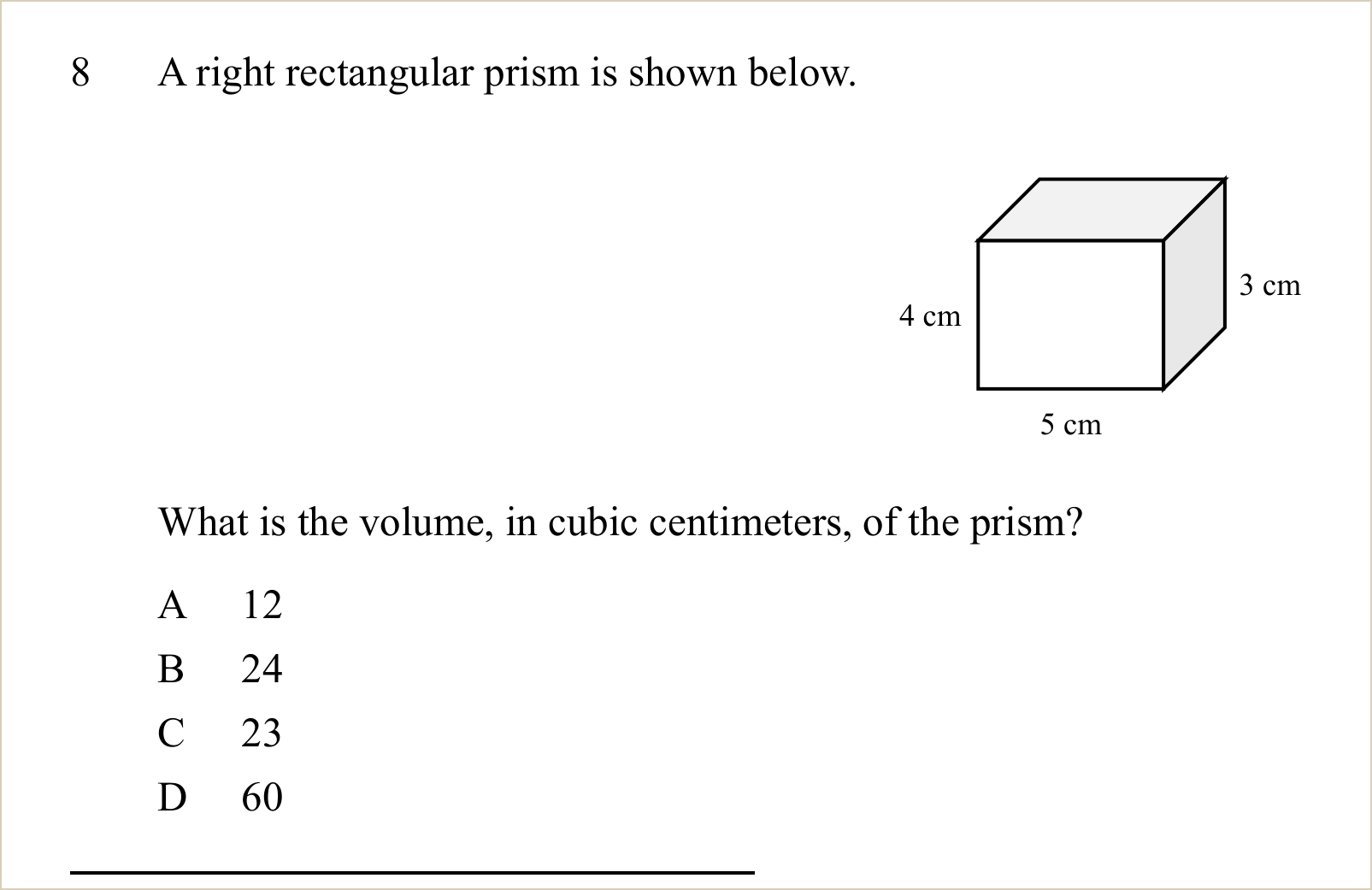
- Volume by formula, and solids made from two joined rectangular prisms
- Classifying two-dimensional figures, and how quadrilateral families nest
Why parents and teachers choose Smart Stars
- Written by experienced educators who study New York’s test design and released item sets
- Every question mirrors test day, with no surprises in format or rigor
- Explanations teach the “why,” so students learn from every mistake
- Built to the real blueprint, including the written-response scoring rule that costs students more points than anything else on this test